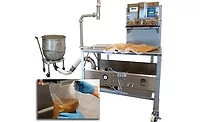
Hot-Fill, Cook-Seal Pasteurization
The increasing use of pasteurization is improving the safety of many ready-to-eat food (RTE) products. This includes the adoption of a variety of pasteurization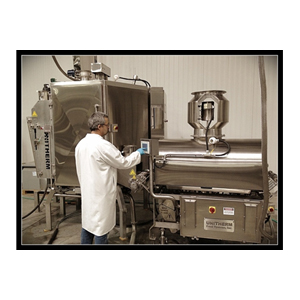 technologies and methods, both pre- and post-packaging.
Although pasteurization is widely considered a highly effective means of removing pathogens, food processors should recognize that introducing any new step to their processes, including new pasteurization techniques, could significantly alter process efficiency.
Unless the pasteurization process is fully integrated into the production stream—from infeed to discharge—it can adversely affect other process outcomes, including quality, taste, appearance and shelf life.
Yet, in efforts to follow FSIS (Food Safety and Inspection Service) guidelines or enhance their own food safety protocols, some RTE producers are installing pasteurizing equipment and procedures that are not integrated with their overall processes, or use pasteurization technologies that can adversely affect the quality of their finished products.
Hot-fill vs. chill and reheat
Traditionally, RTE foods are pre-cooked and then chilled. In the case of dinners like lasagna, this includes each item in the meal—meat, sauce, pasta and cheese. Each one of those items is prepared separately, chilled and then assembled into meals.
If extended shelf life is desired, the RTE manufacturer will process the product through an autoclave or some other type of post-packaging pasteurization system.
“If you have already cooked the product and then chill and assemble it, most post-packaging pasteurizing systems involve reheating the product and then chilling it again,” says Adam Cowherd, sales manager for Unitherm Food Systems, Bristow, Okla. “So, essentially, you’re cooking it twice and chilling it twice. By subjecting the product to additional thermal energy, you may increase nutritional loss and compromise finished eating quality.”
Today, suppliers of dinners like lasagna or mac-n-cheese are pasteurizing in the tray to achieve better shelf life and finished product appearance. By pasteurizing in the tray, the customer is able to market a “top-baked” product. These products have a greater perceived value to the consumer because, after being re-heated in a microwave, they appear and taste like a truly oven-baked product. This is achieved through the hot-fill/cook-seal pasteurization process. In short, the photograph on the package is representative of the finish product coming out of the microwave.
Cowherd explains that for those reasons, many RTE processors are looking at pasteurization systems that do not cook and chill twice, but rather hot-fill, cook once and seal and then chill once. This concept applies to food items in trays or pouches such as ready meals, eggs, soups and sauces.
“By hot filling, the time required to pasteurize is reduced significantly,” he says. “Two or three minutes would suffice. Because the product is already hot, only the very minimal loss of heat during the hot-fill process needs to be recovered for pasteurization. You simply bring the temperature back up and hold for one to three minutes. From that point, it can be chilled.”
One of the key benefits of the hot-fill approach is the reduction of pasteurization time. Pasteurization equipment is sized largely by the amount of time required to pasteurize the product. The strategy of the hot-fill-and-seal approach is to reduce pasteurization time and the footprint of the equipment.
Water-based hot-fill solutions
One of the largest egg product suppliers in the world was in search of an optimum process for pasteurizing liquid eggs packaged in pouches for foodservice, including restaurants, hotels and institutions such as schools.
The pasteurization process would require heating and chilling the liquid eggs while ensuring that the mechanical handling of the product maintains the integrity of the pouch and protects the eating quality of the eggs when served.
The solution, developed by Unitherm, was to hot-fill the liquid eggs into a pouch, then transfer the pouches to a hot water bath where they are pasteurized while cooked and then transferred inline to a water chill system.
“The chilling required a combination of drenching and water bath because the eggs float in the pouch,” says Cowherd. “The end result is a product that is extremely shelf-stable. The final product, sold to foodservices, is re-heated by microwave or in a boiling pot of water. The bag is then opened and scrambled into the serving pan. The same process will work for sauces, soups and other pouched meals.”
Air-based hot-fill solutions
A different approach was needed for a high-volume processor of baby food in trays. The challenge in this case was to pasteurize hot-filled trays with no water or humidity in the process.
Unitherm developed a unique “spiral” pasteurization system capable of advanced data tracking software to guarantee pasteurization in real time. Because there were multiple safety measures in place, including multiple checkpoints, the pasteurization solution required continuous monitoring of air temperatures and residence time. A data tracking system was also required to monitor any variance in temperature, which could result in a failure to pasteurize the products. Volume requirements required continuous production for approximately 10 hours a day, six days a week.
The complexity of the project was heightened by a critical headspace requirement for the packaging. There could be no deformation of the trays during the pasteurization process.
“This was a somewhat unique pasteurizing approach that was developed specifically for the processor,” explains Cowherd. “Water and steam, as heat transfer mediums, are considered to be more efficient and stable than air. In the case of this particular baby food item, the product restricted the thermal energy medium to only the use of dry heat. Also, the processor required a very fine margin of tolerance and air temperature fluctuation, which was critical for the validation of their protocol. So, the heat transfer mechanism within the spiral oven and temperature monitoring and tracking system had to prove the equipment could meet the pasteurization requirement on a constant basis, which it did.”
For more information, contact Unitherm Food Systems, 918-367-0197, www.unithermfoodsystems.com.
Looking for a reprint of this article?
From high-res PDFs to custom plaques, order your copy today!