Refrigerated Frozen Foods logo
search
cart
facebook twitter linkedin youtube
  • Sign In
  • Create Account
  • Sign Out
  • My Account
Refrigerated Frozen Foods logo
  • NEWS
  • PRODUCTS
  • COLD STORAGE
    • Cold Storage Trends
    • Farm to Frozen
    • Supply Chain & Logistics
  • PACKAGING
  • TOPICS
    • Food Safety
    • Product Development & Manufacturing
    • Sustainable Solutions for Cold Foods
  • MEDIA HUB
    • Play Our Word Game
    • Podcasts
    • Videos
    • Polls
    • Webinars
  • DIRECTORIES
    • Cold Storage Construction Guide
    • Warehouse Guide
    • Food Master
  • MORE
    • Cold Chain Perspectives
    • Case Studies
    • C-Suite Q&A
    • Top 150 Processors
    • Awards >
      • Best New Retail Products
      • Cold Storage Facility of the Year
      • Processor of the Year
    • Directory of Associations
    • R&FF Store
    • Calendar of Events
    • FA&M Conference & Expo
  • EMAG
    • eMagazine
    • Archive Issues
    • Contact
    • Advertise
  • SIGN UP!
Food SafetyCold Chain Perspectives

Current testing is not advancing food safety

By Richard Stier
February 7, 2013
There’s a disturbing trend in many food safety programs today: pathogen testing of finished products. It’s being done in products considered shelf stable; products that are not only inhibitory but lethal to pathogens; and raw products, such as produce, that have a short shelf life. This kind of testing is not advancing food safety. 
 
In the 1950s, Dr. Paul LaChance of NASA, Dr. Howard Bauman of Pillsbury and a group of Natick scientists realized traditional quality control methods, that is, finished product testing, would be inadequate to guarantee the safety of foods developed for the space program since manufacturers had to test so much product, little was left for actual use. The group realized safety had to be built into the process. This led to the development of the hazard analysis critical control point (HACCP) system.
 
Twenty-five years later, the National Academy of Sciences formed a blue ribbon panel of scientists from industry, academia and government to establish microbiological standards for foods. The panel concluded that “Testing of finished products was not an effective means of protecting the consumer and assuring the foods were free of microorganisms of public health significance.” In addition, the panel concluded that “HACCP provides a more specific and critical approach to the control of microbiological hazards than is achievable by traditional inspection and quality control.”
 
Today, HACCP is used around the world. It is mandatory for meat, poultry, seafood and juice industries in the US, and once the final regulations are prepared for FSMA, all US processors (with the exception of very small operators) must have a food safety management system that includes a hazard analysis and appropriate preventive controls. The program is also mandated in the European Union, Australia, New Zealand and many other nations. 
 
The real driver for HACCP development and implementation has been basic economics. Food processors have stated they will only buy from vendors that have developed and implemented a food safety management system. As a result, safety has been pushed further down the supply chain. 
 
In addition, the industry’s acceptance of the Global Food Safety Initiative’s approved schemes (SQF, BRC, IFS and FSSC 22000) have not only underscored the importance of food safety, but have resulted in implementation of approved plans throughout the world. But having a HACCP program is only a first step. For the program to be truly successful, it must be properly documented, validated, implemented and maintained, and management must take an active role in ensuring its maintenance.
 

Sampling program to find pathogens
with 95% confidence

Contamination level Samples
5 percent 60
1 percent 300
0.1 percent 3,000

Source: National Academy of Sciences (2010).


Why is the food industry reverting to policies deemed ineffective more than 50 years ago?  

A number of issues driving this trend are not founded on good science. These include a demand for certificates of analysis; a belief that pathogen testing will effectively find pathogens; the potential for regulatory mandates; and the feeling that a negative test provides some sense of security.  
 
Microbiological testing is not an effective means to verify a process is working or to detect any problems. But it can be an excellent tool when building quality and food safety systems. For instance, microbiological data can be used to create control charts to monitor the process systems. 
 
However, the larger issue, which was addressed by the scientists from NASA, Natick and Pillsbury long ago, can be distilled down to one word: statistics. The sampling programs most industries employ are not adequate to detect even low levels of contamination, and when a pathogen is detected in a product such as fresh produce, it’s often the result of dumb luck more than good science. Plus, by the time a pathogen is detected and actions are taken, the produce is often at or near the end of its shelf life. Consequently, when a recall is initiated, the amount of product recovered is negligible.
 
In a recent article in Food Safety Magazine, J.G. Surak and I described the first two laws of food safety:
  • If a lot tests positive for a pathogen, it must be classified as positive for the pathogen.
  • If the lot tests negative for a pathogen, and a non-statistical sampling program was used to collect the sample, we really don’t know if the lot contains a pathogen.
The key to an acceptance sampling plan is the proper selection of the sample size, which depends on the proportion of units that are contaminated with the pathogen. Contamination is not uniform in food lots. In fact, the contamination level in food is typically very low, usually less than 1 percent. 
 
Even though statistics and good science don’t support microbiological testing of finished products as a means for ensuring food safety, some industry members advocate such an approach. Part of this is undoubtedly due to consumer pressure. Consumers understand testing, but do not generally comprehend process control or statistical sampling. 
 
Is more testing or mandatory testing the answer? The answer is yes … and no. Microbiological data is an excellent tool for building quality and safety programs, and it may be used to verify a HAACP plan is effective. But unless a statistical sampling program is established, it won’t ensure safe food.  v
 
References
Sperber, W.H. and Stier, R.F. (2009 - 2010), “Happy 50th Birthday to HACCP: Retrospective and Perspective,” Food Safety Magazine, December 2009 - January 2010.
 
Stier, R.F. and Surak, J.G. (2011), “Process Control and the Food Safety Modernization Act,” Food Safety 
Magazine, August/September 2011. 
 
Ross-Nazzal, J. (2007), “From Farm to Fork: How Space Food Standards Impacted the Food Industry and Changed Food Safety Standards.” Societal Impact of Spaceflight, ed. S. J. Dick and R. D. Launius, 219-236. Washington, DC: NASA. 
 
National Academy of Sciences (2010), An Evaluation of the Food Safety Requirements of the Federal Ground Beef Program. Washington, DC.

Share This Story

Looking for a reprint of this article?
From high-res PDFs to custom plaques, order your copy today!
Richard Stier is a consulting food scientist with international experience in food safety (HACCP), food plant sanitation, quality systems, process optimization, GMP compliance and food microbiology.

Recommended Content

JOIN TODAY
To unlock your recommendations.

Already have an account? Sign In

  • Best New Retail Products of 2026 badge with grocery store refrigerators in the background.

    Top of the Freezer: R&FF’s Best New Retail Products

    From BFY proteins to globally inspired treats, these...
    Product Development & Manufacturing
    By: Kelley Rodriguez
  • Pasco Exterior

    Reser’s Fine Foods: From Farmhouse Kitchen to ‘Good Times’ Everywhere

    A home-based potato salad company started 75 years ago...
    Cold Foods Industry News
    By: Kelley Rodriguez
  • FromtheColdCorner-Anchor_1170x658.jpg

    EPR, Plastic Packaging for Cold Foods & More

    As consumer and regulatory pressure put plastic in the...
    Sustainable Solutions for Cold Foods
    By: Kelley Rodriguez
Manage My Account
  • eMagazine
  • What’s Hot in Cold Newsletter
  • Manage My Preferences
  • Online Registration
  • Customer Service

More Videos

Popular Stories

From the Cold Corner with Americold's Rob Chambers feature image

How Cold Chain Strategy Is Replacing Capacity

1170x658 of Cold Storage Podcast with Jennifer Jewers Bowlin and Craig Handy

ASRS, AI & Adaptability: What's Shaping the Future of Cold Storage

Close-up image of various frozen berries.

AFFI Pushes Supply Chain Transparency to Tackle Frozen Berry Risk

2026 Processor of the Year


Does your facility lead the industry? Nominate your cold storage facility today!

Events

June 17, 2025

Refrigerated & Frozen Foods’ State of the Cold Chain

On Demand Kelley Rodriguez, Editor in Chief of Refrigerated & Frozen Foods, will be joined in this 60-minute webinar by industry experts to help unpack the latest research.

January 1, 2030

Webinar Sponsorship Information

For webinar sponsorship information, visit www.bnpevents.com/webinars or email webinars@bnpmedia.com.

View All Submit An Event

Products

Water Activity in Foods: Fundamentals and Applications, 2nd Edition

Water Activity in Foods: Fundamentals and Applications, 2nd Edition

See More Products
New Retail Products

Explore the newest flavors, textures, and innovations in the frozen food aisle!


SEE WHAT'S NEW!
Play Refrigerated & Frozen Foods’ Cool Word of the Week! There's a new word every Wednesday.

Related Articles

  • Food Safety Exchange: Which Food Safety Certification is Best for You?

    See More
  • Food safety testing

    Food safety testing market to reach $13.1B in 2017

    See More
  • Food safety testing

    Study: Food safety testing market worth $24.6B by 2023

    See More

Related Products

See More Products
  • food safety.jpg

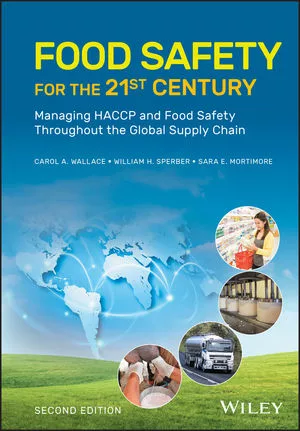
    Food Safety for the 21st Century: Managing HACCP and Food Safety Throughout the Global Supply Chain, 2nd Edition

  • food book.jpg

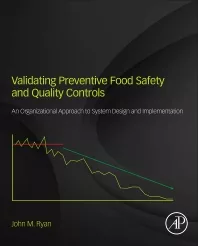
    Validating Preventive Food Safety and Quality Controls 1st Edition

  • small-occ.jpg

    Occupational Health and Safety in the Food and Beverage Industry

See More Products

Events

View AllSubmit An Event
  • July 13, 2016

    FSNS ANNOUNCES FOOD SAFETY CONFERENCE AND LAB GRAND OPENING JULY 13; Event Features Food Safety Topics, Lab Grand Opening and Temple Grandin Book Signing

    San Antonio, TX—June 6, 2016—Food Safety Net Services (FSNS) and Food Safety Net Services Certification and Audit (FSNS C&A) today announced the FSNS Food Safety Conference in Amarillo, Texas on Wednesday, July 13. A tour and reception of the FSNS Amarillo Laboratory will follow after the conference along with a book signing by Dr. Temple Grandin.
View AllSubmit An Event

Related Directories

  • BNP Media - Test Account

    BNP Media publishes directories and buyers guides in conjunction with our varied b-2-b publications covering a wide array of industries. Buyers can count on BNP Media's directories to source suppliers, distributors and more of the products and services they need to successfully operate their businesses. Industry suppliers can list their company information and products annually.
  • FloorSciences | Forensic Failure Analysis + Testing

    FloorSciences provides forensic inspection, testing, and consulting services for cold storage and refrigerated facility floors, concrete slabs, and floor coverings. Services include moisture testing, failure investigation, adhesion testing, QA/QC, and condition assessments for freezer and refrigerated construction, repair, and performance issues in commercial and industrial facilities.
×

Elevate your expertise in refrigerated and frozen foods with unparalleled insights and connections.

Get the latest industry updates tailored your way.

JOIN TODAY!
  • RESOURCES
    • Advertise
    • Contact Us
    • Directories
    • Store
    • Want More
  • SIGN UP TODAY
    • Create Account
    • eMagazine
    • Newsletter
    • Customer Service
    • Manage Preferences
  • SERVICES
    • Marketing Service
    • Reprints
    • Market Research
    • List Rental
    • Survey/Respondent Access
  • STAY CONNECTED
    • LinkedIn
    • Facebook
    • YouTube
    • X (Twitter)
  • PRIVACY
    • PRIVACY POLICY
    • TERMS & CONDITIONS
    • DO NOT SELL MY PERSONAL INFORMATION
    • PRIVACY REQUEST
    • ACCESSIBLITY

Copyright ©2026. All Rights Reserved BNP Media, Inc. and BNP Media II, LLC.

Design, CMS, Hosting & Web Development :: ePublishing