Refrigerated Frozen Foods logo
search
cart
facebook twitter linkedin youtube
  • Sign In
  • Create Account
  • Sign Out
  • My Account
Refrigerated Frozen Foods logo
  • NEWS
  • PRODUCTS
  • COLD STORAGE
    • Cold Storage Trends
    • Farm to Frozen
    • Supply Chain & Logistics
  • PACKAGING
  • TOPICS
    • Food Safety
    • Product Development & Manufacturing
    • Sustainable Solutions for Cold Foods
  • MEDIA HUB
    • Play Our Word Game
    • Podcasts
    • Videos
    • Polls
    • Webinars
  • DIRECTORIES
    • Cold Storage Construction Guide
    • Warehouse Guide
    • Food Master
  • MORE
    • Cold Chain Perspectives
    • Case Studies
    • C-Suite Q&A
    • Top 150 Processors
    • Awards >
      • Best New Retail Products
      • Cold Storage Facility of the Year
      • Processor of the Year
    • Directory of Associations
    • R&FF Store
    • Calendar of Events
    • FA&M Conference & Expo
  • EMAG
    • eMagazine
    • Archive Issues
    • Contact
    • Advertise
  • SIGN UP!
Food SafetyCold Chain Perspectives

Freeze Contaminants in their Tracks with Proper Food Quality Control
By Luca Bertona, EMEA Sales Manager, Thermo Fisher Scientific, Product Inspection
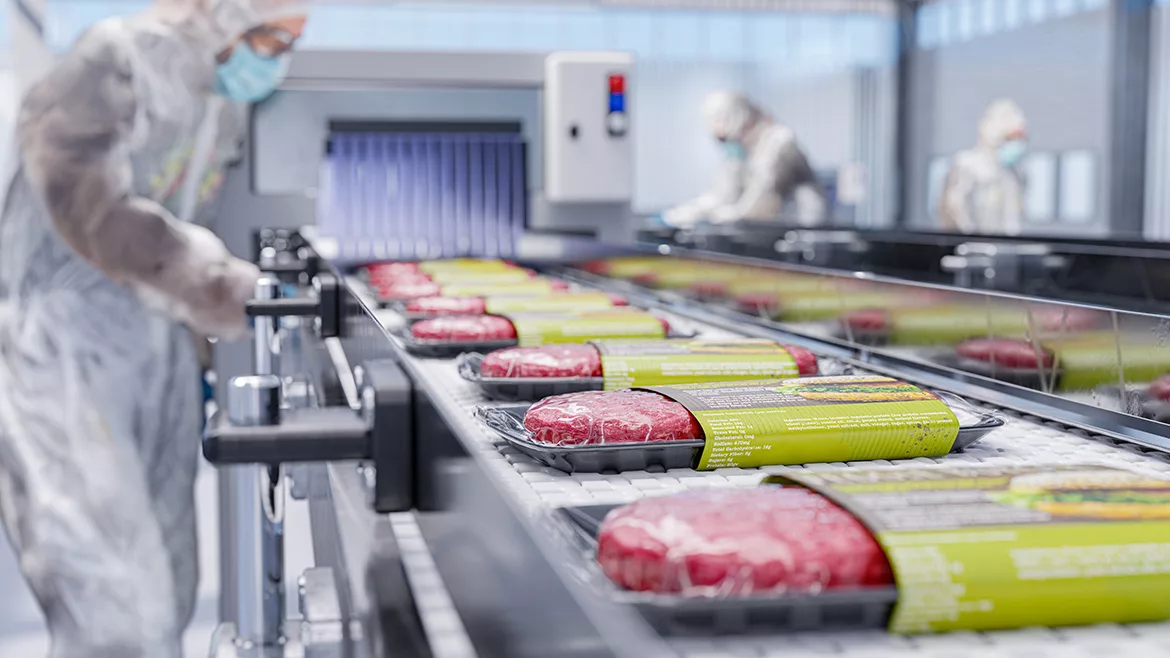
Food safety relies on proper QC.

According to the American Frozen Food Institute, 90% of U.S. consumers are eating more meals at home compared to pre-pandemic times, with frozen foods a popular choice. Getty Images.

July 24, 2024

The significance of quality control (QC) in frozen food manufacturing and processing cannot be overlooked. Contaminants pose considerable health risks for consumers, while even slight variations in product weights can result in economic ramifications for manufacturers. Implementing stringent controls along the entire production line is therefore crucial, as it can help to identify potential hazards that may damage equipment, tarnish a brand's image, and lead to expensive downtime, as well as guarantee that packages contain the correct quantity of product. 

Rising consumer demand puts pressure on frozen food processing facilities to boost output and keep freezers stocked. These sites often already employ a round-the-clock workforce, compelling companies to search for alternative methods, like the increased use of automation. Employing automated systems has revolutionized many sectors – from aerospace to healthcare – and it certainly is not a novel concept in the food and beverage industry, with many companies already relying on robots and automated manufacturing workflows. However, as production increases, so does the chance of contaminants creeping into production lines. More and more frozen food processing facilities are therefore also turning to automation to bolster their QC activities, helping them to meet the ever-rising demands in a competitive global market. 

Manufacturers need to assess their entire operation to ensure that frozen foods stay contaminant free, often requiring the implementation of various detection technologies tailored to different stages of production. There is no universal method for food inspection; the most appropriate approach depends on the needs of each operation. Hazard analysis can help to identify the different types of foreign objects that are most likely to be introduced, which depends on the kind of food and its origin. The choice of technology to use – as well as where it should be positioned in the production line – largely boils down to the type of potential contaminant, the packaging material, and the product composition.


X-ray, Metal Detector, or Both? 

Metal detectors, known for being cost-effective and long operational life, can be incorporated at almost any point along the production line, identifying metal contaminants such as ferrous or non-ferrous metal fragments or wires. In contrast, X-ray systems are effective in detecting both metallic and non-metallic contaminants – including glass, ceramic, and stone – and are often employed at critical production stages, such as the end of the production line after packaging. 

Generally, X-ray systems are more efficient at detecting high-density contaminants, while the efficacy of metal detectors depends on their operating frequencies; higher frequencies prove more effective in identifying stainless steel foreign objects, while lower frequencies are better at detecting ferrous contaminants. Manufacturers and processors must also consider signals caused by the intrinsic conductivity or magnetic properties of frozen foodstuffs themselves. This “product effect” can often be strong enough for a metal detector to identify the actual food as a contaminant – especially in products with a high moisture or salt content – meaning X-ray systems may be more suitable in this instance.

Food packaging has also evolved to meet various consumer and production demands, creating greater demand for novel inspection solutions to ensure the safety and integrity of packaged products. The choice of packaging can be the deciding factor when choosing a detection method, as many food processing facilities have adopted metalized films or foil-based packaging to improve shelf life, boost visual appeal, and reduce overall costs. However, this type of packaging creates too much signal for metal detectors, reducing contaminant detection sensitivity and increasing the number of false rejects. Therefore, X-ray inspection systems are recommended in this case.


Quality and Consistency 

Quality control can be boosted with the use of metal detectors and X-ray systems, helping to safeguard consumer health while offering peace of mind to manufacturers. However, stringent food QC exceeds this, and facilities must also deliver consistent products to the market, especially with regard to individual package weights. Manufacturers lose profits if products are overweight, but face penalties if they are underweight. Incorporating weight verification instruments into the production line is therefore an important part of the QC workflow. Often, inline checkweighers are installed for this purpose, as they have little impact on overall manufacturing speed. Modern instruments can scan from 250 to 700 or more packages per minute – without sacrificing accuracy – saving time and labor costs to ensure regulatory compliance and boost profits.

KEYWORDS: metal detection quality control x-ray detection x-ray inspection

Share This Story

Looking for a reprint of this article?
From high-res PDFs to custom plaques, order your copy today!


Lucabertona

Luca Bertona is an experienced EMEA sales manager with a proven record in driving revenue growth and cultivating strategic partnerships. Passionate about developing and leading high-performing sales teams to achieve and exceed targets, Bertona is skilled in identifying market trends, analyzing competitive landscapes, and implementing effective sales strategies to maximize market penetration. 

Recommended Content

JOIN TODAY
To unlock your recommendations.

Already have an account? Sign In

  • Best New Retail Products of 2026 badge with grocery store refrigerators in the background.

    Top of the Freezer: R&FF’s Best New Retail Products

    From BFY proteins to globally inspired treats, these...
    Product Development & Manufacturing
    By: Kelley Rodriguez
  • Pasco Exterior

    Reser’s Fine Foods: From Farmhouse Kitchen to ‘Good Times’ Everywhere

    A home-based potato salad company started 75 years ago...
    Product Development & Manufacturing
    By: Kelley Rodriguez
  • FromtheColdCorner-Anchor_1170x658.jpg

    EPR, Plastic Packaging for Cold Foods & More

    As consumer and regulatory pressure put plastic in the...
    Sustainable Solutions for Cold Foods
    By: Kelley Rodriguez
Manage My Account
  • eMagazine
  • What’s Hot in Cold Newsletter
  • Manage My Preferences
  • Online Registration
  • Customer Service

More Videos

Popular Stories

From the Cold Corner with Americold's Rob Chambers feature image

How Cold Chain Strategy Is Replacing Capacity

1170x658 of Cold Storage Podcast with Jennifer Jewers Bowlin and Craig Handy

ASRS, AI & Adaptability: What's Shaping the Future of Cold Storage

Containerized Cold Rooms outside.

Containerized Cold Rooms Gain Traction as Flexible Cold Storage Demand Grows

2026 Processor of the Year


Does your facility lead the industry? Nominate your cold storage facility today!

Events

June 17, 2025

Refrigerated & Frozen Foods’ State of the Cold Chain

On Demand Kelley Rodriguez, Editor in Chief of Refrigerated & Frozen Foods, will be joined in this 60-minute webinar by industry experts to help unpack the latest research.

January 1, 2030

Webinar Sponsorship Information

For webinar sponsorship information, visit www.bnpevents.com/webinars or email webinars@bnpmedia.com.

View All Submit An Event

Products

Water Activity in Foods: Fundamentals and Applications, 2nd Edition

Water Activity in Foods: Fundamentals and Applications, 2nd Edition

See More Products
New Retail Products

Explore the newest flavors, textures, and innovations in the frozen food aisle!


SEE WHAT'S NEW!
Play Refrigerated & Frozen Foods’ Cool Word of the Week! There's a new word every Wednesday.

Related Articles

  • AI-driven vision inspection technologies

    Using AI Vision Inspection to Freeze Processing Errors, Foreign Materials in Their Tracks

    See More
  • Marley Engineered Products Andrew Martin

    Stop cold drafts in their tracks

    See More
  • Buhler Microsoft food safety solutions

    Bühler, Microsoft partnership delivers farm-to-fork innovations for reducing food waste, increasing quality control

    See More

Related Products

See More Products
  • food book.jpg

    Validating Preventive Food Safety and Quality Controls 1st Edition

  • statical.jpg

    Statistical Process Control for the Food Industry: A Guide for Practitioners and Managers

  • 1119700825.jpg

    Use of Hydrocolloids to Control Food Appearance, Flavor, Texture, and Nutrition

See More Products

Related Directories

  • QuickFreeze®

    QuickFreeze® specializes in the design and manufacturing of equipment for temperature-controlled environments and is nationally recognized for the patented QuickFreeze® In-Rack Freezing System for freezing and tempering palletized products. QuickFreeze® draw-thru air technology is proven to be the fastest way to freeze/temper products. Our in-rack and modular freezing technologies will bring the most energy-efficient cost savings to your cold storage operation. "QuickFreeze® " The Fastest Way to Freeze a Pallet.
  • FREEZ Construction

    Since the moment we stepped into the industry, FREEZ Construction has established itself as a premier controlled environment contractor. With a foundation built on expertise, commitment, and unparalleled service, we pride ourselves on being more than just contractors – we are thermal specialists who are passionate about what we do. Step into a hassle-free and world-class experience with FREEZ. A Few Degrees Better...
  • I Freeze

×

Elevate your expertise in refrigerated and frozen foods with unparalleled insights and connections.

Get the latest industry updates tailored your way.

JOIN TODAY!
  • RESOURCES
    • Advertise
    • Contact Us
    • Directories
    • Store
    • Want More
  • SIGN UP TODAY
    • Create Account
    • eMagazine
    • Newsletter
    • Customer Service
    • Manage Preferences
  • SERVICES
    • Marketing Service
    • Reprints
    • Market Research
    • List Rental
    • Survey/Respondent Access
  • STAY CONNECTED
    • LinkedIn
    • Facebook
    • YouTube
    • X (Twitter)
  • PRIVACY
    • PRIVACY POLICY
    • TERMS & CONDITIONS
    • DO NOT SELL MY PERSONAL INFORMATION
    • PRIVACY REQUEST
    • ACCESSIBLITY

Copyright ©2026. All Rights Reserved BNP Media, Inc. and BNP Media II, LLC.

Design, CMS, Hosting & Web Development :: ePublishing