From the Cold Corner Podcast
How Cold Chain Strategy Is Replacing Capacity
Americold’s Rob Chambers on optimizing a global food network, deeper customer partnerships and more.
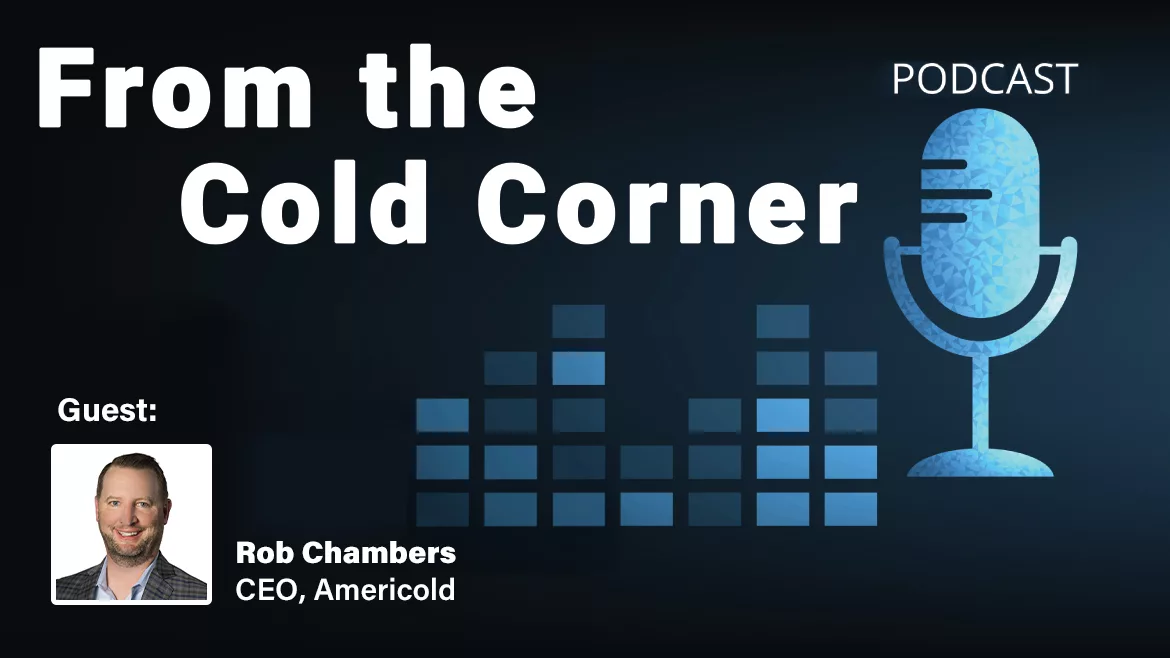
As CEO of Americold, one of the world’s leading temperature-controlled logistics providers, Rob Chambers has seen his share of cold chain change. He leads the publicly traded real estate investment trust, overseeing global operations, commercial strategy and supply chain innovation.
Chambers sat down with Refrigerated & Frozen Foods’ From the Cold Corner podcast earlier this month and said the cold chain is entering a new phase as food manufacturers and retailers demand more from their temperature-controlled logistics partners.
"The cold chain industry at the moment is definitely transforming from what I would consider traditionally a capacity-driven infrastructure model to something more now of really a strategically designed network," Chambers said, describing the company’s role as helping "connect farms to tables and feed families across the globe."
"Our customers are putting their brand and their trust in our hands every day, every pallet, every case, every shipment," he said. "The days of just being a commoditized warehouse provider, I think, are over. If you can’t make the transition from a commoditized warehouse provider to a strategic partner, I think you’re going to be left behind in this business."
Founded more than 120 years ago, the company became Americold Realty Trust through its 2018 initial public offering. The IPO allowed access to capital, accelerating expansion in the U.S. and internationally.
Today, Americold operates across the U.S., Canada, Australia, New Zealand, Europe, South America and the Middle East.
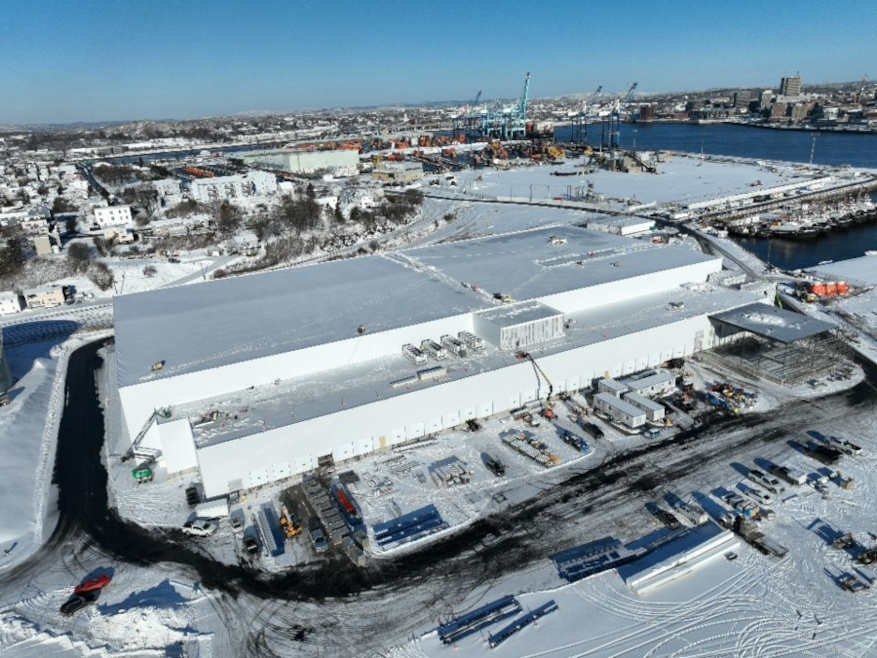
Americold next month will open its Port Saint John, New Brunswick location, its first import-export hub to be built in Canada. The new cold storage facility, the sixth to be operated by Americold in Canada, will leverage the maritime logistics capabilities of DP World and the rail logistics solutions of Canadian Pacific Kansas City. Image courtesy of Americold
Partnerships Shape Strategy
This summer the company is preparing to open its Port Saint John, New Brunswick location, its first import-export hub to be built in Canada.
The new cold storage facility, the sixth to be operated by Americold in Canada, will leverage the maritime logistics capabilities of DP World and the rail logistics solutions ofCanadian Pacific Kansas City.
The $80 million development will house nearly 22,000 pallet positions – the equivalent of over 800 full truckloads of temperature-sensitive goods.
"This is truly bringing together three world-class organizations to create a customer solution that we think is first of its kind and best in class," Chambers said.
Another Americold partnership with CPKC in Kansas City also serves a model for cross-border cold chain movement.
Opened in 2025, the 335,000-square-foot facility includes on-site USDA inspections to eliminate border delays.
The $110-million project was Americold’s first on the CPKC rail network and a key hub for the Mexico Midwest Express, North America’s only single-line rail service for refrigerated goods between the U.S. and Mexico.
"When you look at most cold storage facilities, they are designed to hold product largely. Kansas City was designed to flow it," Chambers said.
Transportation, he added, is often a larger cost than warehousing, making network design a critical savings opportunity.
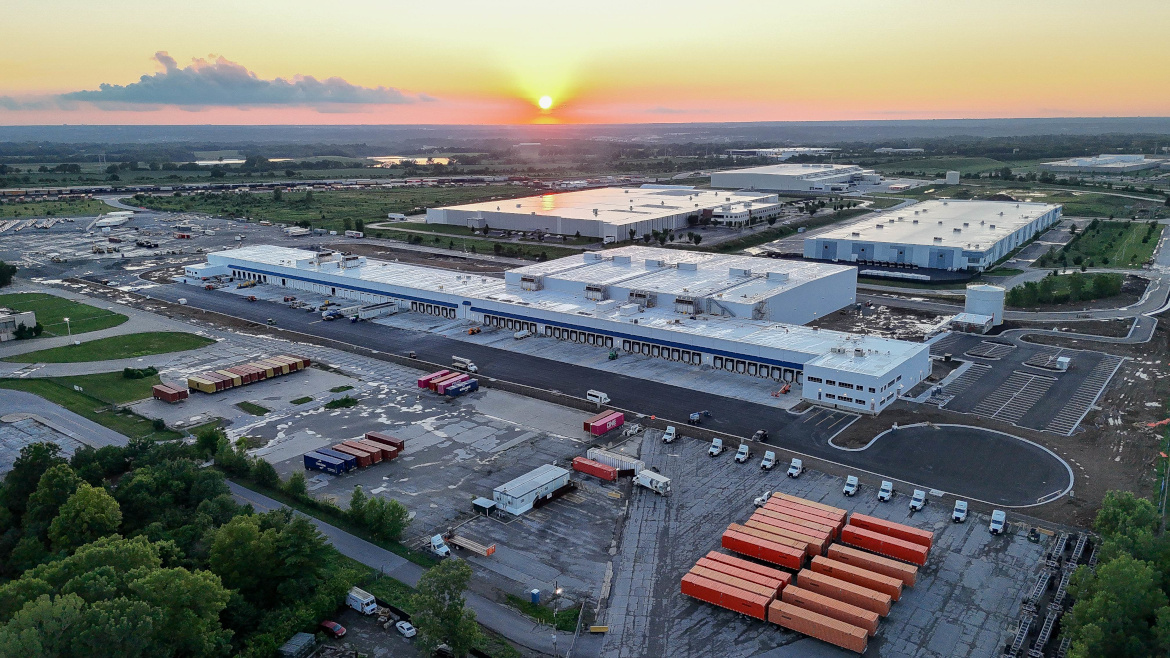
A 335,000-square-foot facility opened last year in Kansas City was Americold’s first on the CPKC rail network and a key hub for the Mexico Midwest Express, North America’s only single-line rail service for refrigerated goods between the U.S. and Mexico. Image courtesy of Americold
Blending a legacy site with the latest in automation and logistics technology, Americold’s Russellville, Arkansas facility is R&FF’s 2025 Cold Storage Facility of the Year, is a "plant-advantaged" site.
Built across the street from the manufacturing site, the 300,000-square-foot facility services the Conagra’s frozen portfolio, which includes Healthy Choice, Birds Eye, Banquet and others.
An expansion in 2023 added 136,000 square feet of space and took the building to new heights – 140-feet – and added 42,000 pallet positions served by automated storage and retrieval (ASRS).
A changing market is giving many customers room to rethink their cold chain networks.
Chambers said incremental cold storage capacity from 2021 to 2025 was "probably anywhere from three to four times" what the industry would see in a normal year. That came as demand softened, due in part to inflationary pressures.
With about 6 million square feet of new cold storage in the development pipeline, supply pressures are easing.
Americold’s economic occupancy remains in the mid-70% range, according to its most recent financial reports.
For processors and manufacturers, the shift means less rush to place inventory wherever space is available.
"Let’s now take a step back and sit and say, with a blank sheet of paper, how would we strategically design our network," Chambers said.
Manufacturers are seeking partners using data, analytics and insights to design networks from scratch, then support those networks across manufacturing-adjacent sites, forward distribution centers, ports and retail distribution centers.
"It’s not just about storing the product anymore," Chambers said, adding Americold is seeing manufacturers outsource services that were previously handled inside production plants, including kitting, boxing, export documentation preparation and blast freezing.
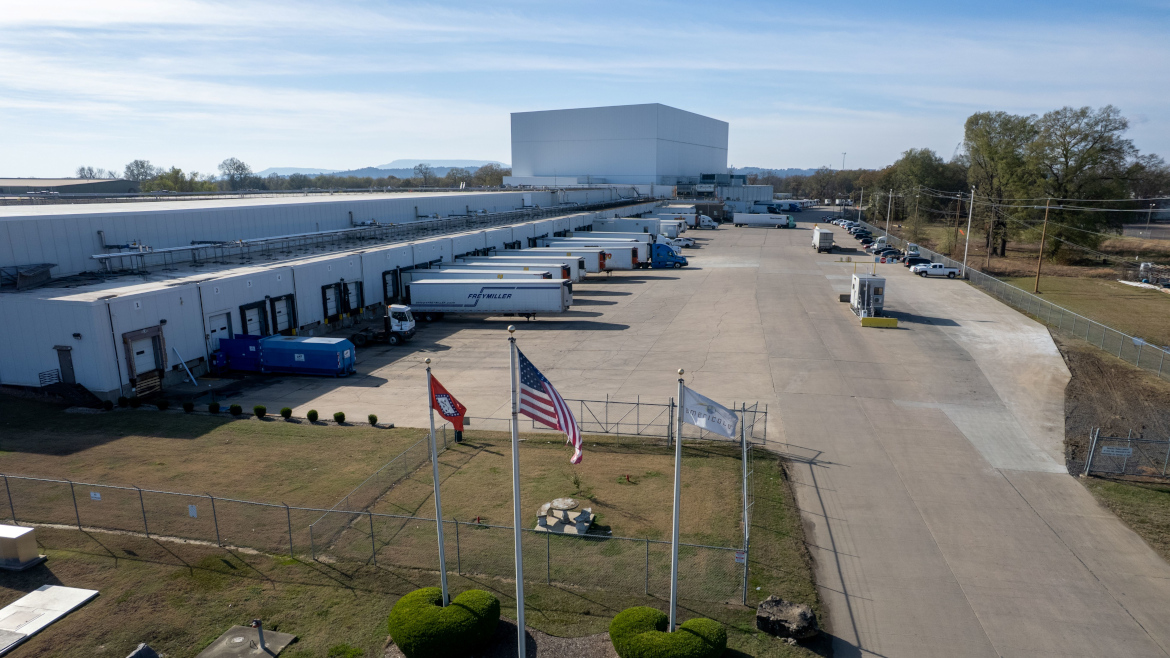
Blending a legacy site with the latest in automation and logistics technology, Americold’s Russellville, Arkansas facility was named R&FF’s 2025 Cold Storage Facility of the Year. The "plant-advantaged" site services Conagra’s frozen portfolio, including Healthy Choice, Birds Eye, Banquet and others. Image courtesy of Americold
Tech at the Right Time
Older warehouses often consisted of "four walls, a roof, some refrigeration, some racking," with customers expected to adapt to the building, Chambers said, whereas now, facilities must be designed to meet a vast SKU profile, value-added service needs and warehouse turns.
"There really is no one-size-fits-all solution for customers in today’s environment," Chambers said.
For example, at the Russellville site, Americold designed automated trailer loading and unloading around Conagra’s pallet height and weight. Chambers said those decisions were made with the customer and have helped produce industry-leading service levels.
Americold is investing in automation, data and AI-driven insights to improve safety, consistency and reliability across its network.
Automation makes sense when land is expensive, when a facility can go higher rather than wider, or when repeatable work can be eliminated. In some cases, Chambers said Americold has advised customers that automation is not the right solution.
How Cold Chain Strategy Is Replacing Capacity
Rob Chambers, Americold CEO, on optimizing a global food network, deeper customer partnerships and more.
"We have a saying that you don’t automate tying your shoes because at some point, it’s just easier to manually tie your shoes than it is to automate it," Chambers said.
Chambers said Americold is implementing Project Orion, a new ERP initiative involving Salesforce, Oracle and Blue Yonder and plans to use embedded AI capabilities for forecasting, planning, labor planning and online appointment scheduling.
Sustainability is "foundational" to everything the modern cold chain touches, Chambers said.
"It’s organic to what we do. Just the core business that we’re doing is all about eliminating food waste and it’s built into the DNA of the company," he said. "The same investments that you’re making that cut emissions also improve safety, improves efficiency and they improve costs and reliability in your long-term performance so oftentimes they share the same outcomes and the same goals.
Americold invested $23 million in energy efficiency improvements, including solar programs, rapid open and close doors and rainwater harvesting. Its latest sustainability report showed a 21% reduction in Scope 1 and Scope 2 emissions.
Inside Americold, Chambers said operational excellence remains the top priority.
For manufacturers reassessing their networks, the biggest inefficiencies often come from multiple handoffs across multiple organizations, Chambers said. Americold’s operating system, a standardized set of procedures and KPIs across its global network, designed to reduce those inefficiencies.
"Find a partner, take a step back and say, help me design this thing from scratch," he said.
For more, listen to the complete podcast in the player above, or download it here or from your favorite podcast platform.
Looking for a reprint of this article?
From high-res PDFs to custom plaques, order your copy today!