From the Cold Corner Podcast
Designing Cold Packaging for the Full Lifecycle
Across the consumer-packaged goods (CPG) industry, there is a shift away from packaging materials that are difficult to recycle. For example, PVC, polystyrene, and carbon black pigments are increasingly being phased out.
The industry is entering a new phase where packaging design must account for the entire product lifecycle, from material selection and manufacturing to end-of-life recovery and reuse.
"Overall, we are seeing that packaging manufacturing is shifting towards designing for the entire product lifecycle," said Paige Greenberg, sustainable packaging engineer at Plastic Ingenuity. "We are designing for material, for manufacturing, and also for the end-of-life phase of a product or a package."
One area of innovation gaining traction is the use of clear PET packaging.
Plastic Ingenuity recently developed a clear mushroom till made with 25% recycled PET (rPET), with the ability to incorporate even higher levels of post-consumer recycled (PCR) content.
"We created this because current mushroom tills are typically colored," she said. "You'll see them in the store; they're usually blue or black, which makes them difficult to recycle. So, our clear solution provides easy sorting for recyclers."
The shift reflects broader changes occurring across the food packaging landscape.
Retailers are increasingly establishing sustainability requirements for suppliers, while state-level EPR legislation is creating additional pressure to improve package recovery rates and recycled content.
"A lot of it has been recyclability," Greenberg said. "These big box retailers really want recyclable packaging on their shelves, and we're starting to see more goals for (minimum) recycled content as well within packages."
As manufacturers pursue sustainability targets, many are also reevaluating how packaging performs within existing recycling systems.
That distinction is critical. Greenberg noted that real-world recyclability depends on factors such as collection access, sorting capabilities and end-market demand, not simply the material itself.
"We're really seeing companies moving from asking, 'Is my package recyclable?' to, 'Will it actually be recovered and used as recycled content?'" Greenberg said. "A lot of items and materials are technically recyclable but the items have to work within our established recycling system in order to be considered recyclable."
Looking ahead, Greenberg expects recycled content mandates and EPR policies to continue influencing packaging decisions. New Jersey's upcoming PCR requirements and similar regulations across the country are likely to accelerate adoption.
"I think we're already seeing it now, and we're only going to see it get bigger in the future," Greenberg said.
At the same time, manufacturers will continue pursuing lightweighting and material optimization strategies that reduce packaging use without sacrificing food protection.

Designing Cold Packaging for the Full Lifecycle
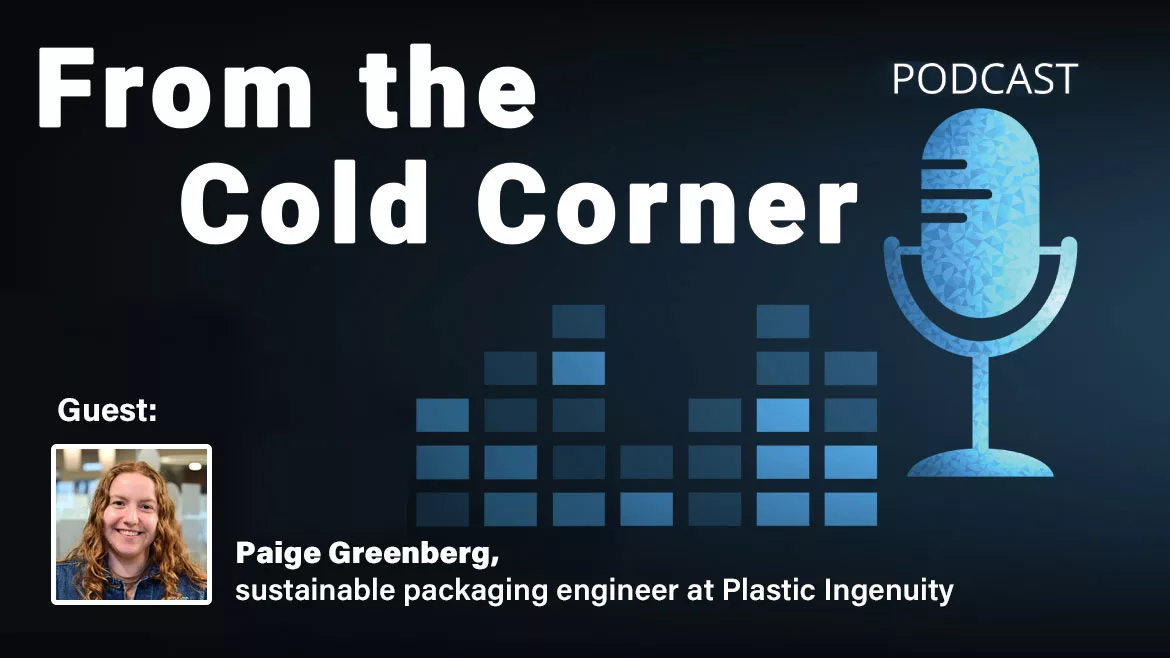
The industry is entering a new phase where packaging design must account for the entire product lifecycle, from material selection and manufacturing to end-of-life recovery and reuse. Paige Greenberg, sustainable packaging engineer at Plastic Ingenuity, joins From the Cold Corner to discuss more.
For more, listen to the podcast or download it from your preferred platform.
Looking for a reprint of this article?
From high-res PDFs to custom plaques, order your copy today!