How to tackle power outages in the food, beverage industry
Geographically, the Top 5 states for outages were California, Texas, New York, Michigan, Ohio and Pennsylvania.

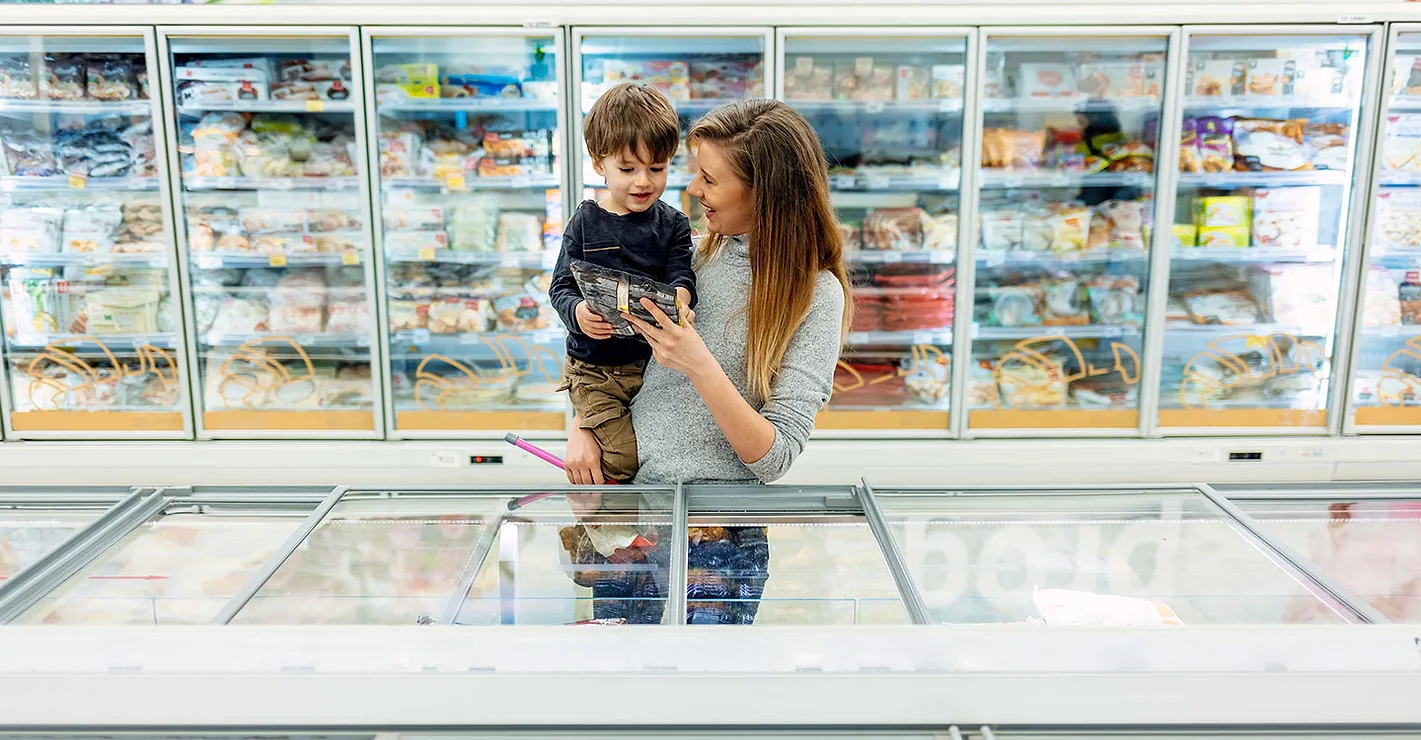
No matter how reliable and resilient an electrical grid is, the power will go out from time to time. But, regardless if it’s short term or long term, power outages can result in significant losses for some industries, including hundreds of thousands of dollars in lost perishable inventory for grocery stores and other cold storage facilities.
Power outages becoming more frequent
In its most recent report, the Blackout Tracker from Eaton, Raleigh, N.C., reveals 3,526 blackouts in 2017 caused problems for roughly 36 million utility customers across all 50 states. This is more than a 19 million increase from 2016. The report also references an ITIC study that suggests many organizations can lose up to $100,000 per hour in the face of outages; this is just as if not more catastrophic and true in cold storage-related industries.
Geographically, the Top 5 states for outages were California, Texas, New York, Michigan, Ohio and Pennsylvania. While, most outages were caused by bad weather, such as hurricanes, winter storms or rainfall, 791 were caused by faulty equipment or human error, 443 were the result of vehicle accidents and 173 the action of animals. In all of these cases, it’s safe to assume that at least some supermarkets and cold storage facilities were forced to hustle to protect food merchandise from spoilage or throw it away and accept the losses.
The costs of spoilage
Foodsafety.gov recommends supermarket operators discard any perishable food (such as meat, poultry, fish, eggs and leftovers) that has been above 40°F for over two hours. Further, most higher-end supermarkets will often dispose of “highly visible” inventory like red meat and seafood after the smallest power disruption to ensure public trust in quality and freshness.
The average grocery store stocks approximately $367,943 in perishable, refrigerated inventory, according to a report produced by the Illinois Institute for Rural Affairs, Western Illinois University, Macomb, Ill. Larger, full-service or specialty supermarkets typically stock over $900,000 in perishables.
Retailers often do not realize that their business interruption insurance policies do not cover damages from the result of a power outage. For example, if lightning were to strike utility equipment, or heavy snow were to damage a power line not located on insured grocery’s premises, there would be no coverage for spoilage of meat and frozen foods caused by the resulting power outage, even though the store had no control over this event. Thus, a special food spoilage coverage rider is required. Unfortunately, these policies typically have a 12- to 24-hour waiting period and are structured only to cover a total loss. Considering the majority of food spoilage occurs in the first three hours after a power outage, grocers can easily be left with high out-of-pocket costs they did not expect or budget for.
Patchwork of mitigation
In the past, grocery stores and other cold storage facilities managed a patchwork of mitigation measures to maintain inventory during power outages, such as backup generators, portable refrigerated trailers or even packing freezer cases full of dry ice. However, the industry has struggled to develop an economically feasible and standard operating procedure to address the most common outages, which last under three hours.
With advancements in energy storage technologies and the development of cloud computing and machine learning, supermarkets and cold storage facilities now have more options to ensure that if and when the power does go out, their refrigeration systems can continue operation without interruption. In many cases, these solutions can be implemented at little to no additional cost, with no requirement to modify existing facilities nor the purchase (or renting) expensive and difficult to permit, back-up generators.
The flexibility of thermal storage
An innovative approach gaining traction with supermarkets features a method of storing “cooling” instead of electricity to power refrigeration loads. The stored “cooling,” or thermal energy, can be used both during outages and on a daily basis to offset peak electricity prices during the day. These systems work by leveraging the store’s excess refrigeration system capacity at night by freeze tanks of salt water when energy costs are lower. Then, when electricity prices soar during the afternoon, they “discharge” like any other battery to provide cooling services for up to 10 hours. As a result, refrigeration systems can remain cool during power outages, and stores can reduce their overall electricity demand on a daily basis, resulting in significant utility bill savings.
Supermarkets, cold storage facilities and food processors can intelligently store and deploy refrigeration through systems that provide daily load-shifting and peak-shaving energy savings every day, in addition to backup power. These activities together can significantly improve a store’s bottom line and resilience.
Refrigeration represents up to 55% of an average supermarket electricity consumption, and research shows that by shifting electricity demand to off-peak hours, building owners can take advantage of lower night-time rates to reduce a store’s on-peak electricity demand by up to 40%. Similarly, savings from energy bill management and participation in utility demand response programs can offset up to 100% or more of the cost of a backup cooling policy.
Despite global weather predictions of larger and more intense storms in the coming years, coupled with our nation’s aging utility infrastructure, grocery stores and cold storage facilities are still contending with unexpected power outages on their own. By using electricity more efficiently and storing cooling off-peak, as well as providing economical backup power to refrigeration systems, thermal energy storage offers an innovative new solution for grocery stores.
No longer should companies resign themselves to incurring losses of perishable merchandise as a “cost of doing business.” Instead, easy-to-install thermal energy storage technology can be employed to optimize energy savings day after day, while also making grocery stores more resilient during those critical times when they would normally be left in the dark.
Looking for a reprint of this article?
From high-res PDFs to custom plaques, order your copy today!