Are wild foods the next trend?
This study shows that “wild” resonates with all consumers when considering health and taste benefits.
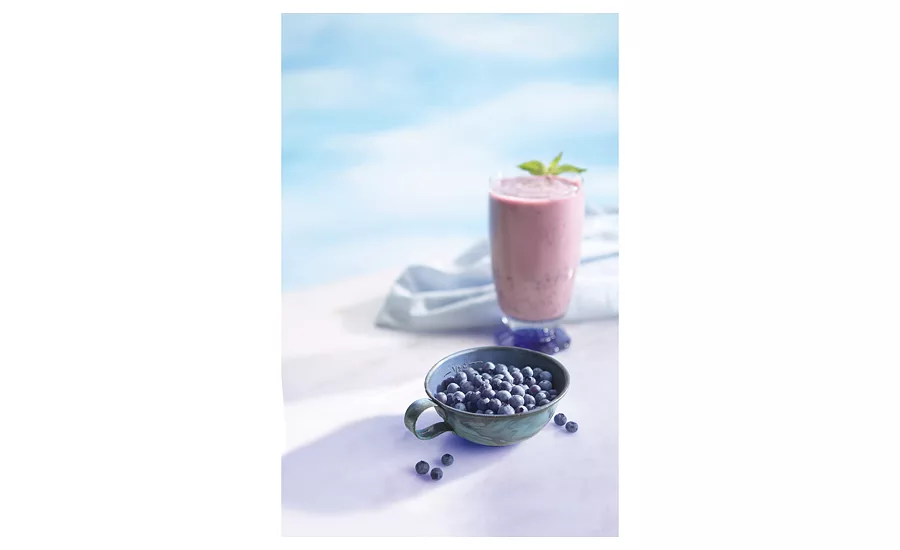
As large restaurant chains and packaged food companies scramble to meet the demands of today’s health conscious consumers, another food trend is emerging.
“Wild foods are about to crash onto the American stage, and a few indigenous ingredients, such as wild salmon, seaweed and wild blueberries are clear standouts,” said Chris Clegg, principal of Portland Marketing Analytics, a Portland, Maine-based marketing research firm, and specialist in measuring the impact of consumer insights and market trends.
“People are increasingly interested in the source of their food; they care about its origin and heritage, including who grew and harvested it,” adds Todd Merrill, president of the Wild Blueberry Association of North America, Old Town, Maine. “Wild blueberries are the perfect ‘Paleo’ food. They were never planted. Instead, they have existed for over 10,000 years in Maine and Eastern Canada. In fact, they are one of a small handful of wild foods that are indigenous and ubiquitous, since they are grown in only one part of the world and are available in the freezer aisle of supermarkets across America.”
Recognizing a lack of awareness about indigenous foods and a need to educate consumers, food manufacturers and foodservice providers, the Wild Blueberry Association of North America engaged Portland Marketing Analytics to conduct a 3-phased nationwide study of over 1,000 U.S. consumers. “The Power of Wild”is said to be a first-in-the-nation study that explores consumer attitudes toward wild foods.
Phase one of the research established the definition of wild foods as “unaltered from its original source, closer to nature and in its purest form.” The research concluded that:
· 67% of all consumers consider wild foods closer to nature
· 63% of all consumers prefer ingredients that are closer to nature
“Wild” also resonated with all consumers when considering health and taste benefits. This was especially strong among the lifestyles of health and sustainability (LOHAS) consumer, which represents 41 million (or 1 in 4) adult Americans and a $290 billion U.S. market.
Of all LOHAS consumers surveyed:
· 72% believe wild foods are healthier
· 72% believe wild foods taste better
· 74% said they would buy more wild food
· 65% said they would pay more for wild food
Phase two and three of the research took a look at consumer preferences for foods containing wild vs. cultivated ingredients, specifically wild blueberries vs. cultivated blueberries.
Participants were shown images of five food categories—smoothies, muffins, jams/preserves, yogurt and ice cream/frozen yogurt—that would commonly use blueberries as an ingredient and asked a series of questions. In each instance, one of the products in the category was labeled wild blueberries and the other with regular, cultivated blueberries.
Consumers had a more positive reaction to the products labeled with wild blueberries:
· 61% were more likely to buy
· 54% would buy more
· 45% would pay more
LOHAS consumers reported stronger preferences for wild with 70% saying they would buy more and 62% willing to pay more.
In some rapidly growing health categories like smoothies, the consumer preferences for wild blueberries vs. regular blueberries were even more pronounced:
· 73% said they would taste better
· 67% said they believed they would be healthier
· 63% said they would better support sustainability
· 64% had an emotional preference
Again, results for the LOHAS consumer were much higher:
· 84% said they would taste better
· 81% said they believed they would be healthier
· 77% said they would better support sustainability
· 79 % had an emotional preference
“Brands targeting LOHAS consumers are in an even more unique position to leverage ‘the power of wild’ by adopting or more heavily promoting the use of wild blueberries on their package and in their menus,” says Merrill.
Panera leads the wild foods trend
Panera Bread, Kirkwood, Mo., is just one example of a company already using wild ingredients, and is quickly distinguishing itself as a forward-thinking chain with a ‘Food As It Should Be’ mantra.
According to head baker Tom Gumpel, who developed the recipe for Panera’s Wild Blueberry Scone,“We rotate flavors out seasonally, but that one scone—I couldn’t get rid of it—there would be a backlash from our customers.”
In fact, the Wild Blueberry Scone has been a star at Panera for years; the restaurant chain sells tens of thousands of them each week at its nearly 2,000 bakery-cafes across the United States and Canada.
“When our customers see wild on the menu, it means something to them,” says Gumpel. “It closes the gap between nature and them. It’s nature providing something for them in a very personal way.”
Experts tell the story of wild
To help raise awareness for this growing wild foods trend, the Wild Blueberry Association of North America has kicked off a multi-year educational campaign designed to inspire a national discussion about the power of wild foods.
Among them, Mary Ann Lila, director of the Plants for Human Health Institute at North Carolina State University, Kannapolis, N.C.
“A wild plant can’t just get up and walk away when confronted with a stress,” she notes. “It has evolved over thousands of years to combat stress by producing powerful phytochemicals to protect itself. These are the same natural plant compounds that protect us from inflammation and chronic disease when we eat wild foods.”
Lila’s research reinforces that wild foods, such as wild blueberries, produce higher concentrations of phytoactive chemicals than are typically found in ordinary cultivated foods, such as cultivated blueberries.
Looking for a reprint of this article?
From high-res PDFs to custom plaques, order your copy today!