Refrigerated Frozen Foods logo
search
cart
facebook twitter linkedin youtube
  • Sign In
  • Create Account
  • Sign Out
  • My Account
Refrigerated Frozen Foods logo
  • NEWS
  • PRODUCTS
  • COLD STORAGE
    • Cold Storage Trends
    • Farm to Frozen
    • Supply Chain & Logistics
  • PACKAGING
  • TOPICS
    • Food Safety
    • Product Development & Manufacturing
    • Sustainable Solutions for Cold Foods
  • MEDIA HUB
    • Play Our Word Game
    • Podcasts
    • Videos
    • Polls
    • Webinars
  • DIRECTORIES
    • Cold Storage Construction Guide
    • Warehouse Guide
    • Food Master
  • MORE
    • Cold Chain Perspectives
    • Case Studies
    • C-Suite Q&A
    • Top 150 Processors
    • Awards >
      • Best New Retail Products
      • Cold Storage Facility of the Year
      • Processor of the Year
    • Directory of Associations
    • R&FF Store
    • Calendar of Events
    • FA&M Conference & Expo
  • EMAG
    • eMagazine
    • Archive Issues
    • Contact
    • Advertise
  • SIGN UP!
Cold Foods Industry NewsFood SafetySupply Chain Logistics for Refrigerated & Frozen Food

Three Tips for Conducting a Mock Recall in the New Era of Smarter Food Safety
By Ryan Richard
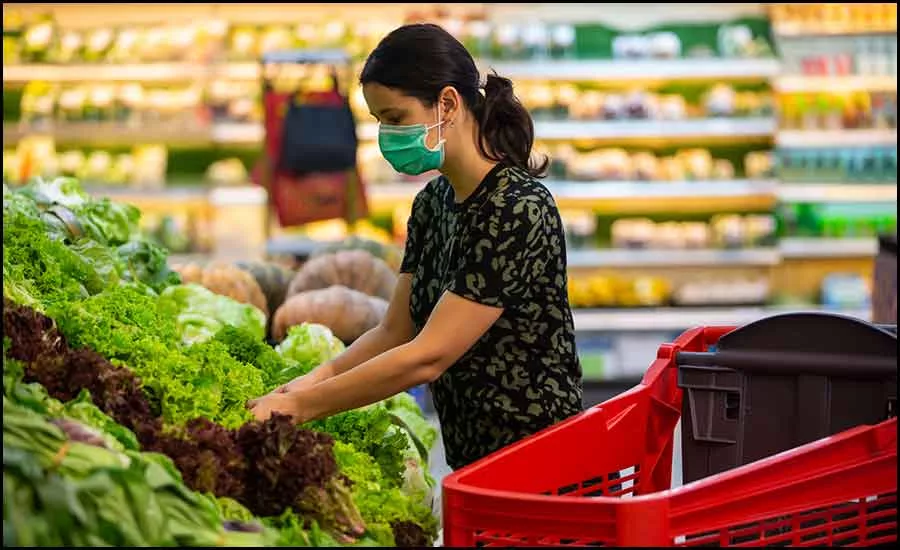
woman in the produce section at the grocery store

Many food safety procedures will soon become more automated and transparent to protect consumers from foodborne illness outbreaks. Image courtesy of GS1 US. 

April 6, 2021

Ever since the U.S. Food and Drug Administration (FDA) introduced the New Era of Smarter Food Safety blueprint last summer, cold chain companies have become focused of how to digitize and modernize food traceability. Many food safety procedures will soon become more automated and transparent in order to quickly and efficiently protect consumers from foodborne illness outbreaks.

Manual and paper-based processes simply don’t support the agility needed in today’s supply chain, not just in the context of the New Era, but also as pandemic-weary consumers continue to demand store-bought foods while social distancing. Both phenomena signify a critical turning point in food safety. Digital transformation plans are likely now in high gear in order to meet new requirements. Companies will be required to share more data than ever before with external partners in electronic formats.

Mock recalls, which have always been a valuable tool for companies committed to food safety, must continue to be conducted and augmented as needed to accommodate these new requirements. Here are some tips to ensure your company has what it takes to stay vigilant in the New Era.


1. Establish and Empower Your Mock Recall Team

Let’s face it--food recalls must be conducted with precision to prevent harm. There are number of collaborators who all need to be prepared to drop everything and focus on them with urgency. Mock recalls work best when teams are aligned on a specific procedure. Quality assurance professionals, data managers, communications teams, customer service representatives, and even legal counsel all need to be comfortable in their roles. Mock recalls help these collaborators prepare for the daunting task of identifying and removing product from inventory and the supply chain.

Empower your mock recall team by clearly communicating specific responsibilities during a recall. When selecting the product to be traced, envision all of the “where used” possibilities—for example, if it was used as an ingredient for another product—to ensure all the right players are involved for appropriate reconciliation of raw materials and packaging.

In a mock recall, a company may name a QA or supply chain manager as a designated “initiator,” and an “approver,” whose responsibility it is to verify the information provided by the initiator. The initiator communicates information about the recalled product, such as instructions, reimbursement, supplier contacts, and other relevant information. GS1 US offers a standardized form created by food industry stakeholders that can be used for this called Rapid Recall Express. The approver ensures that what the initiator reported is appropriate and correct.

In a real recall, these professionals would select trading partners that should be alerted. Depending on the type of product being distributed, many processors may have to alert several more parties in the event of a recall, including outsourced transportation partners who play a role in the interception of products at various stopping points. Overall, the team should be crystal clear on when to notify external partners and when to notify the general public.


2. Go Digital

One of the core elements of the New Era of Smarter Food Safety blueprint is to focus on Tech-Enabled Traceability, and the draft Food Safety and Modernization Act (FSMA) section 204 traceability rule emphasizes electronic record keeping. By maintaining electronic records, instead of paper-based systems, the speed and flow of data between trading partners can be vastly improved and the impact of a recall can be effectively minimized. Additionally, the New Era places greater emphasis on preventing recalls before they start, encouraging the use of predictive analytics and emerging technology, such as artificial intelligence and machine learning, to understand the specific patterns that lead to contamination.

What this focus on technology tells us is that it’s imperative—it’s no longer nice to have—that all relevant traceability data is collected at each stop in the supply chain. This data will fuel the technology solutions that make it easier to see where a product has been and where it is going. With today’s innovative technology solutions, a mock recall can be conducted in as little as 30 minutes if the proper attention is paid to data collection, data structure, and generally setting systems up for success.


3. Standardize Your Data

Most traceability systems in use today are built upon a foundation of global GS1 Standards to help identify products and product ingredients with precision, as well as provide a uniform way for capturing and sharing information about the products with external partners.

Using GS1 identification numbers, such as the GS1 Global Trade Item Number (GTIN), companies can track trade items and share supplementary information, i.e., expiration date, serial number, batch/lot number, to facilitate the communication of product-specific information wherever a barcode is scanned. These standards will also play a key role in how companies meet anticipated FDA traceability requirements that mandate the recording of Key Data Elements (KDEs) which includes location identifiers as well as the unique identification of products and raw materials, and Critical Tracking Events (CTEs) which includes gathering data for certain foods about any kind of transformation of a product or how it has changed possession along the supply chain.

Imagine a well-known ready-to-eat salad brand discovers its products have been contaminated with Listeria during a routine test. The company would be able to determine the exact ingredient affected using unique product identification and a traceability solution based on GS1 Standards. Specifically, the recall team could trace the products using Produce Traceability Initiative (PTI) labels, which are case labels with GS1-128 barcodes encoded with the item’s GTIN and lot number where it was harvested. Because the company has supply chain visibility based on standards and they conduct mock recalls regularly to stay prepared for these situations, they would be able to communicate publicly the exact pack dates, the states and retailers that the product was distributed to and the specific UPCs affected.

Ultimately, this year is placing a huge spotlight on traceability, with New Era plans being put into action, coupled with a continuing focus on food safety and transparency from consumers. Mock recalls confirm your company’s ability to trace products throughout the supply chain with speed and accuracy, and they can be a critical tool for evolving your food safety plan to meet new requirements.

KEYWORDS: Food and Drug Administration food safety analysis Food Safety Modernization Act mock recalls product inspection product quality product recall

Share This Story

Looking for a reprint of this article?
From high-res PDFs to custom plaques, order your copy today!

Rff foodsafe ryan 200

Ryan Richard is Vice President of Community Engagement for GS1 US.

Recommended Content

JOIN TODAY
To unlock your recommendations.

Already have an account? Sign In

  • Best New Retail Products of 2026 badge with grocery store refrigerators in the background.

    Top of the Freezer: R&FF’s Best New Retail Products

    From BFY proteins to globally inspired treats, these...
    New Retail Products
    By: Kelley Rodriguez
  • Pasco Exterior

    Reser’s Fine Foods: From Farmhouse Kitchen to ‘Good Times’ Everywhere

    A home-based potato salad company started 75 years ago...
    Cold Foods Industry News
    By: Kelley Rodriguez
  • FromtheColdCorner-Anchor_1170x658.jpg

    EPR, Plastic Packaging for Cold Foods & More

    As consumer and regulatory pressure put plastic in the...
    Cold Foods Packaging
    By: Kelley Rodriguez
Manage My Account
  • eMagazine
  • What’s Hot in Cold Newsletter
  • Manage My Preferences
  • Online Registration
  • Customer Service

More Videos

Popular Stories

From the Cold Corner with Americold's Rob Chambers feature image

How Cold Chain Strategy Is Replacing Capacity

Best New Retail Products of 2026 badge with grocery store refrigerators in the background.

Top of the Freezer: R&FF’s Best New Retail Products

1170x658 of Cold Storage Podcast with Jennifer Jewers Bowlin and Craig Handy

ASRS, AI & Adaptability: What's Shaping the Future of Cold Storage

2026 Processor of the Year


Does your facility lead the industry? Nominate your cold storage facility today!

Events

June 17, 2025

Refrigerated & Frozen Foods’ State of the Cold Chain

On Demand Kelley Rodriguez, Editor in Chief of Refrigerated & Frozen Foods, will be joined in this 60-minute webinar by industry experts to help unpack the latest research.

January 1, 2030

Webinar Sponsorship Information

For webinar sponsorship information, visit www.bnpevents.com/webinars or email webinars@bnpmedia.com.

View All Submit An Event

Products

Water Activity in Foods: Fundamentals and Applications, 2nd Edition

Water Activity in Foods: Fundamentals and Applications, 2nd Edition

See More Products
New Retail Products

Explore the newest flavors, textures, and innovations in the frozen food aisle!


SEE WHAT'S NEW!
Play Refrigerated & Frozen Foods’ Cool Word of the Week! There's a new word every Wednesday.

Related Articles

  • Food safety testing

    How to Conduct a Mock Recall

    See More
  • 26703-MINI-Q4_2024_Always_On_Media_Relations_c02_A.jpg

    Mini Melts Unveils Fresh Look for a New Era of Growth

    See More
  • Study: Meal kit delivery services usher in new era of culinary convenience

    See More

Related Products

See More Products
  • food safety.jpg

    Food Safety for the 21st Century: Managing HACCP and Food Safety Throughout the Global Supply Chain, 2nd Edition

  • food book.jpg

    Validating Preventive Food Safety and Quality Controls 1st Edition

  • small-occ.jpg

    Occupational Health and Safety in the Food and Beverage Industry

See More Products

Events

View AllSubmit An Event
  • July 13, 2016

    FSNS ANNOUNCES FOOD SAFETY CONFERENCE AND LAB GRAND OPENING JULY 13; Event Features Food Safety Topics, Lab Grand Opening and Temple Grandin Book Signing

    San Antonio, TX—June 6, 2016—Food Safety Net Services (FSNS) and Food Safety Net Services Certification and Audit (FSNS C&A) today announced the FSNS Food Safety Conference in Amarillo, Texas on Wednesday, July 13. A tour and reception of the FSNS Amarillo Laboratory will follow after the conference along with a book signing by Dr. Temple Grandin.
View AllSubmit An Event

Related Directories

  • PMMI - The Assn. for Packaging and Processing Technologies

    About PMMI PMMI is a global resource for the packaging and processing industry, uniting the industry across the manufacturing supply chain. Our members promote business growth in a variety of industries by developing innovative manufacturing solutions to meet evolving consumer demands, today and in the future. PMMI membership represents more than 1,000 manufacturers and suppliers of equipment, components and materials as well as providers of related equipment and services to the packaging and processing industry. PMMI Business Drivers provide the industry a variety of resources such as market research, best-practice tools and reports, technical training, networking opportunities and more. PMMI connects consumer goods companies with our members’ manufacturing solutions through the world-class PACK EXPO portfolio of trade shows, including: PACK EXPO International, PACK EXPO Las Vegas, PACK EXPO East, PACK EXPO Southeast, EXPO PACK México, and EXPO PACK Guadalajara. PMMI Media Group connects manufacturers to the latest solutions, trends and innovations in packaging and processing year-round through a variety of print and digital media including: Packaging World, Healthcare Packaging, Contract Packaging, ProFood World, Mundo EXPO PACK and OEM.
  • Mock Plumbing & Mechanical Inc.

  • Refrigerated Structures of New England

×

Elevate your expertise in refrigerated and frozen foods with unparalleled insights and connections.

Get the latest industry updates tailored your way.

JOIN TODAY!
  • RESOURCES
    • Advertise
    • Contact Us
    • Directories
    • Store
    • Want More
  • SIGN UP TODAY
    • Create Account
    • eMagazine
    • Newsletter
    • Customer Service
    • Manage Preferences
  • SERVICES
    • Marketing Service
    • Reprints
    • Market Research
    • List Rental
    • Survey/Respondent Access
  • STAY CONNECTED
    • LinkedIn
    • Facebook
    • YouTube
    • X (Twitter)
  • PRIVACY
    • PRIVACY POLICY
    • TERMS & CONDITIONS
    • DO NOT SELL MY PERSONAL INFORMATION
    • PRIVACY REQUEST
    • ACCESSIBLITY

Copyright ©2026. All Rights Reserved BNP Media, Inc. and BNP Media II, LLC.

Design, CMS, Hosting & Web Development :: ePublishing