Refrigerated Frozen Foods logo
search
cart
facebook twitter linkedin youtube
  • Sign In
  • Create Account
  • Sign Out
  • My Account
Refrigerated Frozen Foods logo
  • NEWS
  • PRODUCTS
  • COLD STORAGE
    • Cold Storage Trends
    • Farm to Frozen
    • Supply Chain & Logistics
  • PACKAGING
  • TOPICS
    • Food Safety
    • Product Development & Manufacturing
    • Sustainable Solutions for Cold Foods
  • MEDIA HUB
    • Play Our Word Game
    • Podcasts
    • Videos
    • Polls
    • Webinars
  • DIRECTORIES
    • Cold Storage Construction Guide
    • Warehouse Guide
    • Food Master
  • MORE
    • Cold Chain Perspectives
    • Case Studies
    • C-Suite Q&A
    • Top 150 Processors
    • Awards >
      • Best New Retail Products
      • Cold Storage Facility of the Year
      • Processor of the Year
    • Directory of Associations
    • R&FF Store
    • Calendar of Events
    • FA&M Conference & Expo
  • EMAG
    • eMagazine
    • Archive Issues
    • Contact
    • Advertise
  • SIGN UP!
Sustainable Solutions for Cold FoodsCold Chain Perspectives

Sustainability

Using Physics-Based System Modeling to Find Efficiencies in Cold Chain Facilities

Examining complex interactions between major components, digital twins can go far beyond typical sensor data.
By Leo Eskin Ph.D., CTO SnoFox Sciences
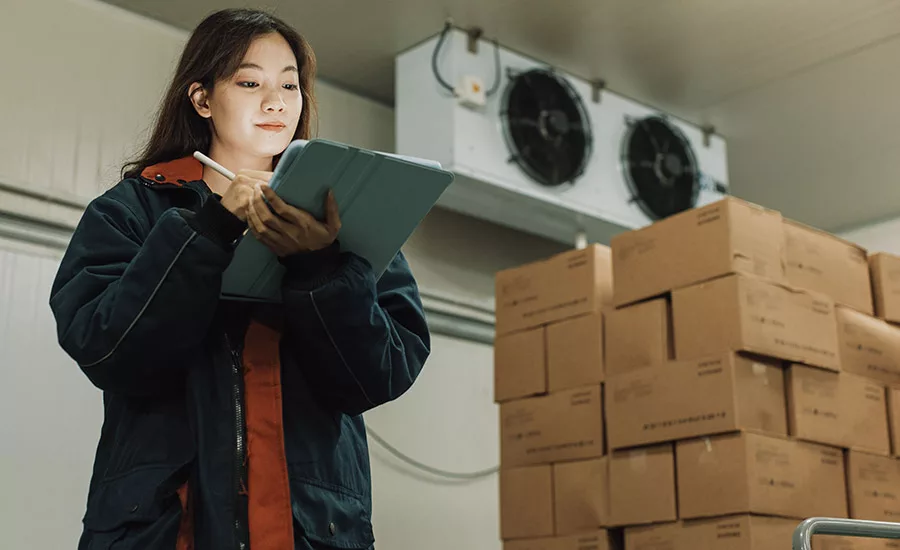
Woman monitoring warehouse

By developing high-fidelity thermodynamic simulations of industrial refrigeration systems, operators can gain unprecedented visibility into system performance, identify opportunities for optimization and reduce energy consumption and greenhouse gas emissions. Courtesy 1shot Production / E+ / Getty Images

February 11, 2025

In refrigerated spaces large and small, from warehouses to refrigerated transportation, physics-based thermodynamic modeling can be used to inform performance improvements, significantly reduce energy consumption and improve maintenance intervals. By leveraging data from a facility’s control system to compute previously unavailable information, these thermodynamic digital twins enable such real-time performance improvements and can be used to identify common equipment failures using machine learning algorithms to alert personnel to take action.

The cold chain faces unique operational challenges not experienced by the rest of the industrial sphere. Sudden spikes in power consumption, equipment degradation and many other issues like frost buildup on evaporator coils can all impact system efficiency, leading to downtime, product spoilage and higher costs. Identifying the root cause of these problems and taking corrective action is critical, but it's often difficult without detailed, real-time visibility into system performance.

Moreover, while the cold chain plays a critical role in preserving food and pharmaceuticals around the world, it is also a major consumer of energy, accounting for an estimated 17% of global electricity production. As the need for industrial refrigeration continues to grow due to global climate change and change in consumer tastes, finding ways to enhance the efficiency and sustainability of cold chain operations has become an urgent priority.

One promising approach is the use of physics-based digital twin modeling. By developing high-fidelity thermodynamic simulations of industrial refrigeration systems, operators can gain unprecedented visibility into system performance, identify opportunities for optimization and reduce energy consumption and greenhouse gas emissions.

The Power of Digital Twins

The key to addressing these challenges lies in the use of physics-based thermodynamic modeling, which can create a "digital twin" of an industrial refrigeration system. By modeling the complex interactions between major components (e.g., compressors, evaporators and condensers), these digital twins can provide a wealth of insights that go far beyond what can be gleaned from typical sensor data.

For example, this digital twin model of a 233-ton industrial ammonia cooling system (below) is able to calculate not just the total cooling capacity and power consumption, but also the detailed performance of individual components. This allows operators to identify anomalies like sudden power spikes, which can result in significant demand charges and greenhouse gas emissions from the power grid.
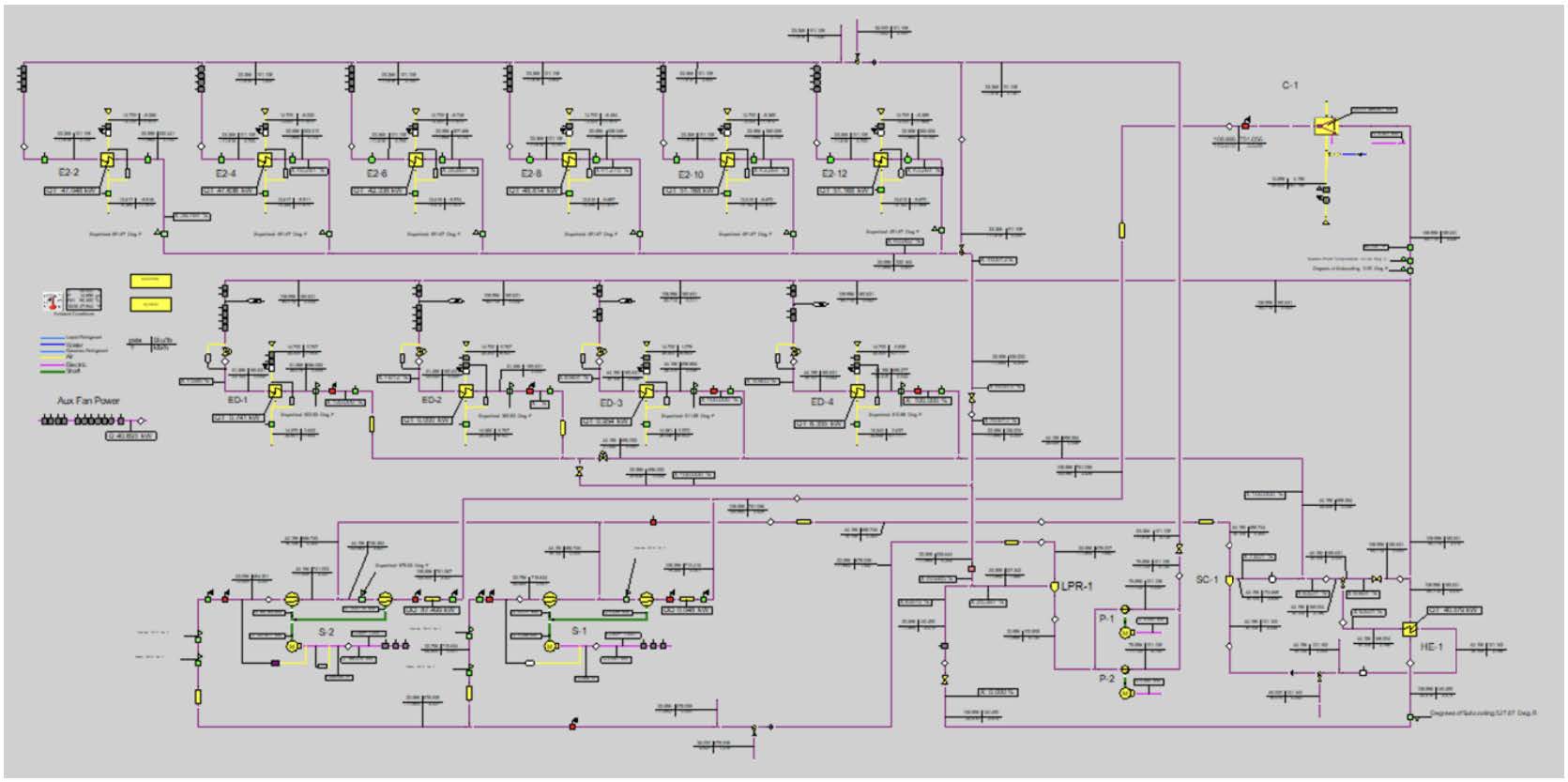
Heat Balance diagram
Heat Balance diagram for a digital twin model of a two-pressure-level, 233 refrigeration ton (820 KW) industrial ammonia cooling system. Courtesy SnoFox Sciences

The digital twin also provides a novel way to evaluate system performance, using a standardized “score" that compares the actual coefficient of performance (COP) to an ideal, practical COP based on the system's operating conditions. This allowed the researchers to benchmark the system's efficiency and track changes over time, highlighting opportunities for optimization.

Going even further, the model can be used to generate synthetic data sets that train machine learning algorithms to accurately identify common failure modes in smaller refrigeration units for vaccines, such as compressor failures, evaporator frosting and expansion valve issues. With this kind of predictive maintenance capability, cold chain operators can take proactive steps to address problems before they lead to product spoilage or service disruptions.

Unlocking Efficiency and Sustainability

The insights provided by digital twin modeling have the potential to unlock significant efficiency and sustainability gains across the cold chain. By monitoring system performance in real-time, operators can identify and address issues like equipment degradation, improper maintenance, and inefficient control strategies. This not only reduces energy consumption and greenhouse gas emissions, but also helps to minimize product spoilage and maintain the integrity of temperature-sensitive goods.

Moreover, the ability to benchmark performance and compare systems using the score methodology opens up new opportunities for continuous improvement. Cold chain facilities can learn from each other, adopting best practices and targeting areas for optimization. Over time, this could drive industry-wide improvements in energy efficiency and sustainability.
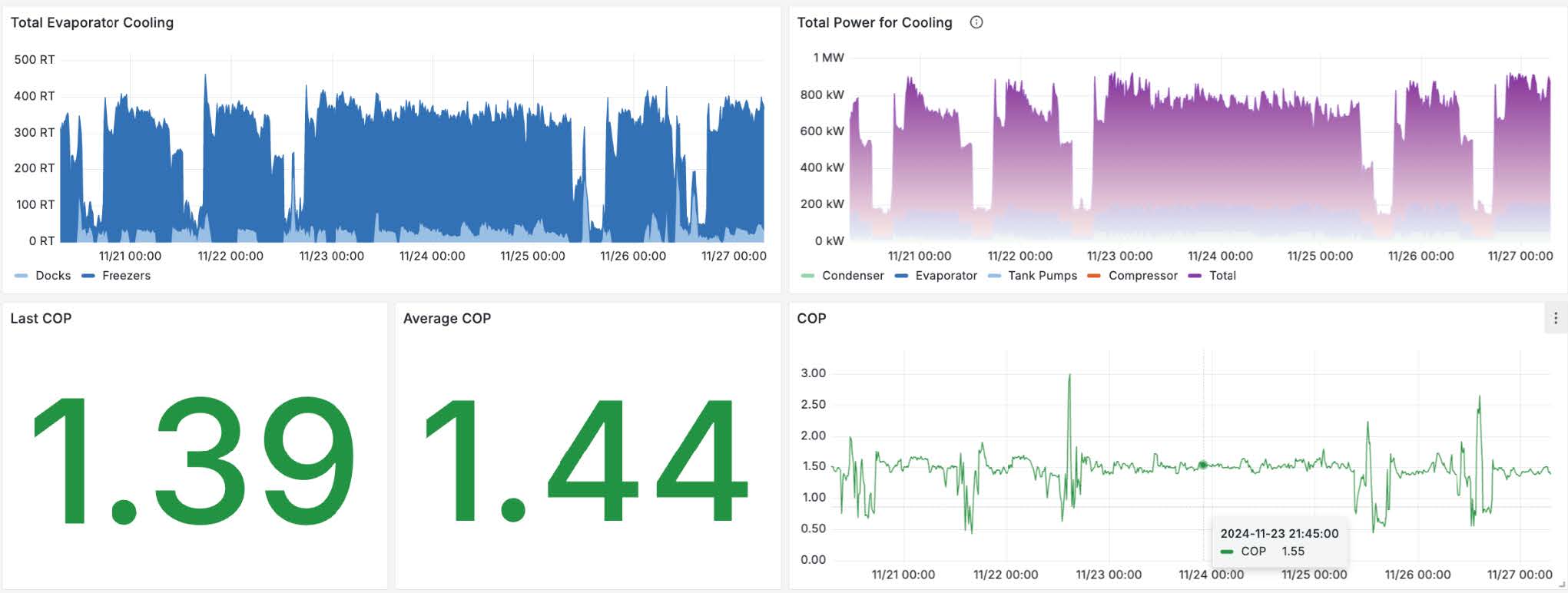
Cold storage facility performance overview
Cold storage facility performance overview, showing the calculated evaporator cooling capacity, power used for cooling and the coefficient of performance (COP) for a 233 refrigeration ton (820 KW) industrial ammonia cooling system. Courtesy SnoFox Sciences

As the demand for industrial refrigeration continues to grow, the need for innovative solutions like digital twin modeling will only become more pressing. The current area of focus for digital twin monitoring is the development of more advanced machine learning algorithms that can not only identify failures, but also provide predictive maintenance recommendations. By integrating these capabilities with the detailed performance data from the digital twin, cold chain operators are able to anticipate and prevent issues before they occur, further enhancing efficiency and reliability.

Ultimately, the work being done in this field represents a significant step forward in addressing one of the most pressing challenges facing the global economy and environment. By leveraging the power of physics-based modeling, machine learning, and emerging digital technologies, the cold chain industry can become an example of how innovation and technology can drive meaningful progress towards a more sustainable future.

KEYWORDS: cold chain operations energy efficiency standards GWP predictive maintenance programs warehouse

Share This Story

Looking for a reprint of this article?
From high-res PDFs to custom plaques, order your copy today!

Leo

Leo Eskin is a co-founder and CTO of SnoFox Sciences. With over 40 years of entrepreneurship and leading business in the cross functional worlds of power plants, data science, software development, mobile applications and thermodynamics, he brings a wealth of diverse experiences and knowledge to solving customer challenges. He holds a PhD from Stanford in mechanical engineering and a minor in electrical engineering. Headshot courtesy SnoFox Sciences

Recommended Content

JOIN TODAY
To unlock your recommendations.

Already have an account? Sign In

  • Best New Retail Products of 2026 badge with grocery store refrigerators in the background.

    Top of the Freezer: R&FF’s Best New Retail Products

    From BFY proteins to globally inspired treats, these...
    Product Development & Manufacturing
    By: Kelley Rodriguez
  • Pasco Exterior

    Reser’s Fine Foods: From Farmhouse Kitchen to ‘Good Times’ Everywhere

    A home-based potato salad company started 75 years ago...
    Cold Foods Industry News
    By: Kelley Rodriguez
  • FromtheColdCorner-Anchor_1170x658.jpg

    EPR, Plastic Packaging for Cold Foods & More

    As consumer and regulatory pressure put plastic in the...
    Cold Foods Packaging
    By: Kelley Rodriguez
Manage My Account
  • eMagazine
  • What’s Hot in Cold Newsletter
  • Manage My Preferences
  • Online Registration
  • Customer Service

More Videos

Popular Stories

From the Cold Corner with Americold's Rob Chambers feature image

How Cold Chain Strategy Is Replacing Capacity

Best New Retail Products of 2026 badge with grocery store refrigerators in the background.

Top of the Freezer: R&FF’s Best New Retail Products

1170x658 of Cold Storage Podcast with Jennifer Jewers Bowlin and Craig Handy

ASRS, AI & Adaptability: What's Shaping the Future of Cold Storage

2026 Processor of the Year


Does your facility lead the industry? Nominate your cold storage facility today!

Events

June 17, 2025

Refrigerated & Frozen Foods’ State of the Cold Chain

On Demand Kelley Rodriguez, Editor in Chief of Refrigerated & Frozen Foods, will be joined in this 60-minute webinar by industry experts to help unpack the latest research.

January 1, 2030

Webinar Sponsorship Information

For webinar sponsorship information, visit www.bnpevents.com/webinars or email webinars@bnpmedia.com.

View All Submit An Event

Products

Water Activity in Foods: Fundamentals and Applications, 2nd Edition

Water Activity in Foods: Fundamentals and Applications, 2nd Edition

See More Products
New Retail Products

Explore the newest flavors, textures, and innovations in the frozen food aisle!


SEE WHAT'S NEW!
Play Refrigerated & Frozen Foods’ Cool Word of the Week! There's a new word every Wednesday.

Related Articles

  • From the Cold Corner Logo

    New Podcast: How Washdown Motors Can Help Drive Efficiencies in Cold Foods Processing

    See More
  • Eskimo Cold Storage

    Paths to Progress for Women in Cold Chain Logistics

    See More
  • BillerudKorsnäs invests in cold chain packaging company Vericool

    See More

Related Products

See More Products
  • GlobalData_logo_blue_header.png

    Frozen Meat (Meat) Market in North America - Outlook to 2022: Market Size, Growth and Forecast Analytics

  • supplychain.jpg

    Supply Chain Management for Sustainable Food Networks

  • Operations in Food Refrigeration

See More Products
×

Elevate your expertise in refrigerated and frozen foods with unparalleled insights and connections.

Get the latest industry updates tailored your way.

JOIN TODAY!
  • RESOURCES
    • Advertise
    • Contact Us
    • Directories
    • Store
    • Want More
  • SIGN UP TODAY
    • Create Account
    • eMagazine
    • Newsletter
    • Customer Service
    • Manage Preferences
  • SERVICES
    • Marketing Service
    • Reprints
    • Market Research
    • List Rental
    • Survey/Respondent Access
  • STAY CONNECTED
    • LinkedIn
    • Facebook
    • YouTube
    • X (Twitter)
  • PRIVACY
    • PRIVACY POLICY
    • TERMS & CONDITIONS
    • DO NOT SELL MY PERSONAL INFORMATION
    • PRIVACY REQUEST
    • ACCESSIBLITY

Copyright ©2026. All Rights Reserved BNP Media, Inc. and BNP Media II, LLC.

Design, CMS, Hosting & Web Development :: ePublishing