Workwear & PPE Policies to Keep Employees Safe from Dock to Deep Freeze
Tailoring protocols can better protect teams, maintain product integrity and keep the cold chain moving.
In the cold chain, safety begins the moment an employee puts on their gear.
Each piece of personal protective equipment – PPE – plays a vital role in keeping teams protected and productive, from high-visibility vests that stand out on a busy loading dock to insulated bib overalls built for a -20 degrees Fahrenheit freezer aisle. Across the cold chain’s varied environments, where temperatures, humidity and hazards shift from one doorway to the next, the right workwear acts as a safeguard against injuries, operational delays and compliance issues.
A strong PPE policy equips every role for its specific risks, builds morale, ensures regulatory alignment and keeps the cold chain moving without interruption.

Food processing plants and cold storage warehouses are not just cold, they are complex. Cold chain facilities include multiple zones running at different temperatures and humidity levels. Conditions can change drastically and a one-size-fits-all approach to insulated PPE can leave dangerous gaps in worker safety, productivity and regulatory compliance.
A comprehensive workwear and PPE policy will outline proper apparel to address environmental hazards, disparate temperature zones and regulatory requirements.
Environmental hazards could include extreme cold, frozen or wet floors, moving forklifts, dim lighting and equipment with blades or other high-risk machinery. A single facility may have several different temperature and humidity zones, such as ambient prep areas, refrigerated processing and packing areas, and chiller or freezer storage zones.
Employees working against all these hazards, across all different temperatures and conditions, must still follow all applicable safety standards set by the U.S. Food and Drug Administration and the Occupational Safety and Health Administration (OSHA).
Cold Chain PPE Policy
While the specific requirements may vary depending on the type of food processing, packing or storage functions performed by a cold chain facility, the following topics provide the foundation for a comprehensive safety workwear policy.
Employers are also recommended to consult with attorneys to review any applicable federal, state or local labor laws and food safety regulations as they create or update their workwear and PPE policies.
In food processing and cold storage, employers must define exactly who must follow the policy and where and when specific gear is required on the job.
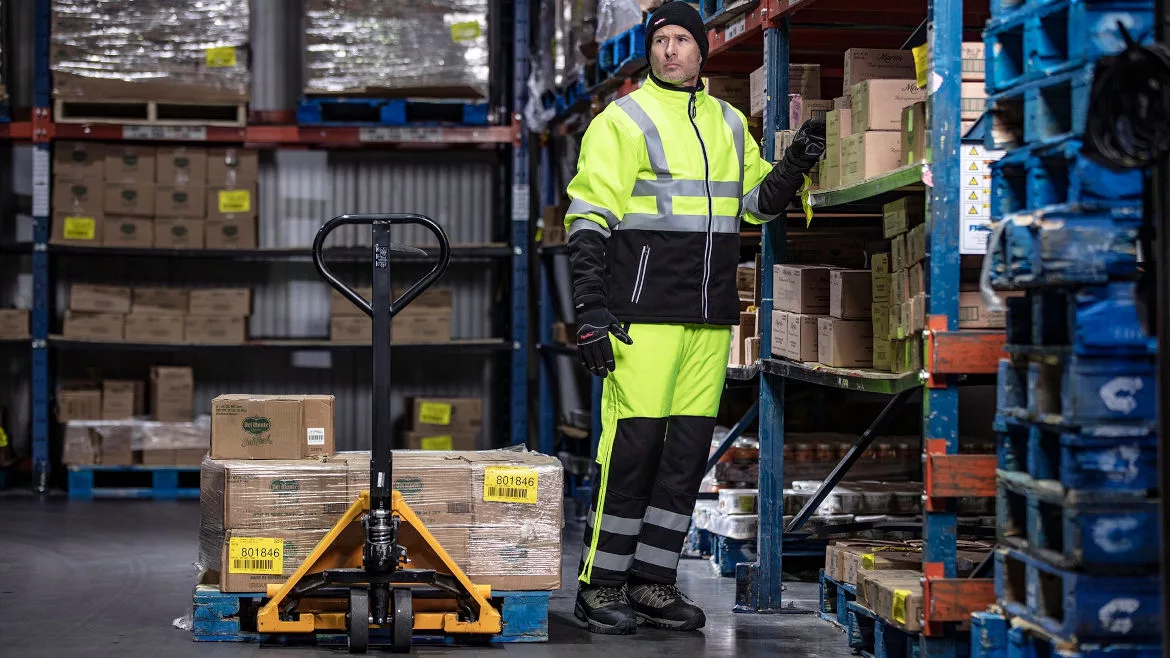
For example, any employee working in a dimly lit area, such as a storage warehouse or a high-traffic area like a loading dock, should be required to wear high-visibility workwear. These employees should wear high-visibility PPE with reflective materials to increase their visibility to others working or operating vehicles and equipment in the area.
Beyond this baseline, specialized roles demand protective gear tailored to the hazards and hygiene standards of cold foods processing.
For example, workers handling meat or poultry need cut-resistant gloves to guard against blade injuries. They also require chemical-resistant, slip-resistant boots that withstand frequent sanitizer use while preventing falls and items like frock coats, hair and beard nets to help maintain strict contamination control.

Safety policies should also clearly prohibit clothing and accessories that pose risks. Loose garments or dangling drawstrings can snag on machinery, leading to serious injuries and costly equipment damage. Hooded sweatshirts or jackets with drawstrings can restrict peripheral vision and become entangled in moving parts, making them unsafe in many cold chain settings.
A comprehensive workwear and PPE policy addresses these specific nuances, setting clear, role-based expectations for every employee. It should also cover visitor protocols, outlining necessary safety gear guests must wear and who is responsible for ensuring compliance.
By tailoring safety policies to the realities of cold storage and food processing, companies can better protect their teams, maintain product integrity and keep operations running smoothly.
Proper PPE Maintenance
This policy section should outline the employer’s expectations for the care and maintenance of any assigned or supplied PPE, along with the steps employees take to report lost, damaged or unsafe equipment and request replacement PPE.
Employers should specify which maintenance tasks fall to employees, such as properly sanitizing protective clothing to prevent contamination and which responsibilities the employer will manage, like repairing hard hat straps.
The policy should also name a designated point of contact—whether a safety manager, supervisor, or PPE coordinator—to whom employees should report any PPE issues. This person will guide employees on approved alternative gear that meets safety standards and ensure they are fully protected before returning to work.
Clear communication about responsibility for PPE helps maintain safety, prevents cross-contamination and ensures workers in the cold chain have reliable protection for every shift.
The final portion of a comprehensive cold chain workwear policy should detail how employees will be trained in safety best practices for their specific facility and job duties. This section should also include disciplinary actions for failing to follow the established safety workwear and PPE policy.
Ideally, safety training and a review of the PPE policy will be part of the onboarding process for new employees. This training should also be periodically reinforced with refresher training sessions at least annually or semi-annually. These refresher sessions also offer a practical opportunity for employees to examine their own PPE and request repairs or replacements for any damaged gear.
Fit & Function
A successful safety workwear and PPE program goes beyond simple compliance checklists. It requires choosing durable, comfortable and properly fitting equipment designed to perform under the demanding conditions of food processing and cold storage operations. In an industry known for high employee turnover, selecting the right gear can reduce workplace injuries and improve employee satisfaction and retention.

With recent OSHA emphasis on properly fitting PPE, safety managers must select PPE that is fit-for-purpose and properly fits the employee wearing it. This includes female employees and those needing extended or non-standard sizes.
Safety managers should prioritize suppliers offering a broad range and adaptable designs to ensure every team member is outfitted correctly. Proper fit is essential—not just for comfort but also to maintain compliance and maximize protection.
Prolonged exposure to extreme frigid conditions in some cold chain facilities can cause cold stress accidents and injuries, hypothermia, frostbite and other cold-related health problems. Safety managers can help employees guard against these risks with insulated PPE appropriate to the environment in which each works.
Sweat is the enemy in cold environments. Choosing moisture-wicking base layers pulls moisture away from the skin, keeping employees dry and warm. Thermal crewneck sweatshirts are also a versatile part of a cold-chain professional’s PPE kit, as they can provide adequate protection for people working in a range of mild conditions or serve as a mid-layer between base layers and insulated jackets or bib overalls in colder zones.
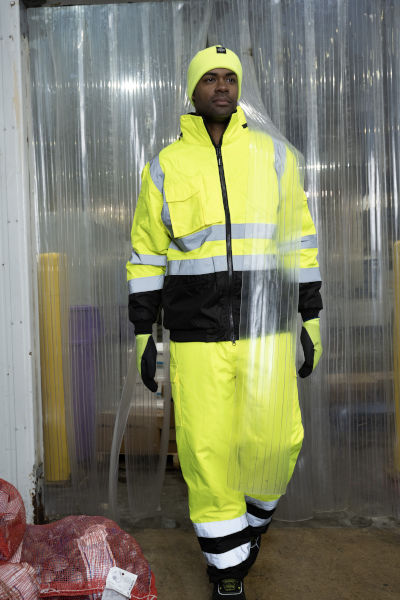
Invest in insulated workwear designed and temperature-rated for cold chain environments. Be sure to select freezer jackets, cooler jackets and insulated pants or bib overalls with built-in ergonomic stretch panels at joints to support mobility without sacrificing warmth. Look for durable wind- and water-resistant outer shell materials for freezer workers. Look for thin, lightweight synthetic insulation that will not settle or break down with heavy use and is thin enough to wear under a sanitary frock for processing staff.
Accessorize for Protection & Productivity
Fingers feel the freeze more quickly than almost any other body part. Safety managers should supply insulated work gloves that match the work being performed. For example, insulated gloves with impact protection and grip assistance may be required in the freezer, while waterproof and cut-resistant gloves may be required in processing or packing areas.
Frozen concrete floors and condensation are a recipe for slips, trips, and falls. Protect employees, keep their feet warm, and keep them steady on their feet in insulated, composite-toe work boots with waterproof uppers, shock absorbing insoles, and specialized slip-resistant outsoles designed not to crack or crumble under prolonged contact with frozen surfaces.
From caps or beanies for working in warmer zones to full-face masks and insulated balaclavas for working in the freezer, keeping the vulnerable skin of the face, ears and neck covered without obstructing peripheral vision is a critical step to staying warm.
Safety glasses, goggles, face shields, or masks should meet ANSI/ISEA Z87.1 standards and be chosen based on the risk profile—whether it’s flying debris, chemical splashes, or UV exposure in outdoor loading zones.
In noisy production environments, effective hearing protection is essential. Select earmuffs or earplugs with appropriate noise reduction ratings that are comfortable, easy to clean, and simple to put on or remove as noise levels fluctuate.
From dock to deep freeze, a solid PPE policy is like armor for employees. The right fit, the right function, and the right training turn every piece of PPE into a powerhouse of protection and productivity. Keep it clear. Keep it consistent. By making protection, comfort and compliance standard issue, companies not only guard against injuries and downtime, but also strengthen morale and productivity, keeping both people and products in top condition.
Looking for a reprint of this article?
From high-res PDFs to custom plaques, order your copy today!