Case Study
Case Study Demonstrates How Waste Heat Spurs Savings
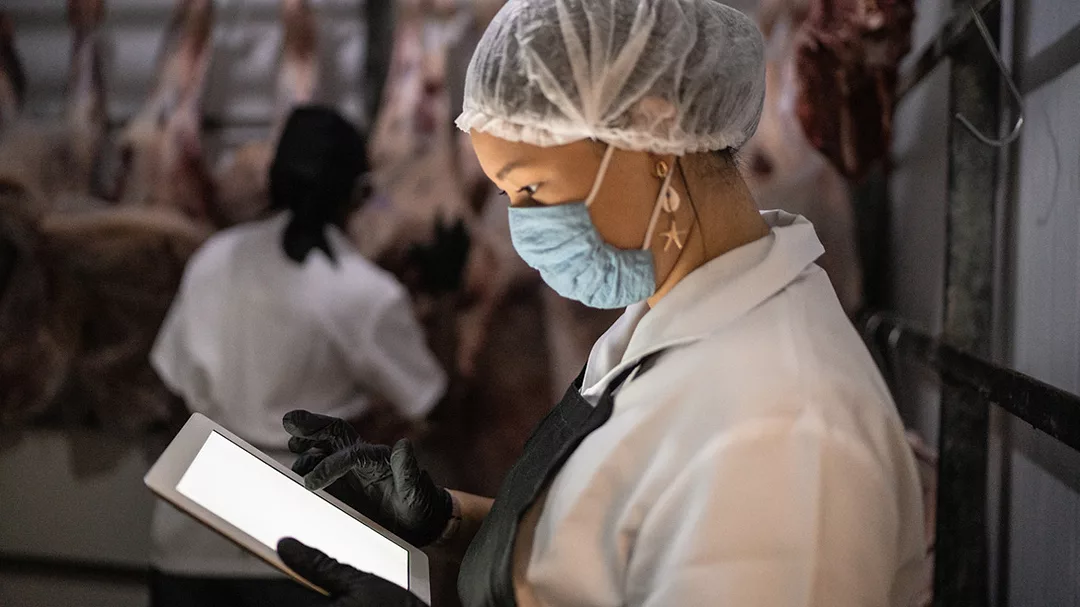
Traditional electric defrosting was instead swapped for a hot glycol system in the meat and fish cold rooms at a new, 527,000-square-foot logistics center in southern Italy, where summertime temperatures climb above 100° Fahrenheit.

The plant operates at one-third of the energy intensity suggested by the literature for similar climatic conditions: the SEC value measured by Arneg is 13kWh/ton, compared to the benchmark value of 45kWh/ton for this location.
Natural refrigerants, like CO2, produce little or no greenhouse emissions and are future-proofed against regulation and costly refits. But in hot climates, CO2 systems face a challenge. As the temperature rises, energy use increases and efficiency can be reduced.
Güntner and refrigeration contractor, Arneg, devised a set of solutions for a site where summer temperatures can reach 107° Fahrenheit. An installation at a new, 527,000-square-foot logistics center in Montalto Uffugo, Italy, is demonstrating how the issues can be mitigated by the application of innovative technology and creative thinking.
One of the most impactful strategies for energy efficiency was replacing traditional electric defrosting with a hot glycol system, specifically for the meat and fish cold rooms.

Traditional electric defrosting was instead swapped for a hot glycol system in the meat and fish cold rooms at a new, 527,000-square-foot logistics center in southern Italy, where summertime temperatures climb above 100° Fahrenheit. Image Source: FG Trade / E+ / Getty Images
"It was an ambitious project," said Stefano Vidal, Güntner’s manager for Southern Europe. "We had to find a way to combine natural refrigeration, sustainability and high energy efficiency under extreme climatic conditions. This solution is a perfect example of how energy that would otherwise be wasted can be reintegrated into the system to serve a critical function – efficiently and sustainably."
The system uses four Güntner V-shape VARIO Gas Coolers with aicore controllers, 40 Dual VARIO Air Coolers and 18 Cubic VARIO Air Coolers. Key benefits include:
- Virtually energy-free defrost: The glycol is heated using waste heat recovered from the CO2 refrigeration plant, with no additional electrical input required.
- Full operational performance using natural refrigerants: The V-shape VARIO is optimized for use with natural refrigerants.
- Reduced energy consumption for cooling: The variable speed control on air cooler fans reduces direct and indirect energy consumption while maintaining uniform cold air distribution.
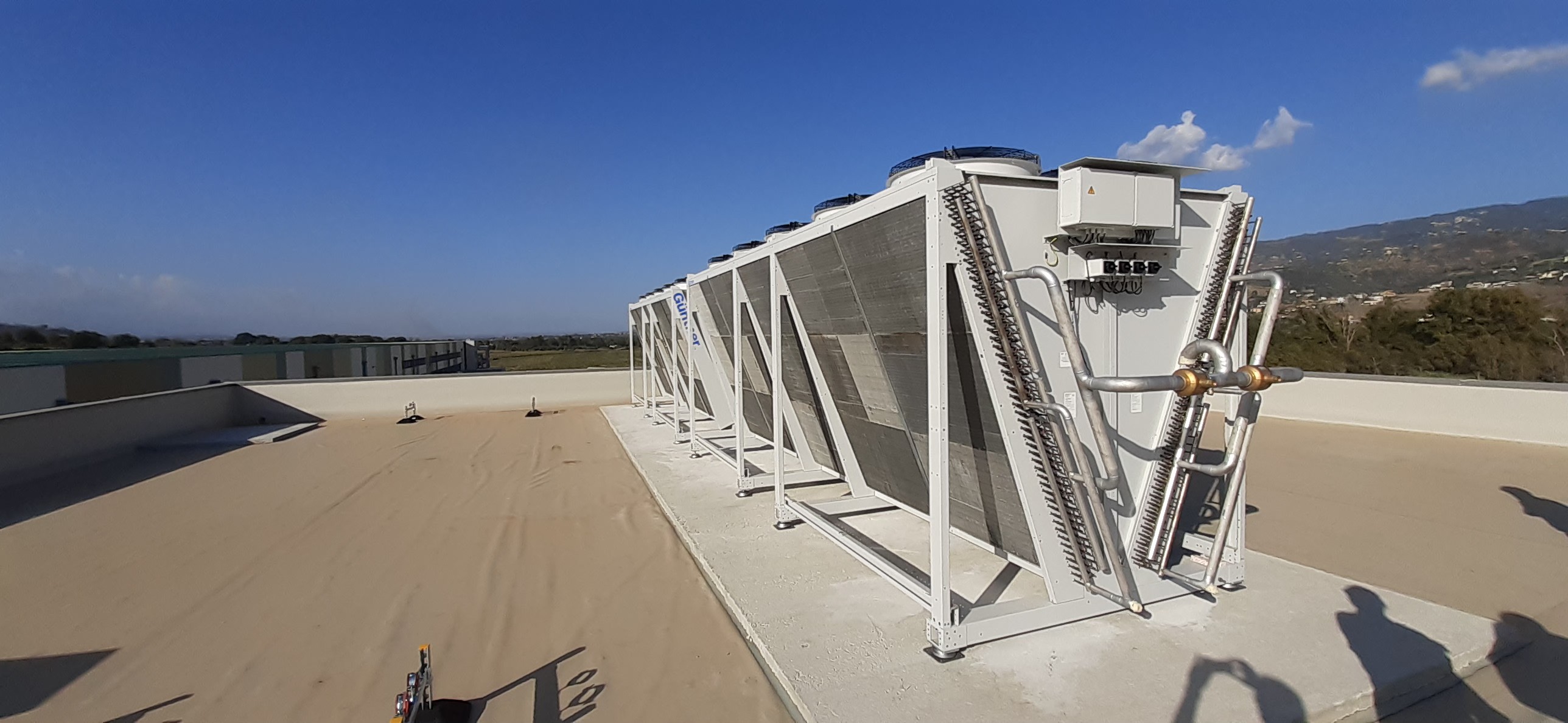
The system uses four V-shape VARIO Gas Coolers with aicore controllers, optimized for use with natural refrigerants. Image courtesy Güntner
Dramatic Decrease in Energy Intensity
Technical analysis by Arneg revealed impressive environmental and economic benefits, including:
- Approximately 102,000 kWh/year savings in electricity thanks to the glycol defrost system.
- Estimated cost savings of €20,000/year.
- Avoidance of CO2 emissions of 26,115kg/year.
- Low Specific Energy Consumption (SEC), which is the amount of energy used per unit of stored or handled product.
"We chose to work with Güntner because of their strong reputation for reliability, innovation, and technical expertise in refrigeration and heat exchange technologies," said Enrico Zambotto, technical engineering director, refrigeration systems, Arneg. "Their commitment to sustainability and continuous improvement perfectly aligned with our own goals for this project."

Thanks to Arneg and Güntner’s partnership, the end customer is now enjoying exceptional energy performance.
The plant operates at one-third of the energy intensity suggested by the literature for similar climatic conditions: the SEC value measured by Arneg is 13kWh/ton, compared to the benchmark value of 45kWh/ton for this location.
"Energy efficiency is no longer a nice-to-have, it’s a business-critical priority in industrial refrigeration," Vidal said.
Most significantly, this project points the way forward for the efficient use of CO2 in warm regions.
"By successfully implementing natural refrigerants in a high-temperature environment, we have demonstrated that environmental responsibility and high performance can go hand in hand. This is a meaningful contribution to the global transition towards greener, more energy-efficient technologies.
Looking for a reprint of this article?
From high-res PDFs to custom plaques, order your copy today!