Containerized Cold Rooms Gain Traction as Flexible Cold Storage Demand Grows
Advances in insulation, solar integration and modular design are helping containerized cold rooms meet growing demand for flexible, energy-efficient storage.
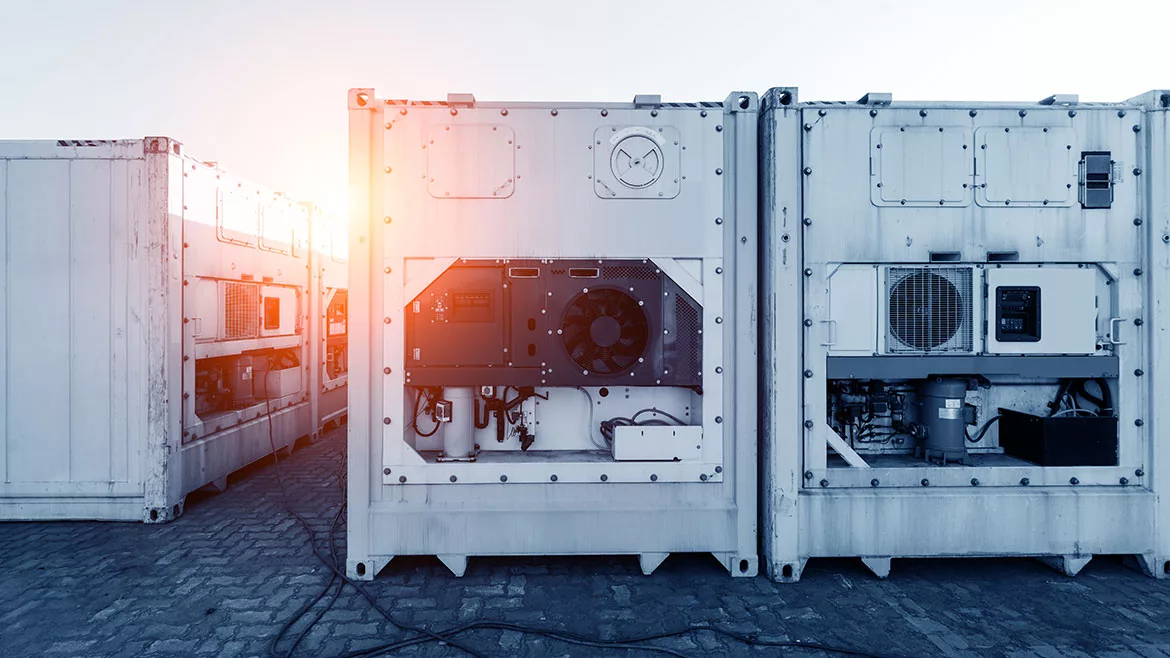
As food manufacturers and logistics companies seek more flexible and energy-efficient ways to manage temperature-sensitive products, containerized cold rooms are emerging as an increasingly attractive alternative to traditional cold storage infrastructure.
Available in a range of temperature capabilities and footprints, containerized cold rooms support everything from short-term overflow storage to temperature-controlled production and distribution operations. Growing demand for fresh and minimally processed foods is driving adoption across food processing and manufacturing and 3PLs, looking for scalable refrigerated capacity without the expense and permanence of traditional facilities.
TITAN Containers is bringing ArcticStore Horizon, its next-generation containerized cold room, to market, designed to reduce energy consumption while providing a scalable alternative to conventional cold storage infrastructure.
The Denmark-based company, which operates in more than 90 countries, developed the solution in response to customer demand across the food, pharmaceutical and industrial sectors.
"With ArcticStore Horizon specifically, we've developed our most energy-efficient cold storage solution to date," said Søren Skov Mogensen, CEO of TITAN Containers.
TITAN concentrated on two key areas, insulation and solar power. The company says the result is average energy savings of up to 55% compared to conventional refrigerated containers, a notable figure in an industry where energy expenses can account for as much as 70% of operating costs.
ArcticStore Horizon incorporates vacuum insulation panels (VIPs), which TITAN says reduce energy consumption by approximately 30% on their own. Units can also be equipped with roof-mounted solar panels to further lower energy use.
"If you go to the pharma cold chain and look at how they transport very high-end products, they do so in boxes with vacuum-based insulation because it's the best in the world. We've taken that and used it to insulate the walls of a container," Mogensen said. "We've lowered the roof of the container and added solar panels that can be tilted to get the most efficient use. On average, that adds another 25% reduction. Customers can offset a significant portion of their consumption, which means less exposure to volatile electricity prices and more predictable operating costs."
Polar King this spring debuted its Everest Edition, which the company describes as the industry's first solar-assist mobile walk-in refrigerated and freezer trailer.
The unit features a hybrid solar-assist and DC charging system designed to supplement battery power and extend operational runtime.
Solar panels help offset daily energy consumption, while primary DC charging provides consistent power replenishment.
The economic value is less about "free refrigeration" and more about reducing charging dependence, said Rob Henry, director of marketing at Polar King.
Still, solar-assisted capabilities can help extend battery life and operating runtimes.
"Even with solar assistance, refrigerated trailers still need dependable and reliable charging," Henry said. "That matters most in regions where utility costs fluctuate, grid access is limited, or operators need temporary refrigeration at events, remote sites or emergency staging areas."
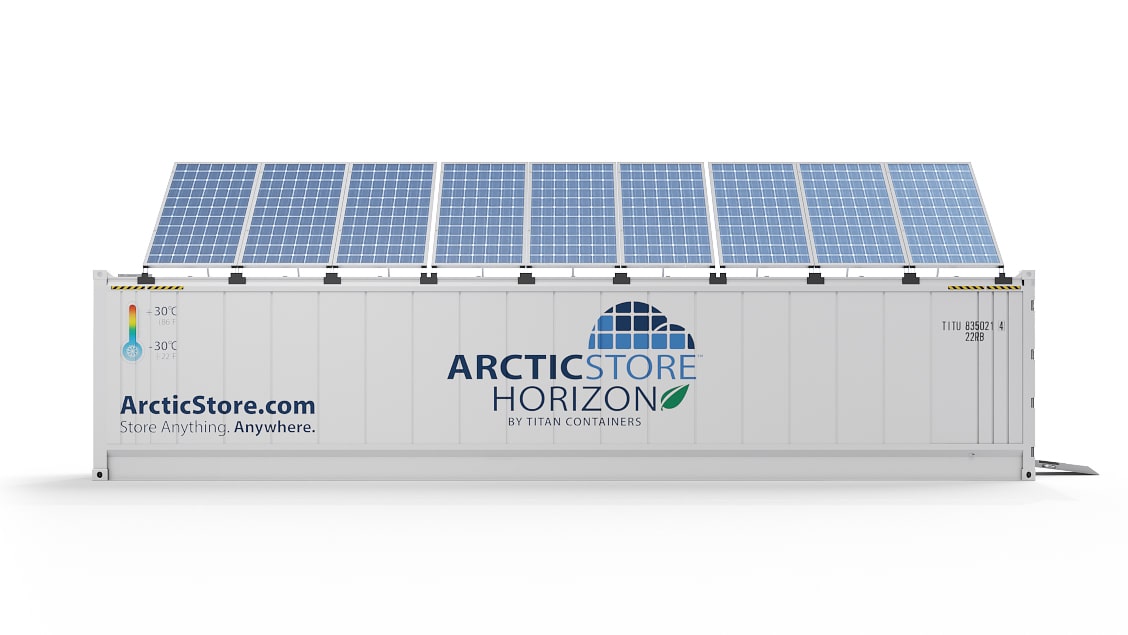
TITAN Containers launched ArcticStore Horizon, a portable cold storage solution with vacuum insulation panels (VIPs) and solar arrays to cut energy costs. Image courtesy TITAN Containers
Flexibility Drives Adoption
Beyond energy efficiency, containerized cold rooms offer an advantage many operators increasingly value: deployment flexibility.
EXPLORE MORE



Unlike traditional cold storage warehouses, containerized units can be installed quickly and scaled as demand changes. They can be integrated into production environments, deployed by retailers for seasonal overflow capacity or used to support temporary operations and special events.
While individual units do not match the capacity of large-scale cold storage facilities, TITAN views the systems as highly modular.
"Sort of like Lego bricks, you can add as many together as you want," Mogensen said. "We can create one big temperature-controlled environment that can be as large as a customer needs."
"It is plug-and-play by definition," he added.
An all-electric mobile cold storage unit can also eliminate on-site diesel engine use, which can be especially valuable during emergency response efforts, disaster deployments, events and school operations.
"We are seeing strong interest from operators that need cold storage outside the traditional warehouse model," Henry said. "The common thread is operational flexibility. These users often need refrigeration where a fixed walk-in is not practical, or where temporary capacity is required quickly.”
“For example, a Midwest restaurant group regularly uses cold storage units during remodels, seasonal demand spikes and equipment replacement,” he said.
The approach allows companies to expand incrementally, aligning storage capacity with actual demand rather than forecasting years in advance.
Containerized cold rooms are also increasingly equipped with advanced monitoring and control systems that support food safety and logistics compliance through precise temperature management and real-time data logging.
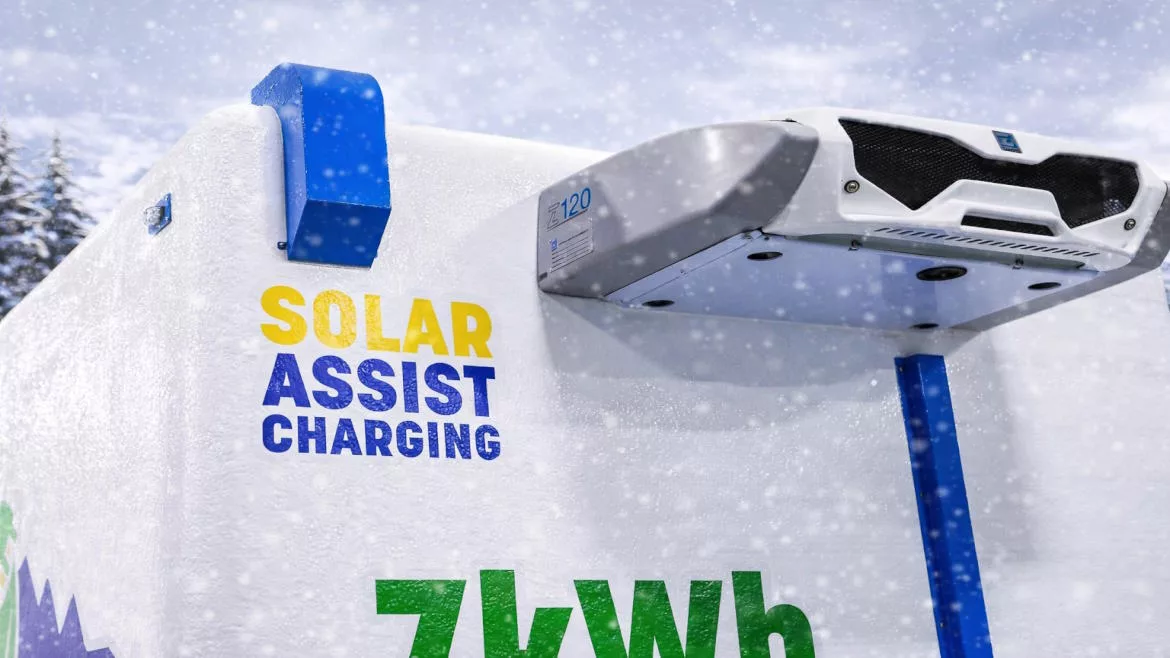
Polar King electric trailers features a hybrid solar-assist and DC charging system designed to supplement battery power and extend runtime. Image courtesy of Polar King
A Growing Role in the Cold Chain
Urbanization, climate pressures and shifting consumer expectations are driving demand for more responsive and localized cold chain infrastructure. At the same time, rising operating costs and sustainability initiatives are pushing food companies toward more efficient refrigeration technologies.
As a result, the global market for containerized cold rooms is projected to grow at a double-digit CAGR through the early 2030s.
"I think there will be a larger and larger need for flexible storage that can scale up and down when needed," Mogensen said. "At the same time, there will be more attention toward energy efficiency, not just from an environmental perspective, but from a cost and competition perspective."
SeaCube Cold Solutions, backed by SeaCube Container Leasing, earlier this year acquired Martin Container, a West Coast portable cold storage company, as demand continues to rise across the Southwest and Pacific regions.
Since launching in 2025, SeaCube Cold Solutions has focused exclusively on portable cold storage, serving grocery retailers, food distributors, agricultural operations, festivals, restaurants, pharmaceutical companies and logistics providers.
"We're really just looking at what's the next horizon? We want to double again in the refrigerated space over the next six or seven years. But we also know that now is the time to start looking at diversification, because we are known now as the 'reefer guys,' at least from international standpoint," said James Armstrong, senior vice president of emerging business at SeaCube.
Dawsongroup tcs has launched its Superbox modular cold chain system in the U.S. market.
Backed by a fleet of more than 30,000 assets in Europe, Superbox is designed to be 50% wider than a traditional refrigerated container.
While fixed facilities remain essential for high-volume, centralized cold chain operations, portable and scalable cold storage solutions are carving out a larger role across the food supply chain.
For operators balancing capacity needs, energy costs and sustainability goals, containerized cold rooms offer an increasingly flexible option without the long timelines and capital requirements associated with traditional infrastructure.
Looking for a reprint of this article?
From high-res PDFs to custom plaques, order your copy today!