Energy-Efficient Plants of the Future
Advances in refrigeration, automation, employee environments and more are being built into the next generation of cold foods facilities.

The ammonia half of a highly efficient NH3/CO2 cascade system.
As we look ahead to 2021, several areas of the food processing world have become better defined due to the pandemic. One in particular is that employees are truly a company’s greatest asset. As such, they play a big part in ensuring a facility operates efficiently. If companies want to protect their future in the food business, they must protect their most valuable resource; long-term, faithful employees.
Employee Importance and Safety
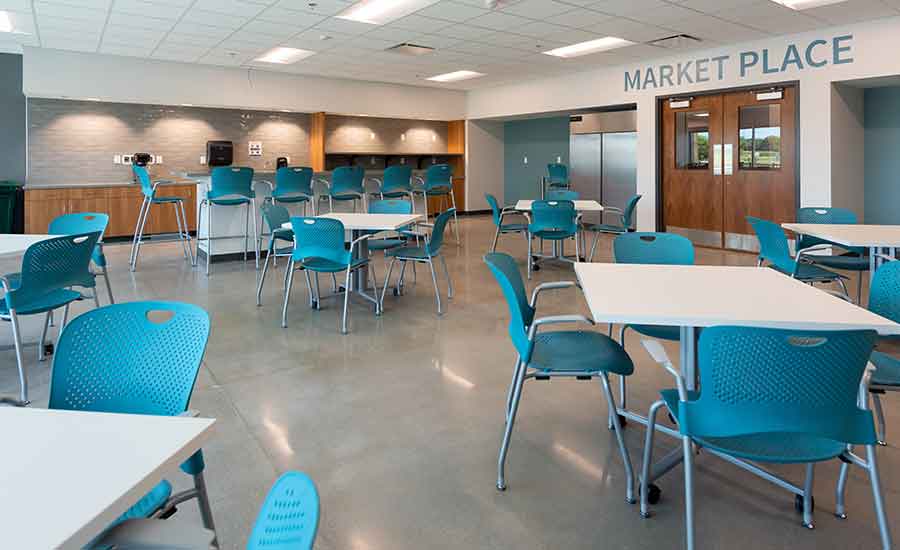
Employees may not be the first thought when energy efficiency comes to mind, but companies that invest in clean, energizing environments for staff will see productivity increase.
Energy efficiency in today's day and age can be directly attributed to the talented personnel hired and retained. The overall health of employees should become a priority if the work is to be completed in a smooth, consistent manner. Carefully planned employee workspaces and break rooms can improve morale, thus positively influencing employee well-being.
Improved welfare spaces that directly face outside replace welfare spaces that are located deep in the building. Ventilation is enhanced in these places, and larger square-foot-to-employee ratios are being used. In the lunchroom, there are greater options for purchasing nutritious foods, and expanded use of brighter, cleaner, easy-to-maintain finishes to sharpen the look of the room. There is also a greater emphasis on employee safety, including improved separation systems and cleanliness. Areas to relax between shifts may include televisions and gaming systems that encourage employees to take their minds off work and access to Wi-Fi for personal use. Proximity to outdoor spaces for breaks, eating, and personal time is also provided, and the use is encouraged. Onsite fitness centers are also becoming commonplace to improve employee health.
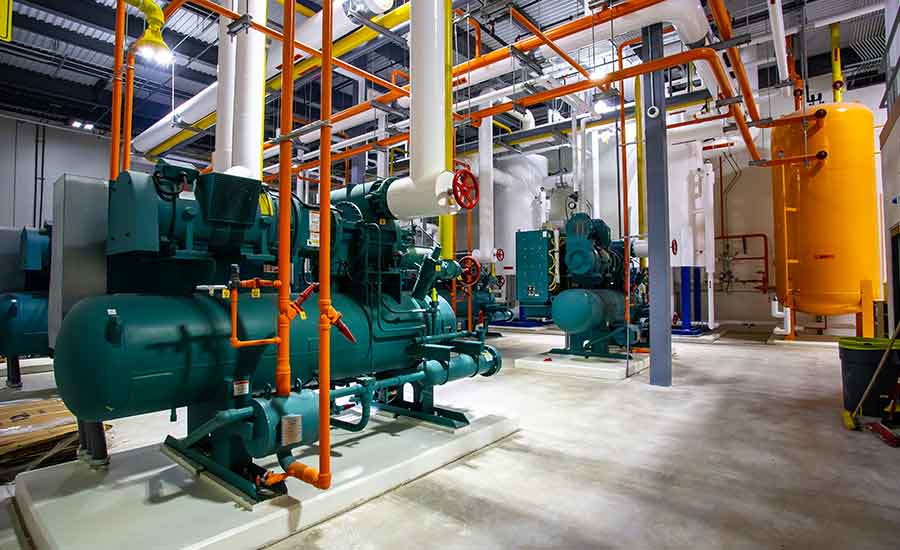
Ammonia receivers and compressors. High-efficiency, low-charge ammonia refrigeration systems are becoming more common in processing plants.
Advanced Refrigeration Systems
High-efficiency, low-charge ammonia refrigeration systems have recently been used more commonly in processing plants. Since they are close to refrigerated areas, they are generally more energy-efficient due to smaller pumps, lower pressures, and less compressor wiring. This system provides expansion flexibility and reduces local ammonia, leading to a minimal amount onsite and in the room. A more distributed approach eliminates central plants, the need for onsite engineers, and removes the risk of large discharges. Due to the limited number of temperature ranges required within a food processing facility, these systems are well-suited for single-temperature warehouse and process-room cooling and heavier demand single-temperature spiral freezers.
Another option has surfaced using CO2 as the refrigerant, which is a natural, safe, and inexpensive refrigerant (12 times more economical than traditional HFC). CO2 has many safety advantages; It cannot burn or explode at very high temperatures, and during a fire, CO2 does not create hazardous gases. Because of smaller pipes, evaporators, and compressors, a smaller charge of CO2 may be required compared to an ammonia system of equivalent capacity.
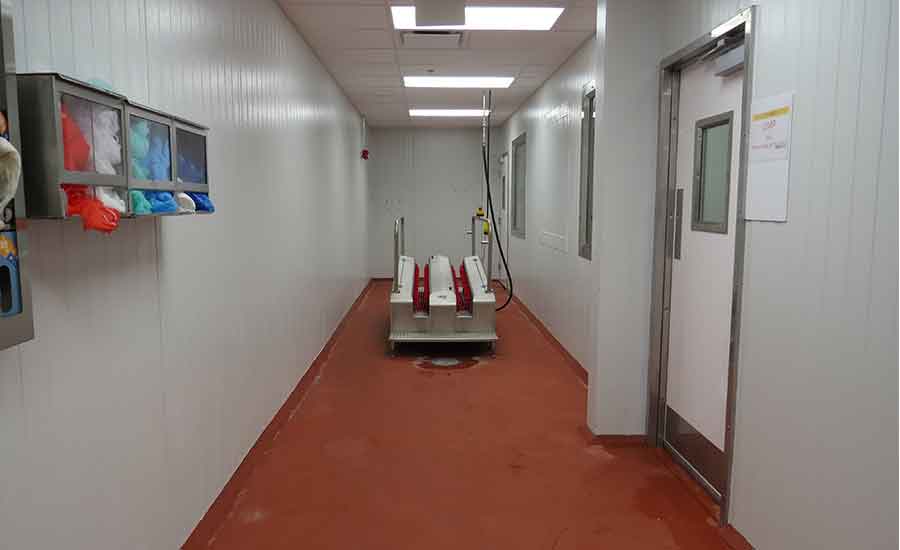
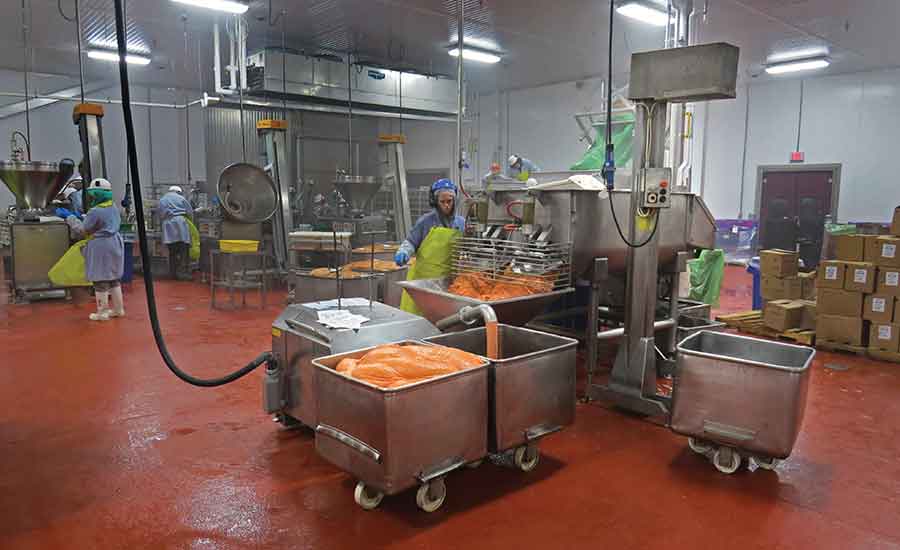
Streamlined standard operating procedures (SOPs) help employees work more efficiently, and become better educated in food safety protocols.
In the case of CO2, the pressure ratio is about 20% to 50% lower when compared with HFCs and ammonia. The lower pressure ratio combined with the higher pressure levels gives much greater efficiencies.
In the range of -55ºC to 0ºC evaporating temperatures, the performance of CO2 is 4-12 times better than that of ammonia. This means that CO2 compressors and piping systems are much smaller than for equivalent capacity ammonia systems.[1]
CO2 combined with NH3 is called a cascade system that offers the industrial refrigeration industry a gifted opportunity to build safe, environmentally friendly, and highly efficient industrial refrigeration systems well into the future.
Process Automation
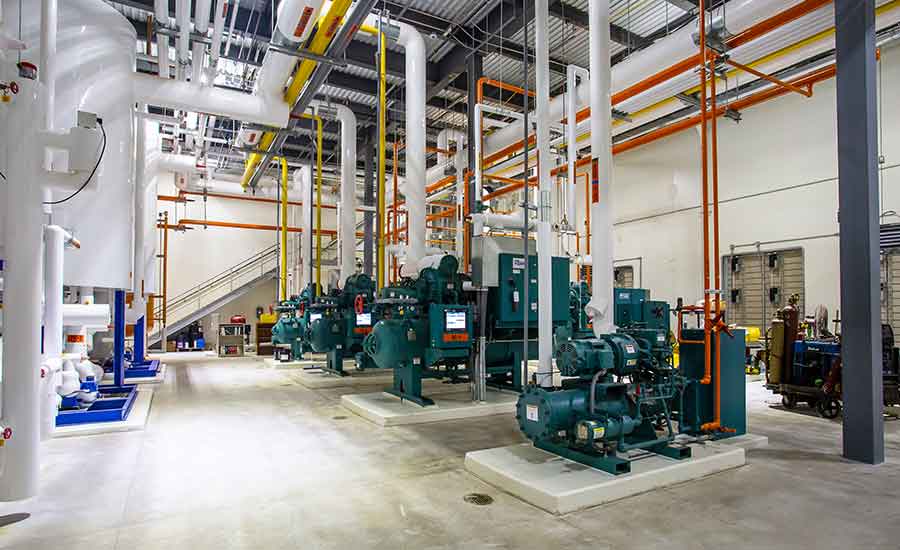
Providing required clearance for refrigeration equipment is critical for proper and efficient maintenance.
Automation of the production equipment is a massive reason for increased production efficiencies but may use larger amounts of energy. Contrasted to historic production methods of using employees, automation is a quick return on investment. Also, the labor pool is getting tighter, and good quality, reliable help is challenging to find and retain, especially in temperature-controlled environments. After automation implementation, companies often report that their bottom lines have increased and that their employee productivity has too. Automation allows food production companies to get people out of the manual, repetitive positions and into those jobs that provide more opportunities for mental diversity throughout their shifts.
Increased engineering and R&D technology can also help food manufacturing businesses identify ways to improve the company while on the fly. R&D implementation can enhance output while also increasing product quality and safety. A quality product lowers the cost of compliance by eliminating variables. Investment in creating streamlined standard operating procedures (SOPs) to make your employees’ jobs easier is also a game-changer and increases efficiencies. It also requires ongoing education in food safety processes, regulations and codes.
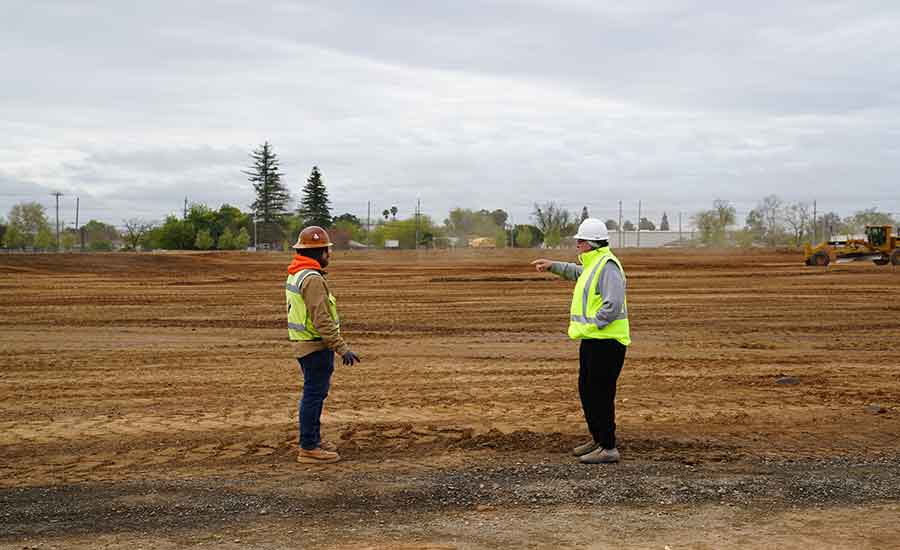
New-build facilities give processors a chance to integrate energy-efficient equipment and automation right from the start.
Upgrading or Replacing Old Systems
Replacement or initial installation of new and improved energy-efficient equipment that consumes much less energy than older type devices is a tried and true energy saving method. Still, owners typically resist replacement with a “if it’s not broken, why fix it?” point of view. This is a difficult argument to overcome in tight business markets until you look at the potential operational savings. For example, advanced boilers and furnaces may operate at higher temperatures but consume less fuel leading to a quick return on your investment. They are more efficient and emit less harmful substances into the environment.
Another example is that older electric motors usually operate at one regular speed. Newer variable speed drives allow setting the required velocity, so it is possible to save up to 60% of energy, depending on how the motor is used. New technologies have turned the corner and have helped these simple mechanisms operate at their peak performance leading to an incredible investment return.
In conclusion, efficiencies in food production facilities lay in many locations. The first place to start could be improving the facility’s conditions to ensure the stability of staff mental health, since they are a company’s greatest asset.
Footnote
[1] Carbon Dioxide (CO2) for the Food Processing and Cold Storage Industries - Klaas Visser, Honorary M.IIR, M AIRAH, M.IIAR The Official Journal of AIRAH - June 2002.Looking for a reprint of this article?
From high-res PDFs to custom plaques, order your copy today!