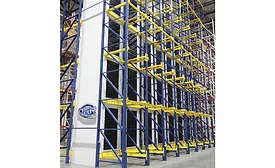
When Tippmann Group introduced the QFR Zone blast freezing alternative more than 10 years ago, the industry changed the way it looked at freezing their palletized products. Now, with more than 16,000 QFR Zone pallet positions sold, a new, patent-pending addition to the QFR Zone is the Pallet Fit door, which provides more flexibility than ever for freezing palletized product fast.
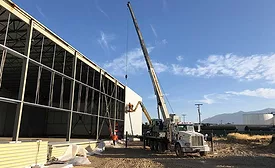
Blackline Cold Storage has broken ground at the site of their new 298,000-square-foot cold storage facility to be owned in partnership with Artemis Real Estate Partners at the Port of Houston, Texas. The facility will provide approximately 70 new jobs to the area when the first phase of construction is complete on the 36-acre site in TGS Cedar Port Industrial Park.
Blackline Cold Storage announced it will develop, construct and operate a new 298,000 sf state-of-the-art cold storage facility to be owned in partnership with Artemis Real Estate Partners at the Port of Houston, on a 36-acre site it is purchasing in the TGS Cedar Port Industrial Park. The rail-connected site is strategically located within the heavy-haul corridor in close proximity to the Barbours Cut and Bayport container terminals and with convenient access to the regional interstate highway system and provides Blackline the land for phased expansion up to 650,800 sf at full buildout.
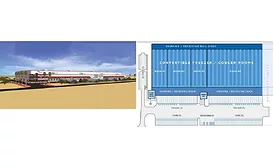
Ti Cold Development, a nationally recognized leader in the cold chain industry, has begun work on a 315,000-square-foot cold storage facility in Phoenix. Upon completion, this facility will feature nearly 40,000 pallet positions, a 60-foot-deep refrigerated dock, 40-foot-deep refrigerated rail dock and -10F to 35F, fully convertible refrigerated / frozen space.
Looking back on what we’ll call 2020 B.C. (Before Coronavirus), the pipeline for cold storage construction was already robust and healthy. According to research by commercial real estate firm CBRE, overall industrial construction—which encompasses cold storage, along with warehouses, distribution centers, manufacturing facilities, self-storage, office and flex space—was at 298 million square feet (MSF) before COVID-19, bolstered by the ongoing rise of e-commerce.