Conagra's Citizenship approach is centered around four pillars—Good Food, Responsible Sourcing, Better Planet and Stronger Communities—that guide how the company creates value while operating responsibly.
By producing ice directly at its distribution center, Winn-Dixie can reduce transportation-related greenhouse gas emissions by up to 90% while delivering fresher, high-quality products to customers.
The addition expands DHL Supply Chain’s fleet of Class 8 electric vehicles in North America to more than 150, reinforcing the company’s leadership in more sustainable transportation.
“Delicious Decarbonization Through Integrated Electrification and Energy Storage” project will reduce annual emissions by more than 99% from 2022 levels.
April 1, 2024
Kraft Heinz will use the funds to install a range of technologies, including heat pumps, electric heaters, electric boilers, anaerobic digestors, biogas boilers, solar thermal, solar photovoltaic and thermal energy storage.
Kraft Heinz aims to achieve net zero greenhouse gas emissions across its operational footprint and entire global supply chain by 2050.
February 13, 2024
The company has signed an agreement with Carlton Power to study the development of a renewable green hydrogen plant at its Kitt Green manufacturing plant in Wigan, Greater Manchester.
When building food manufacturing plants, it is vital to understand the product and the process for producing, packaging and storing raw materials, and the end product.
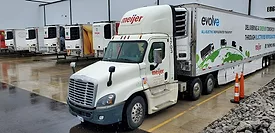
Meijer piloted Thermo King’s electric trailer during Michigan’s harsh winter weather, adding to Thermo King’s understanding of how climate impacts the system.