Cold Chain Perspectives
Process Safety in Cold: Why Near Misses Matter More Than Major Incidents
Operational discipline, frontline engagement key to preventing ammonia refrigeration events.
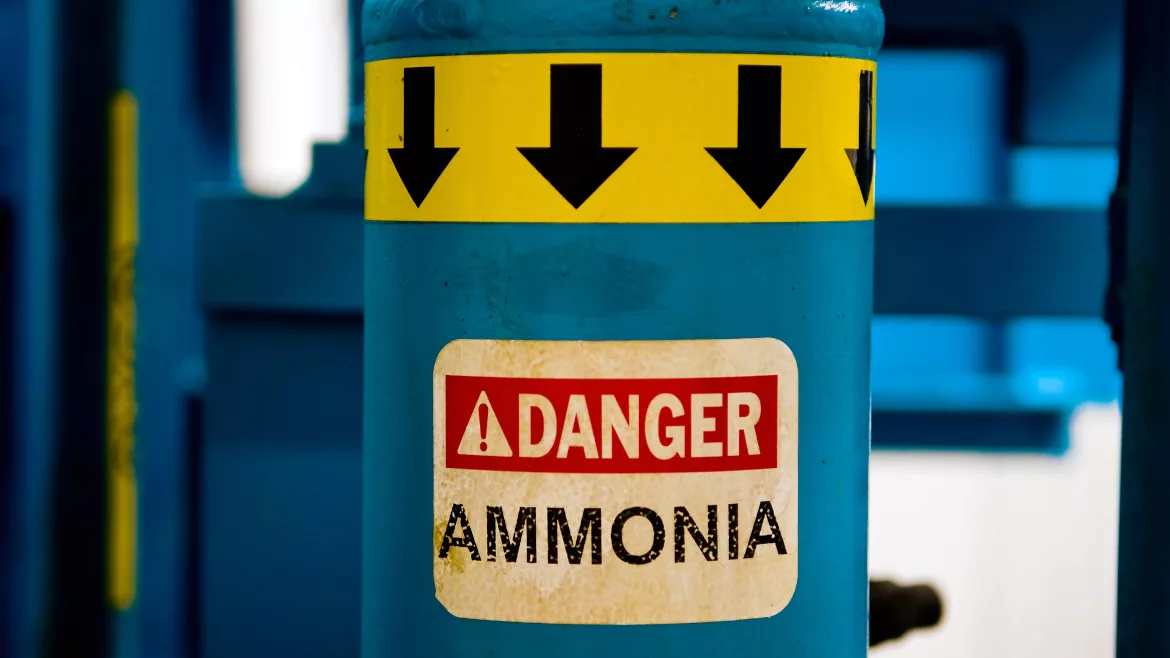
In ammonia refrigeration, many of the most valuable signals occur before a reportable release ever happens, repeated alarms in the same area or alarms that operators become 'used to.'
In refrigerated and frozen food operations, ammonia refrigeration has both a competitive advantage and a process safety responsibility. It delivers efficiency, performance and sustainable refrigeration but also introduces a high-consequence hazard that does not care whether your facility is running peak season throughput or a quiet overnight shift.
Most leaders will never personally manage a “major incident.” That is the point of prevention: catastrophic events are rare. But that rarity can create a dangerous illusion, one where the absence of major events is mistaken for evidence of strong process safety.
Near misses are the weak signals that tell you where your barriers are thinning, your operating discipline is drifting, and your teams are silently compensating for problems that will eventually stop being manageable. A near miss is often the last free lesson you’ll get before learning the hard way with the potential for injuries, evacuations, product loss, regulatory scrutiny and reputational damage.
Cold chain facilities that treat near misses as a primary process safety input, supported by operating discipline and frontline engagement, are most likely to prevent high-consequence refrigeration events.

Cold storage leaders who use near-miss data as process safety intelligence can strengthen the barriers that matter when ammonia systems are under stress. Image source: nasakid / iStock / Getty Images
Ammonia is widely used because of its excellent thermodynamic properties, low cost and a proven track record in industrial systems but requires vigilance.
Near misses show operations managers the procedural and maintenance gaps, inconsistent response to alarms, equipment aging into failure modes and other potential areas of concern. If your cold chain facility has only a few near miss reports, it may not mean you have few near misses – instead, it may mean you have a weak reporting culture, an early warning sign on its own.
Cold chain facilities often undercount near misses because they define them too narrowly (“no release, no problem”). In ammonia refrigeration, many of the most valuable signals occur before a reportable release ever happens, such as:
- Leak found and stopped before escalating.
- Repeated alarms in the same area or alarms that operators become “used to.”
- Outside normal operating envelopes (including recurring nuisance trips).
- Relief valve weeping, lifting, or suspected lift events.
- Suction or liquid valve left cracked, or a bypass inadvertently open.
- Oil pot or drain practices that involve improvised hoses, unverified isolation, or inconsistent PPE use.
- Isolation/lockout errors, near line-opening events, or confusion during a pump-down.
- Temporary repairs that become “semi-permanent.”
- Corrosion under insulation indications, damaged pipe supports, vibration issues.
- Hot work conflicts near refrigeration equipment, or inadequate pre-job hazard reviews.
Turning Data into Process Safety Intelligence
Near miss reporting is only valuable when it becomes decision-grade data. That means going beyond logging events and instead building a system that turns weak signals into corrective action.
- Make reporting easy, fast, and non-punitive: Near miss systems fail when they feel like paperwork, blame, or a trap. If the first question after a report is “Who did it?” people stop reporting. A practical approach is to allow short initial reports followed by a quick supervisor/PSM follow-up. Speed matters, a report written three shifts later loses detail and urgency.
- Categorize by barrier, not just by event type: Instead of only labeling an event leak or alarm, add tags that help you see patterns such as mechanical integrity (MI), operating procedures, alarm management, training/competency, contractor management, Management of Change (MOC), housekeeping, emergency readiness. Over time, your trending tells you where your protection layers are thinning.
- Treat repeat events as a serious signal: A single ammonia detector alarm might be a one-off. Three alarms in the same zone over two months is a sign of a failing system. Repeated near-misses deserve escalation because repetition is often the bridge between minor and major.
- Convert near miss learning into leading indicators: Many cold storage operations track lagging indicators (recordable injuries, spills, OSHA rates). Those are important but they don’t tell you whether your ammonia risk is increasing. The goal is not to hit a number. The goal is to see risk moving early and intervene.
Operating discipline sounds like a soft topic until you’ve seen how many serious ammonia events begin with ordinary drift:
- A procedure exists, but nobody uses it because it’s outdated.
- A valve lineup is “tribal knowledge” instead of verified.
- Alarm setpoints are unclear, so alarms become background noise.
- Shift handovers don’t capture abnormal conditions.
Operating discipline is the difference between a facility that is technically capable of safe operation and one that is consistently safe under pressure.
Critical tasks such as pump-downs, oil draining and startup/shutdown sequences should have simple, usable checklists that match how the job is performed.
EXPLORE MORE


Ammonia near misses often occur during transition when a system is left in an abnormal state and the next shift assumes it is normal. A structured handover that highlights alarms, bypasses, impairments, unusual valve positions and maintenance status prevents surprising conditions.
If alarms are frequent, unclear, or not actionable, operators adapt by ignoring them. That’s not an operator problem; it is a system design and management problem. Good alarm management means alarms are prioritized, response actions are defined, nuisance alarms are engineered out, detector maintenance and calibration are treated as safety critical.
Major releases are often preceded by small leaks, corrosion, vibration, repeated gasket failures, or ignored supports. When a facility treats minor seepage as “normal,” it trains the organization to tolerate loss of containment. A powerful cultural shift is to treat any minor leak as a process safety signal that triggers learning and prevention.
The people closest to the system operators, refrigeration techs, maintenance teams who work near evaporators see the weak signals first such as a new vibration, frost patterns that don’t look right, a valve that “never used to be sticky,” a detector that always seems to alarm after defrosting or a smell that comes and goes with load changes.
Practical ways cold chain facilities can do this include leaders and engineers spending time in engine rooms, valve stations and penthouses with a specific lens:
- What’s bypassed?
- What’s leaking, vibrating, corroding, or damaged?
- What jobs are being done “the hard way” because tools or access are poor?
- Where are people improvising?
Before maintenance work, analyze all the hazards associated with the project and make a mitigating action plan in case of an emergency.
High consequence events are often preceded by someone thinking, “This doesn’t feel right,” and continuing anyway. When frontline teams believe they can pause work without punishment, you prevent escalation.
Near miss systems succeed when facilities close the loop in a way that is fast, visible and institutional.
The last step is verification, and this is where many programs fail. If you don’t confirm that actions worked, you’re just moving paperwork.
A Starter Kit for Cold Chain Facilities
If you want to strengthen process safety performance in ammonia refrigeration, start here:
- Define ammonia near misses broadly (alarms, odors, excursions, valve errors, relief events, repeat issues).
- Make reporting easy (mobile-friendly, quick entry, optional anonymous reporting).
- Track and publish a few leading indicators monthly (repeat alarms, overdue corrective actions, safety-critical MI backlog).
- Tighten operating discipline around the highest-risk tasks (pump-down, isolation, oil draining, line opening).
- Run monthly frontline listening sessions focused on “what almost happened” and “what makes your job risky.”
- Treat repeats/near misses as urgent even if each one seems minor.
Major ammonia incidents are uncommon but that does not make them unpredictable. In most cases, the system sends warnings first in the form of minor leaks, recurring alarms, procedural workarounds and frontline concerns that never make it into the formal record.
Cold storage leaders who use near-miss data as process safety intelligence, backed by strong operating discipline and genuine frontline engagement, don’t just reduce incident rates. They strengthen the barriers that matter when ammonia systems are under stress.
Looking for a reprint of this article?
From high-res PDFs to custom plaques, order your copy today!