Refrigerated Frozen Foods logo
search
cart
facebook twitter linkedin youtube
  • Sign In
  • Create Account
  • Sign Out
  • My Account
Refrigerated Frozen Foods logo
  • NEWS
  • PRODUCTS
  • COLD STORAGE
    • Cold Storage Trends
    • Farm to Frozen
    • Supply Chain & Logistics
  • PACKAGING
  • TOPICS
    • Food Safety
    • Product Development & Manufacturing
    • Sustainable Solutions for Cold Foods
  • MEDIA HUB
    • Play Our Word Game
    • Podcasts
    • Videos
    • Polls
    • Webinars
  • DIRECTORIES
    • Cold Storage Construction Guide
    • Warehouse Guide
    • Food Master
  • MORE
    • Cold Chain Perspectives
    • Case Studies
    • C-Suite Q&A
    • Top 150 Processors
    • Awards >
      • Best New Retail Products
      • Cold Storage Facility of the Year
      • Processor of the Year
    • Directory of Associations
    • R&FF Store
    • Calendar of Events
    • FA&M Conference & Expo
  • EMAG
    • eMagazine
    • Archive Issues
    • Contact
    • Advertise
  • SIGN UP!
Food Safety

Consumer Reports challenges salad food safety

February 2, 2010

The non-profit publisher of Consumer Reports says its latest tests of packaged leafy greens found bacteria that are common indicators of poor sanitation and fecal contamination, in some cases, at rather high levels.


The story appears in the March 2010 issue of Consumer Reports and is also available free online at www.ConsumerReports.org. Consumers Union, Yonkers, N.Y., also said it issued a report urging the U.S. Food and Drug Administration (FDA) to set safety standards for greens, available online at www.ConsumersUnion.org. FDA food safety legislation pending in the Senate, and passed last summer by the House of Representatives, would require the FDA to create just such safety standards.


The tests, which were conducted with financial support from the Pew Health Group, assessed for several types of bacteria, including total coliforms and Enterocccous -- "indicator organisms" found in the human digestive tract and in the ambient environment that can signal inadequate sanitation and the potential for the presence of disease-causing organisms. While there are no existing federal standards for indicator bacteria in salad greens, there are standards for these bacteria in milk, beef, and drinking water. Several industry consultants suggest that an unacceptable level in leafy greens would be 10,000 or more colony forming units per gram (CFU/g).


Consumer Reports said it found that 39 percent of samples exceeded this level for total coliform, and 23 percent for Enterococcus. The tests did not find E. coli O157:H7, Listeria monocytogenes or Salmonella -- sometimes deadly pathogens which can be found in greens, although it was not expected given the small sample size. The goal was to investigate other markers of poor sanitation that should be used in the food safety management of produce.


"Although these 'indicator' bacteria generally do not make healthy people sick, the tests show not enough is being done to assure the safety or cleanliness of leafy greens," said Dr. Michael Hansen, senior scientist at Consumers Union. "Levels of bacteria varied widely, even among different samples of the same brand. More research and effort is needed within the industry to better protect the public. In the meantime, consumers should buy packages of greens that are as far from the use-by date as possible."


For its latest analysis, Consumer Reports had an outside lab test 208 containers of 16 brands of salad greens, sold in plastic clamshells or bags, bought last summer from stores in Connecticut, New Jersey, and New York. Among the findings:

  • 39 percent of samples exceeded 10,000 CFUs (or another similar measure) per gram for total coliforms and 23 percent for Enteroccocus, the levels industry consultants deemed unacceptable.
  • 2 percent of samples exceeded French and 5 percent Brazilian standards for fecal coliform bacteria.
  • Many packages containing spinach, and packages which were one to five days from their use-by date, had higher bacterial levels. Packages six to eight days from their use-by date generally fared better.
  • Whether the greens came in a clamshell or bag, included "baby" greens, or were organic made no difference in bacteria levels.
  • Brands for which there were more than four samples, including national brands Dole, Earthbound Farm Organic, and Fresh Express, plus regional and store brands, had at least one package with relatively high levels of total coliforms or Enteroccocus.
"The Senate should act immediately to pass pending FDA food safety reform legislation that requires the agency to set performance standards as well as develop safety standards for the growing or processing of fresh produce," said Hansen. "FDA should also formally declare that certain pathogenic bacteria -- such as E. coli O157:H7, Salmonella, and Listeria -- be considered adulterants when found in salad greens."

Until packaged salad becomes cleaner, Consumer Reports advocates that shoppers ...

  • Buy packages far from their use-by date.
  • Wash the greens even if the packages say "prewashed" or "triplewashed." Rinsing won't remove all bacteria but may remove residual soil.
  • Prevent cross contamination of greens by keeping them away from raw meat and poultry.


KEYWORDS: bacteria Consumer Reports packaged salads

Share This Story

Looking for a reprint of this article?
From high-res PDFs to custom plaques, order your copy today!
Recommended Content

JOIN TODAY
To unlock your recommendations.

Already have an account? Sign In

  • Best New Retail Products of 2026 badge with grocery store refrigerators in the background.

    Top of the Freezer: R&FF’s Best New Retail Products

    From BFY proteins to globally inspired treats, these...
    New Retail Products
    By: Kelley Rodriguez
  • Pasco Exterior

    Reser’s Fine Foods: From Farmhouse Kitchen to ‘Good Times’ Everywhere

    A home-based potato salad company started 75 years ago...
    Cold Foods Industry News
    By: Kelley Rodriguez
  • FromtheColdCorner-Anchor_1170x658.jpg

    EPR, Plastic Packaging for Cold Foods & More

    As consumer and regulatory pressure put plastic in the...
    Sustainable Solutions for Cold Foods
    By: Kelley Rodriguez
Manage My Account
  • eMagazine
  • What’s Hot in Cold Newsletter
  • Manage My Preferences
  • Online Registration
  • Customer Service

More Videos

Popular Stories

From the Cold Corner with Americold's Rob Chambers feature image

How Cold Chain Strategy Is Replacing Capacity

1170x658 of Cold Storage Podcast with Jennifer Jewers Bowlin and Craig Handy

ASRS, AI & Adaptability: What's Shaping the Future of Cold Storage

Containerized Cold Rooms outside.

Containerized Cold Rooms Gain Traction as Flexible Cold Storage Demand Grows

2026 Processor of the Year


Does your facility lead the industry? Nominate your cold storage facility today!

Events

June 17, 2025

Refrigerated & Frozen Foods’ State of the Cold Chain

On Demand Kelley Rodriguez, Editor in Chief of Refrigerated & Frozen Foods, will be joined in this 60-minute webinar by industry experts to help unpack the latest research.

January 1, 2030

Webinar Sponsorship Information

For webinar sponsorship information, visit www.bnpevents.com/webinars or email webinars@bnpmedia.com.

View All Submit An Event

Products

Water Activity in Foods: Fundamentals and Applications, 2nd Edition

Water Activity in Foods: Fundamentals and Applications, 2nd Edition

See More Products
New Retail Products

Explore the newest flavors, textures, and innovations in the frozen food aisle!


SEE WHAT'S NEW!
Play Refrigerated & Frozen Foods’ Cool Word of the Week! There's a new word every Wednesday.

Related Articles

  • default online grocery app

    Consumer Reports study finds America's grocery shopping is undergoing a revolution

    See More
  • Refrigerated, frozen foods in Consumer Reports' study

    See More
  • Consumer Reports reviews diet entrees

    See More

Related Products

See More Products
  • food safety.jpg

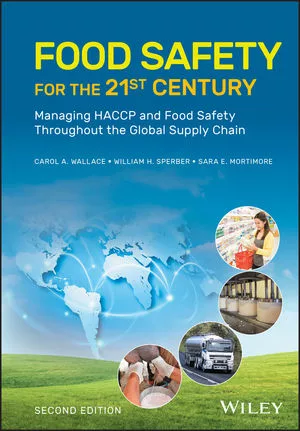
    Food Safety for the 21st Century: Managing HACCP and Food Safety Throughout the Global Supply Chain, 2nd Edition

  • food book.jpg

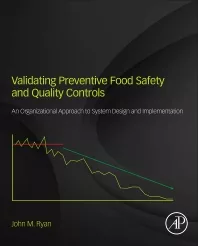
    Validating Preventive Food Safety and Quality Controls 1st Edition

  • small-occ.jpg

    Occupational Health and Safety in the Food and Beverage Industry

See More Products

Events

View AllSubmit An Event
  • July 13, 2016

    FSNS ANNOUNCES FOOD SAFETY CONFERENCE AND LAB GRAND OPENING JULY 13; Event Features Food Safety Topics, Lab Grand Opening and Temple Grandin Book Signing

    San Antonio, TX—June 6, 2016—Food Safety Net Services (FSNS) and Food Safety Net Services Certification and Audit (FSNS C&A) today announced the FSNS Food Safety Conference in Amarillo, Texas on Wednesday, July 13. A tour and reception of the FSNS Amarillo Laboratory will follow after the conference along with a book signing by Dr. Temple Grandin.
View AllSubmit An Event

Related Directories

  • Aptar - Food Protection

    Aptar - Food Protection is part of AptarGroup, Inc., that provides food protection solutions, applying active packaging science and equipment and processing expertise to develop advanced systems that help extend freshness and enhance safety for fresh-cut produce, seafood, and more. The company offers custom active packaging solutions that protect against foodborne pathogens, reduce food waste, and deliver improved consumer experiences. In addition to their active packaging solutions, the company’s portfolio includes a range of packing trays, pouches, retail and mini containers, slicing equipment, lidding film, and tray-sealing technology.
  • Foth | Food Plant Engineering LLC

    We are designers and builders of sustainable food production facilities. Using imagination, innovation, and ingenuity, we help food manufacturing companies improve food safety, gain productivity, and grow capacity.
  • Power Construction Cold+Food Group

    Our team delivers integrated design-build services for cold storage, food processing, and distribution facilities nationwide—bringing designers, builders, and in-house structural engineers together to solve complex challenges, control costs, and keep projects on schedule. From small box-in-box repairs to 300,000+ sf campuses, we bring experience across -20°F freezer environments, chilled processing areas, and ambient support spaces. With self-perform insulated metal panel (IMP) capabilities and deep technical expertise, we streamline every phase of construction to ensure quality, speed, and long-term performance.
×

Elevate your expertise in refrigerated and frozen foods with unparalleled insights and connections.

Get the latest industry updates tailored your way.

JOIN TODAY!
  • RESOURCES
    • Advertise
    • Contact Us
    • Directories
    • Store
    • Want More
  • SIGN UP TODAY
    • Create Account
    • eMagazine
    • Newsletter
    • Customer Service
    • Manage Preferences
  • SERVICES
    • Marketing Service
    • Reprints
    • Market Research
    • List Rental
    • Survey/Respondent Access
  • STAY CONNECTED
    • LinkedIn
    • Facebook
    • YouTube
    • X (Twitter)
  • PRIVACY
    • PRIVACY POLICY
    • TERMS & CONDITIONS
    • DO NOT SELL MY PERSONAL INFORMATION
    • PRIVACY REQUEST
    • ACCESSIBLITY

Copyright ©2026. All Rights Reserved BNP Media, Inc. and BNP Media II, LLC.

Design, CMS, Hosting & Web Development :: ePublishing