Are Plant-Based Proteins Better Suited for Refrigeration or Freezing?
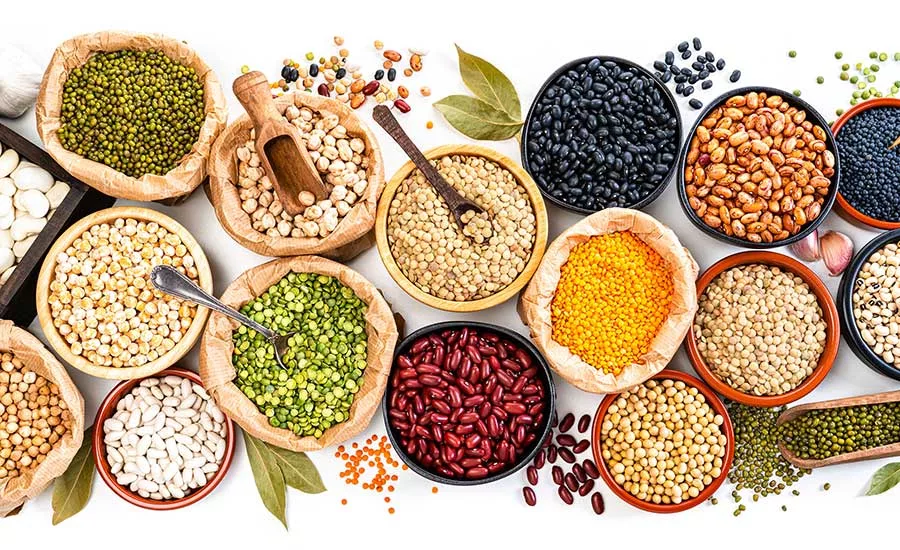
Some common ingredients that may be present in plant-based meat products that provide the protein include soy, peas, beans, mushrooms, mung beans, and wheat. Image courtesy of fcafotodigital | Getty Images E+ Collection
The plant-based protein industry is rapidly growing, with Bloomberg Intelligence recently predicting the market share could grow from $29.4 billion in 2020 to $162 billion by 2030, representing 7.7% of the total global protein market. As the size of the plant-based protein segment grows so does the interest of the type of companies competing in this industry. It’s not just startups anymore, as large established, global companies have shifted their focus to create more plant-based products to better meet and capitalize on this growing demand.
There are several obstacles companies need to overcome as plant-based proteins continue to capture market share. Reaching price party with animal proteins on a cost-per-pound basis will be important for cost-conscious consumers. Other key barriers to overcome for widescale consumer acceptance include the taste, texture, color, and nutritional profile of plant-based proteins.
Enter the cold supply chain. As with all cold products, manufacturers must formulate production, distribution, storage, and merchandising strategies as they evaluate the pros and cons of going refrigerated, frozen, or a combination of methods.
The challenge with plant-based proteins is that in addition to proteins and fats, they may also include ingredients not present in animal protein products. While these additional ingredients may help with consumer acceptance by providing such enhancements as a meat-like color at shelf, the sizzle when grilling or cooking, and the color, taste, and textures (in particular, mouthfeel) of the finished product, these ingredients such as carbohydrates, minerals, and flavor enhancers create a different structure than animal proteins. Some common ingredients that may be present in plant-based meat products that provide the protein include soy, peas, beans, mushrooms, mung beans, and wheat. Cocoa butter, coconut oil, and canola oil may be used to contribute to the fat composition.
While they are designed to match or perform better than animal protein products, careful attention must be paid to how these products are chilled. As Jamie Valenti-Jordan, CEO of Catapult Commercialization Services and a Certified Food Scientist explains, it is because this amalgam of various ingredients is meant to mimic the properties of meat at the point of consumption, not actually mimic meat entirely. The cellular structures that protect meat and meat fibers during a rapid freeze do not exist for plant-based products. The crystal growth protections afforded to animal proteins are not natively present in plant-based systems.
Due to variations in the proteins themselves, there is not necessarily a “best type” of protein to use from a refrigeration or freezing standpoint. However, it is important to consider modifications to the chilling process for plant-based proteins as compared to animal proteins. To account for these structural differences, frozen plant-based products generally require a quicker freeze process, better protection against freezer burn, and should be stored at lower temperatures to prevent damage from the freezing process.
For refrigeration of plant-based proteins, it is important to consider that the product is generally manufactured from a blend of hydrated powders from various sources. In addition to the potential for mishandling in the supply chain and inoculation of the final product, the distribution, storage, and final product quality should be taken into account when using refrigeration. When a plant-based protein product thaws, they are more susceptible to syneresis, since the structures holding the water are built for the consumption experience, not preservation, according to Valenti-Jordan.
As with other products in the cold supply chain, there is a balance when choosing between refrigeration and freezing as the desired cold production, storage, and distribution method. From a food safety and quality standpoint, minimizing changes in temperature and state are important. However, a combination of freezing and refrigeration may make the most sense to maximize a product’s life in the cold chain.
For example, one strategy might be to produce, store, and transport plant-based proteins frozen, to take advantage of a longer shelf life and minimize microbial activity. Once at the final consumer distribution point, such as the grocery store, a carefully designed slacking program could be used to gradually increase the temperature of the product for sale to the consumer. In some cases, this may be preferable to drive consumer behavior and convenience, as some plant-based proteins, specifically burgers and other products that closely mimic animal protein, may be designed to cook better from a refrigerated, not frozen state. Slacking programs are already used by retailers for a number of animal protein products, so extensive additional in-store employee training to execute a slacking program may not be necessary.
Both refrigerated and frozen plant-based meat saw significant growth over the past year, with the trend expected to continue. Although frozen plant-based meat has historically had a higher market share, refrigerated plant-based meat has seen a higher growth rate recently. Typically, frozen plant-based meat has been priced lower than refrigerated product, so presenting the final product to the consumer at the point of sale in a refrigerated fashion may command a premium price over frozen as well as achieve a closer price point to refrigerated animal protein products.
While properly frozen products, whether plant-based or animal proteins, may be relatively safe in frozen state for a long time from a food safety perspective, extended frozen storage may impact product quality. Unopened packages in the thawed state might typically be acceptable for up to 7-10 days. Because of the inherent sensitivity of plant-based proteins, quality and acceptance issues such as texture and moisture content could be mitigated by using constant temperatures for both freezing and refrigeration, and minimizing variations. Still, it is important to properly package your plant-based protein product to best protect it from quality issues throughout cold storage.
The cold chain is crucial in maintaining product safety and quality, with plant-based protein products no exception. As compared to animal proteins, plant-based products perform differently when it comes to refrigeration and freezing due to the difference in the cellular structures of their ingredients. While this may pose some inherent challenges, understanding the differences and the impact of freezing and refrigeration on plant-based products, along with careful design of the packaging and chilling methods—especially during production—can result in a safe, high-quality product being delivered to the consumer.
Looking for a reprint of this article?
From high-res PDFs to custom plaques, order your copy today!