4 Examples of How Automation Drives Efficiency in Prepared Foods Processing
How technology can cut waste and boost throughput for popular cold foods.

Automation dramatically increases pizza production rates, improves accuracy and quality, and ensures less waste through accurate sauce depositing and consistent toppings with the ability to slice and apply pizza in full patterns.
As demand for RTE and frozen foods soars, food processors looking to drive throughput are looking for ways to maximize efficiency and gain a competitive edge.
Efficiency boils down to speeding up production – and cutting waste – to deliver the same high quality in every batch, day in and day out.
Process automation can help eliminate bottlenecks and optimize cold foods production, ensuring higher efficiency from ingredient and raw materials receiving to the loading dock for distribution. Advanced technology can dramatically change the production floor, especially when it comes to prepared foods like pizza, sandwiches, frozen and ready meals and snack foods.
Here are four examples of how automation drives efficiency in prepared food processing.
1. Pizza Production
Fresh (refrigerated) and frozen pizza production is up based on consumer demand. For example, the frozen pizza business is projected to grow at a compound annual growth rate (CAGR) of 6.9% from 2023 to 2030, according to Grandview Research.
Machines that automate pizza production include sauce applicators, topping applicators and pizza slicers.
How automation improves efficiency: Manually topping pizzas can be time-consuming, inconsistent, and, at times, wasteful. For larger operations, heavy labor may be required.
Automation dramatically increases production rates, improves accuracy and quality, and ensures less waste through accurate sauce depositing and consistent toppings with the ability to slice and apply pizza in full patterns.
When fully integrated, a pizza topping line can produce more than 45 pizzas per minute per lane. A sauce depositor, topping depositor, and pepperoni slicer can be configured to work together. Some equipment offers simple recipe changeouts so a processor can easily produce different types and sizes of pizza on the same line. Machines can scale up to multiple lanes for high-volume operations.
2. Sandwich Assembly
The global sandwich market is estimated to grow by $43.8 million through 2028, driven by multiple factors, such as the rise in popularity of breakfast sandwiches, as well as diverse consumer tastes.
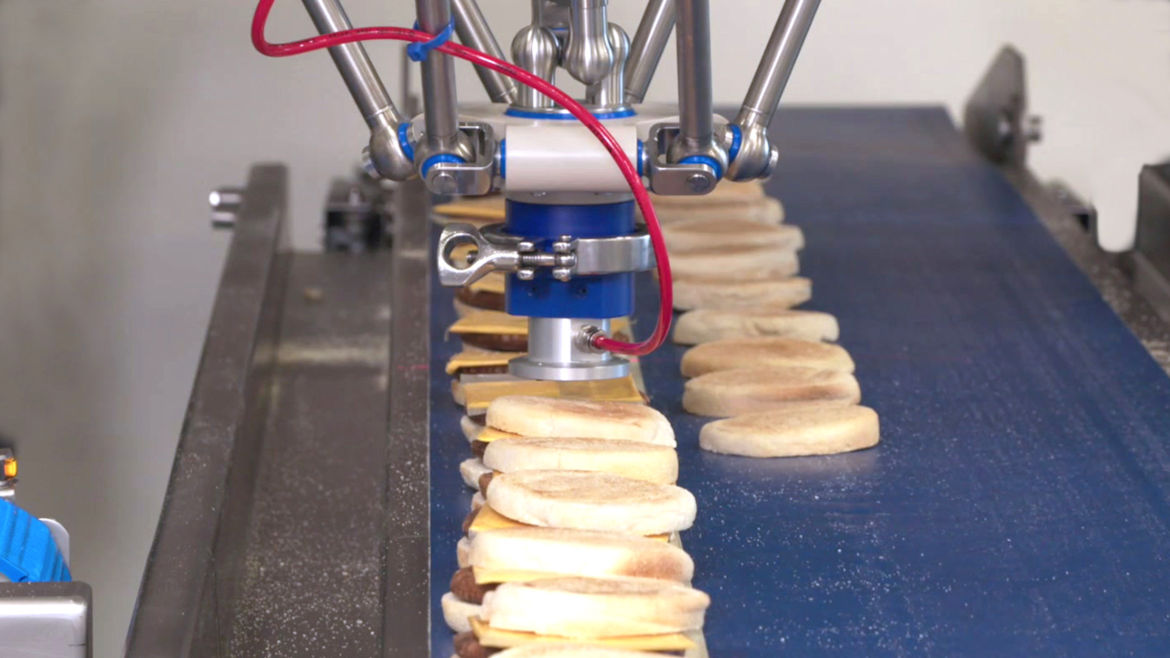
Machines that automate include processing equipment, plus robotics can automate an entire sandwich production line.
How automation improves efficiency: Equipment integrated with robotics can almost completely replace manual labor and dramatically increase production. It automates nearly all the applications in making a sandwich up to the final packaging.
A line can be fully integrated and run at the same rate (60 per minute, per lane) throughout to ensure consistent production. All portions are consistent, from condiments and salads to the slicing and application of meat and cheese. Hygienic robotics units are designed to handle ingredients and completed sandwiches to prepare them for the next step.
Sandwich depositors, slicers, cutters and robotics all have built-in flexibility to process multiple recipes and products, so manufacturers can easily change out ingredients and process products on the same line with minimal downtime. Look for equipment designed for maximum hygiene to streamline sanitation and allow thorough cleaning and validation between runs.
3. Prepared Meals
The prepared meals category includes ready-to-eat meals, salads, and frozen meals. Revenue in the RTE meals market amounts to $48.61 billion in 2025, according to Statistica. The market is expected to grow annually by 2.77% (CAGR 2025-2030).
Consumers find grab-and-go retail prepared foods appealing, driven by the fact that some consumers view their cooking skills as limited or prefer not to cook completely from scratch.
Machines that automate include slicers, spreaders and depositors.
Automation improves efficiency and boosts ROI by increasing overall throughput and improving the accuracy of slicing, spreading, and food application to ensure consistency and minimize waste. Here’s how that works with three common types of prepared foods.
Prepared meals include sandwiches, salads, frozen and ready meals. Automated slicers slice and apply ingredients directly into trays and food bases, providing consistent and accurate slice thickness and placement, which improves quality and reduces waste.
Most slicers are cantilevered so they can be moved on or off the line for production flexibility and ease of sanitation. They can also be reconfigured to change ingredients, reducing downtime between SKUs.
Integrated depositors apply sauces, condiments, salads, and other ingredients with accurate placement. Units are designed to handle flexible ingredients and different deposit weights and can be moved on or off the line for sanitation.
4. Snacks
The snack food category is expected to grow annually by 6.20% (CAGR 2025-2030), per Statistica. In 2025, revenue in the snack food market totals $269.45 billion.
Trends impacting the snack food market are the consumption of snacks as a meal replacement and a more extensive selection of healthier snack options.
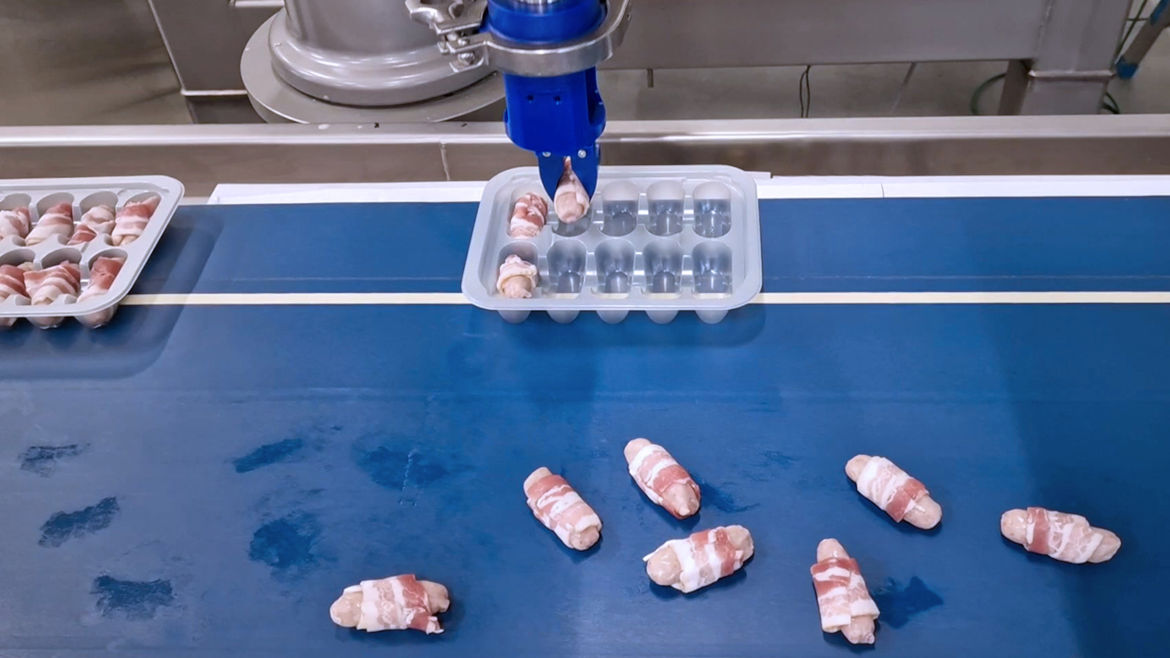
Machines that automate include many slicers that are designed to slice food into snacks. These machines scale from offline slicing to high-volume, multi-lane bulk slicing.
How automation improves efficiency: Inline slicers integrate with the processes before and after, such as chillers, ovens or fryers, by slicing product directly onto the required trays and screens, streamlining production and increasing throughput.
Examples of sliced snacks that benefit from an automated process include:
- Meat and vegan substitutes for jerky and other meat snacks.
- Bread chips, crisps, melba toast, and other baked snacks.
- Dehydrated or dried citrus slices used in snacks, drink garnishes, gift boxes and more.
The popularity of prepared food continues to rise as consumers require on-the-go options for their busy lifestyles. Automation allows food processors to keep up with the demand for pizza, sandwiches, prepared meals, snacks and other food items.
By partnering with vendors that offer automation and robotics to meet the needs of consumers, processors and manufacturers can be ready to scale up as needed.
Looking for a reprint of this article?
From high-res PDFs to custom plaques, order your copy today!