Frozen Novelty Co-Packer Improves Packaging Line Uptime

This partnership leverages Mini Melts USA's proven expertise in frozen vending infrastructure, operations, and distribution, combined with The Magnum Ice Cream Company's portfolio of iconic brands and products.
Frozen novelty ice cream packaging lines are unforgiving. High speeds, temperature sensitivity, and limited opportunities for accumulation mean that interruptions and the resulting downtime quickly translate into product loss.
When a premium ice cream manufacturer shifted high-volume stick novelty production from Mexico to a U.S. co-packer, predictable packaging line uptime became the deciding factor in scaling production.
This case study details how IPM - Integrated Packaging Machinery applied an OEM-neutral, systems-level integration approach to design, validate and guarantee a high-speed frozen novelty packaging line engineered to deliver sustained throughput, controlled recovery and predictable uptime through built-in capacity redundancy, system-level automation and coordinated controls.
Engineering Uptime Through System-Level Integration
The co-packer partnered with IPM to design and integrate a stick/novelty packaging line, engineered to sustain uptime at a minimum of 720 bars per minute, within a constrained footprint. The project required a fully integrated back-end system capable of protecting product integrity, maintaining throughput during downtime and delivering guaranteed performance from cartoning to palletizing.
The frozen novelty format added complexity: once product exits the spiral freezer, production cannot stop. Approximately 45 minutes of product can continue moving downstream, even if upstream feeding is interrupted. Any packaging interruption risks significant product loss, rework, or compromised quality.
Because frozen product could continue moving downstream during upstream interruptions, the packaging line needed to operate with margin beyond nominal demand. Meeting the minimum throughput requirement alone was not sufficient. The back end had to be capable of absorbing disruptions, while continuing to run, rather than simply matching the required rate under ideal conditions. This shifted the focus from individual machine speeds to integrated system behavior across the packaging line.
The goal was to design a packaging system that could absorb disruptions without stopping product flow, while maintaining strict performance targets. The solution also had to fit within a limited plant footprint and integrate with existing upstream freezing and flow-wrapping equipment.
Key Performance Metrics
-
720 Bars/Minute
Backend packaging designed to preserve uptime. -
25% Throughput Redundancy
Engineered margin that allows recovery without stopping product flow. -
Scrap < 15%
Up to 50% less than typical frozen novelty scrap rates.
The objective was not simply to meet a target rate, but to design a comprehensive packaging system that could predictably operate during disruptions. That meant engineering margin into the line, building in redundancy where it mattered most and ensuring that downstream equipment was designed to outpace the upstream process when required.
Each design decision was made and evaluated based on how each machine-center and unit operation in the line was expected to interact and perform in synch with all the other machine-centers and unit operations in the packaging system. Predictable and controllable packaging system uptime performance is shaped by machine interaction and recovery behavior.
“At these speeds, uptime isn’t about how fast a single machine can run. It’s about how the system performs when something changes. Recovery dynamics, interaction between machines, and how quickly the line stabilizes are what ultimately define performance,” said Brad Breuker, director of applications & business development, IPM.
IPM refers to this methodology as hybrid integration. Rather than optimizing individual machines in isolation, hybrid integration aligns OEM-neutral equipment specifications, controls and service strategy around system behavior under real operating conditions. In frozen novelty applications, where recovery dynamics, disruption tolerance and interaction between machine centers define uptime, this system-level focus is essential to achieving predictable performance at speed.
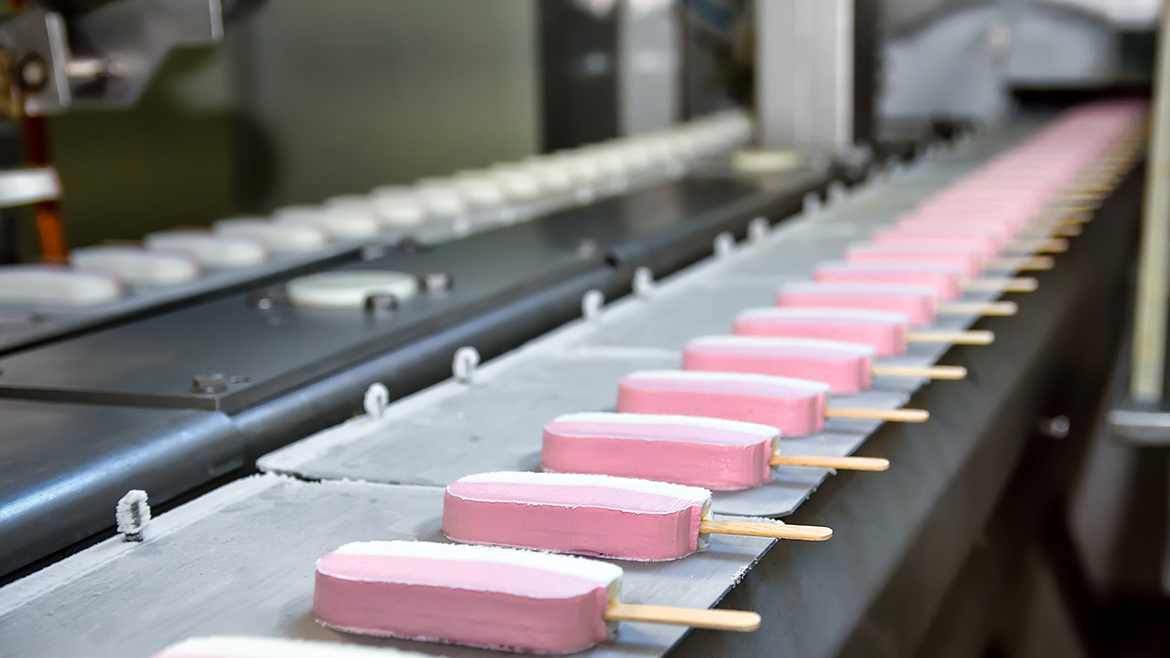
IPM focused its engineering effort on the back end of the line, where disruption risk was highest.
Rather than matching freezer output, downstream equipment was specified and integrated to operate above the minimum required rate. This provided a built-in margin that allowed the packaging line to continue running during downstream interruptions. Redundancy was intentional and targeted, applied where downtime would have the greatest downstream impact, with the goal of building system resilience rather than duplicating equipment unnecessarily.
An OEM neutral design strategy is critical to executing the system-level strategy. IPM did not begin with predetermined equipment selections. Instead, multiple back-end suppliers were evaluated based on how each option would interact, react and perform within the integrated system.
Two vendors were assessed against the same criteria, with emphasis on throughput capability beyond the minimum rate, serviceability, recovery behavior during disruptions and overall fit within the available footprint. At production speeds, mismatched recovery dynamics between machine centers often define overall system stability, so the evaluation focused less on individual machine specifications and more on predictable, resilient line performance under real operating conditions.
One solution stood out based on how it performed under disruption conditions rather than how it performed under ideal conditions. The specified equipment demonstrated faster recovery following interruptions, more predictable operation during restart events and better alignment with the overall control strategy of the line.
IPM’s OEM-neutral approach also created a competitive evaluation environment, allowing multiple suppliers to bid against the same system requirements. This ensured pricing reflected true market conditions, rather than being driven by single-vendor preferences. As a result, the co-packer achieved a lower overall system cost while still meeting the line's performance, automation, serviceability and integration requirements.
Controls integration was essential to translating system design into consistent line performance. IPM integrated controls across the back end to coordinate equipment behavior during rate changes, interruptions and recovery events, ensuring the packaging line responded as a single system rather than as independent machines. This coordination aligned recovery timing and downstream response across machine centers, enabling smoother restarts and more predictable operation under disruption.
Integrated packaging line equipment included:
- High-speed stick novelty cartoning systems.
- Accumulation and transfer conveyors for frozen product handling.
- Case packing systems are integrated to maintain downstream flow.
- Robotic palletizing systems supporting high-throughput operation.
- Integrated controls coordinating rates, interruptions, and restarts.
Validating Performance with Real Operating Conditions
IPM aligned system design decisions with how performance would be validated. Acceptance criteria were defined around real operating conditions rather than idealized test scenarios, reflecting the realities of frozen novelty production. The packaging line was required to demonstrate sustained operation at the specified throughput while maintaining stability during planned and unplanned disruption events.
Validation extended beyond factory acceptance. As part of Factory Acceptance Testing (FAT), key machines were evaluated at the OEM’s facility in Germany to confirm performance prior to shipment. Because the finished product could not be shipped in frozen form for testing, IPM used a foam-based surrogate, selected to replicate the handling characteristics of the frozen novelty format. In parallel, IPM conducted on-site testing of the conveyor system to verify product handling, accumulation behavior and recovery dynamics under frozen conditions.
Rather than relying solely on individual machine acceptance, IPM validated performance at the system level, with specific validation of the custom conveyance system. This approach ensured that equipment interactions, recovery behavior and control coordination were evaluated together, mirroring how the line would operate in production. Performance guarantees were tied to integrated system behavior, reinforcing accountability beyond installation and startup.

The packaging line was engineered with substantial throughput margin built in. While the application required sustained operation at 720 bars per minute, IPM designed downstream packaging equipment with a 25% engineered redundancy factor. This additional capacity was intentional, providing the margin required to support recovery and maintain system and product control during the disruptions inherent in frozen novelty production.
The engineered capacity allowed downstream equipment to absorb localized interruptions without forcing upstream stoppages, reducing the risk of product loss when frozen product continued flowing downstream.
The system reduced scrap to below 15%, cutting expected losses by roughly half.
With installation underway, the co-packer is well positioned to execute a critical transition with confidence. Through IPM’s OEM-neutral approach to system-level integration, the packaging line has been designed and validated to deliver sustained throughput, controlled recovery and predictable uptime through built-in redundancy and system-wide controls.
For frozen and refrigerated food manufacturers facing higher speeds, tighter footprints and increased operational risk, system-level integration is essential to protect uptime, manage recovery and sustain performance.
Looking for a reprint of this article?
From high-res PDFs to custom plaques, order your copy today!