Traceability, Productivity, Compliance Labeling Requirements
Traceability, productivity and compliance labeling requirements (such as GS-1) are driving the fresh food industry to use barcode technology—at the dock side, in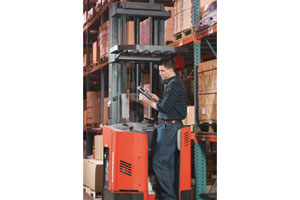 the field, at the production line and in storage.
Challenge
Being in the fresh food business means getting short shelf-life products to market as quickly and cost effectively as possible. Wholesalers and retailers are becoming more demanding and the processors, in order to comply with new requirements, are using barcode technology in increasing numbers.
Solution
Alaskan fish processors have been using SIMBA software for more than 25 years. It was designed in the late 1980s with the purpose of reporting daily production to management and sales. Since then, the system has expanded to include printing compliance labels, tracking inventory, verifying shipment and completing lot traceability for food safety.
Flexibility
The fresh food industry encompasses everything from fish to produce to meat and poultry to berries and citrus fruits. Each product has its own unique challenges for production, handling and food safety. The following is a discussion of available and scalable solutions for cold storage companies when handling fresh food products.
Cold storage companies are most often managing products owned by their customers. This “temporary custody” of fresh product includes the requirement for confirming item/quantity/location, lot traceability, maintaining freshness and shipment verification.
Scenario 1: Receive/store/ship
In this example, the cold storage company is an inventory location for the product owned by their customer and performs no value-added functions. The facility may be the first point of ownership of the product for their customer. For example, a berry jam manufacturer purchases cooked berries from a number of local growers. The drums of berries are shipped directly to the third-party cold storage facilities who hold the product in a temperature-controlled environment until needed for a production run.
The manufacturer has required the cold storage facility to report upon receipt of the drums, which grower sent the berries, what is the product code and quantity, and to ship specific drums to them upon request. No processing or commingling is required. Traceability is simplified—keep track of the drums by lot until shipped and report to the manufacturer.
Scenario 1: Solution
The software solution for Scenario 1 may include:
Barcode labeling. Upon receipt, the facility may print a barcode label that ties to the pertinent details in an inventory management database or on an Excel spreadsheet. The database details could include grower, lot number, product code, date received and/or storage location.
Inventory control. If the drum is within the facility, a simple scan of the barcode label and entry (or scan) of the new location code updates the inventory software database.
Palletizing. Some product traceability and inventory management software solutions provide for accumulating units (drums, cartons, etc.) on to a pallet and track all units with one “pallet label.”
Shipping and shipment verification. Once the owner of the goods requests a shipment, that transaction may be captured in the software and, in more advanced systems, the Manifest and Bill of Lading may be automatically produced.
Print barcode labels/store on database. This solution is the simplest and includes three pieces.
• Barcode label printer—Prices can range from as low as $500 up to $4,000 depending on the number of labels printed in a time period. Most requirements can be addressed for about $1,400.
• Label design software—A single-user version that will allow printing from an Excel spreadsheet or database will run about $450.
• Stand-alone or networked PC—The PC doesn’t have to be very powerful. It just needs to have a USB port for the printer and minimal memory/storage. This solution is the least expensive, the easiest to install and the easiest to use. It does not address the need to record inventory locations, palletize or verify shipment information. It does provide lot traceability, as long as a lot number is captured in the database.
Moving to the more advanced solutions, a cold storage facility that is not required to commingle lots or perform any processing may chose a fairly straight-forward inventory management software. A couple of features to look for are:
The ability to store an item in multiple locations. Not all inventory management software allows for this, and a problem can occur if there isn’t enough space in a specific location for the quantity on hand.
The ability to track lots. Again, this is not always available, and will be critical for any cold storage company with traceability requirements.
Inventory management software has a wide range in price also. It can be purchased from as low as $2,000 to highs of $500,000 or more for those that have advanced warehouse management features.
When choosing mobile barcode devices, think about your environment. The least expensive
mobile pda’s are the most fragile. Warehouse locations are notoriously hard on equipment, so you will want a hardware solution that has a high IP rating. (IP65 is sealed from dust and sprayed water; ask about the “drop test” and get one that can withstand multiple 6-foot drops to concrete).
If the mobile devices will be used in freezers, it’s best to get ones that are “non-condensing.” This means they won’t fog up when being used.
Commingling is when product from different lots (perhaps even different species) are mixed together in a new carton. This happens when the cold storage facility is asked to complete an order fulfillment function for their customer. Processing happens when the facility actually alters the product (cuts into fillets, adds ingredients, etc.). To maintain lot control and traceability, the software used must have re-boxing or commingling functionality. You will find this only in software specially designed for fresh food.
Track by lot or by carton?
There are two methods of maintaining traceability: (1) track the lots as they move through the supply chain; (2) track lots within cartons as the cartons move through the supply chain.
If a simple lot tracking method is used, as lots are commingled, all the included lots are considered contaminated in the case of a recall. For example, lot B is commingled with a portion of Lots A and C. Because there is no way in a straight-forward lot tracking scheme to differentiate which portions of Lots A and C have been commingled, if Lot B is recalled, so are Lots A and C in their entirety. This can get expensive.
A better method is by using a carton tracking scheme. The software accumulates carton data, defining which cartons contain which Lots. Then when Lot B is contaminated, only
cartons B, A/B and B/C are recalled. This tracking method (re-boxing lots by carton) would also pertain to any recalled ingredients in processed foods.
For a cold storage company, the risk of a cooler or freezer malfunction must also be considered. If that happens, the cartons in that location at the date of the malfunction should be tracked and destroyed. Again, unless the lots are tracked within each carton, the risk of having to recall the entire lot rather than the affected cartons is a real possibility.
The importance of shipment verification
Every company has shipment disputes. Ideally it would be possible to retain proof of what was contained in a specific shipment. Using a method of shipment verification (sometimes called
“van loading”) solves this problem. As cartons are accumulated onto pallets and loaded onto vans, each is accounted for using a barcode scanning application. Each carton number is assigned to a van and included on the manifest.
A system that addresses the lot tracking requirements of Scenario 2 will include all of the features of the inventory management system in Scenario 1 plus the following:
Printing the carton label. A carton label may be as simple as a serial number, as specific as a GS-1 label or as complex as a Costco-compliant label. Whichever is the case, find an inventory management system that allows for the most complex label you can envision.
Boxing, re-boxing and commingling. The requirements for commingling and re-boxing are unique to products that have the potential of recontamination or recall (fresh foods). It’s important to find a software solution that accounts for these situations by tracking expiration dates and lot numbers—and that has a tracking scheme that mitigates losses in the case of a recall. The ability to track products by various attributes (size, grade, owner, etc.) is also unique and important in the fresh food industry
Other key features to look for:
• Ease of use—make sure the system can accumulate attributes, print barcode labels and track cartons and lots without too many key strokes.
• Speed and flexibility—collecting that much information can take time if the data collection scheme isn’t efficient.
• Track by carton—how tracking lots within cartons will save money.
• Shipment verification—record shipments by carton and van number to satisfy any disputes.
Conclusion
The use of barcode in cold storage environments can be key to a well-run and profitable business. Solutions range from simple to very complex, from inexpensive to more than $1 million. It is important that you list the key elements that will be required for your system to both satisfy your customers and provide you with access to the information that you need to run your business at the highest level of efficiency, accuracy and profitability.
Learn more by contacting Dynamic Systems Inc. at 800-342-3999, ext. 240.
Looking for a reprint of this article?
From high-res PDFs to custom plaques, order your copy today!