How Today’s Ports Improve, Expand & Build for the Future

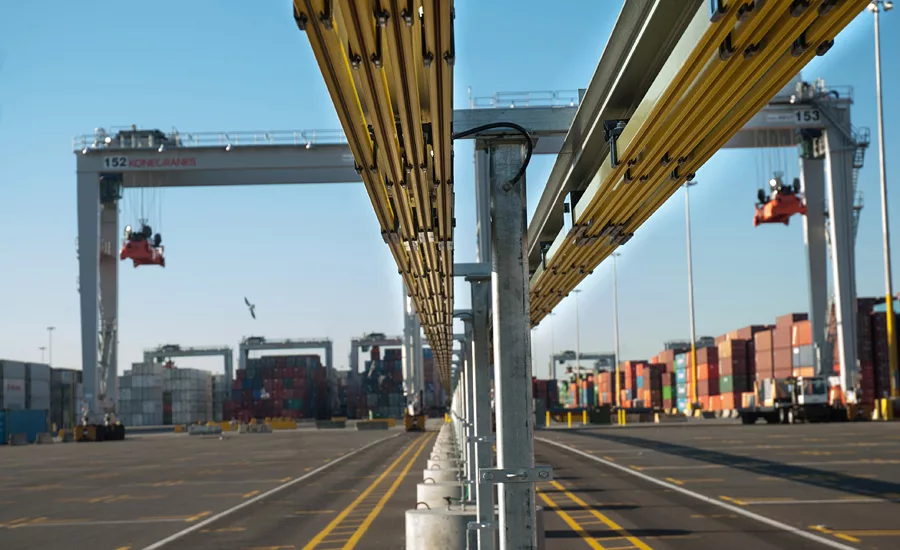

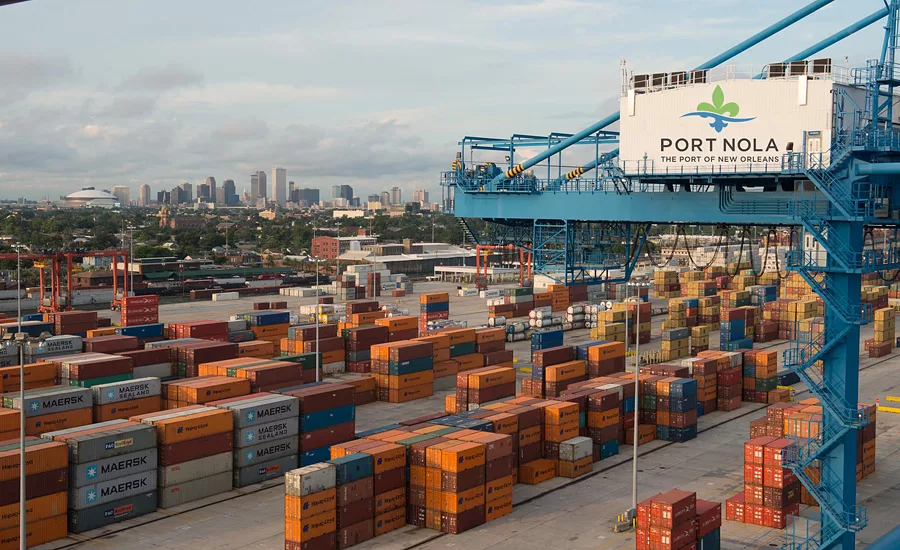
Over the past year, Port of New Orleans and its terminal operators implemented automated gate systems and terminal operating systems, added 450 refrigerated plugs to its container terminal, made greater use of RFID tags to improve gate efficiency and developed a GPS-based app and optical character recognition to deliver greater visibility of terminal flow.
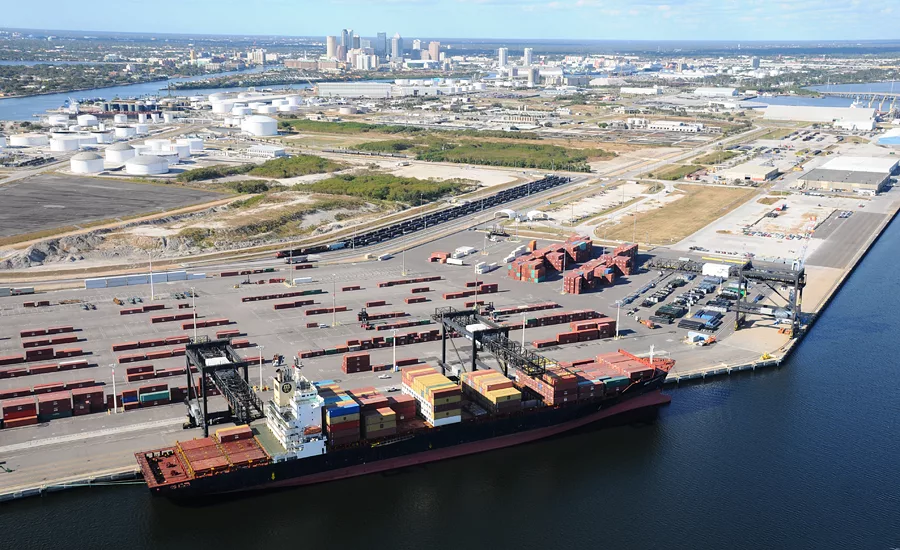
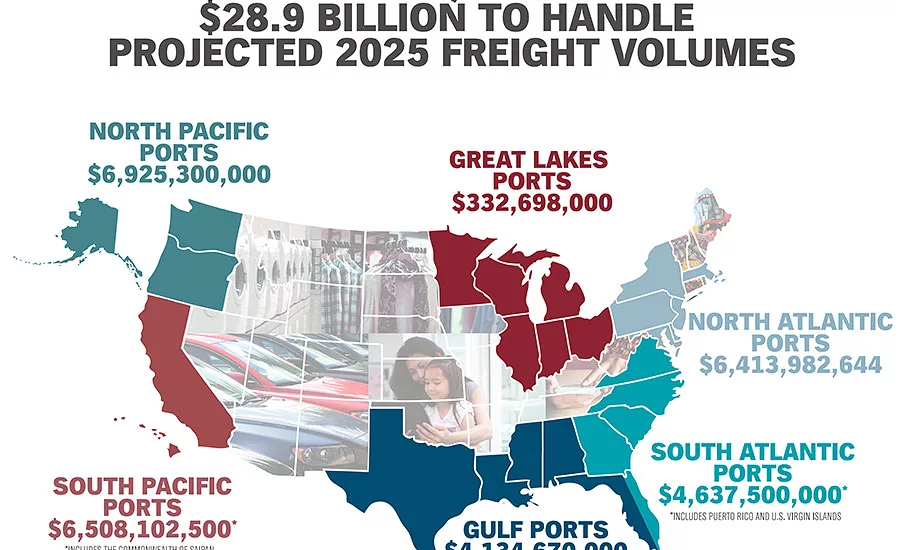
Here’s a breakdown of today’s U.S. ports and what’s required to handle freight volumes in 2025, according American Association of Port Authorities.
When it comes to improving import and export, port authorities and their private-sector partners are making major investments in adding or improving their on-dock rail facilities, according to Kurt Nagle, president and CEO of American Association of Port Authorities (AAPA), Alexandria, Va.
“Based on AAPA’s survey responses, a majority of U.S. ports are engaged in upgrading and/or expanding their on-dock rail systems, but have cited the need for outside resources, primarily federal funds, to help pay the costs,” adds Nagle. “In addition to rail infrastructure improvements at ports, information technology is also helping to hasten the movement of cargo. For instance, to speed cargo flow, ports are investing in digital cameras and other technology to track devices installed on shipping containers that provide vital information about their whereabouts in the supply chain. At many ports, digital cameras rather than human inspectors are used at terminal gates to examine containers for mechanical fitness and check that security seals are intact. And, thanks to digital systems, drivers no longer need to pull out paperwork and wait while someone checks printed information against a computer screen. A digital camera can identify the unit number of the container, match it automatically with the advanced billing data that has been entered into the system, and in some cases, immediately tell the driver where to go within the marine terminal to discharge his or her load.”
Find out what some of today’s ports are doing to improve carbon footprint, enhance efficiency and operate safer, more state-of-the-art terminals.
Port of New Orleans
Over the past year, the Port of New Orleans (Port NOLA), New Orleans, has made significant investments in state-of-the-art technologies to become faster, safer and more efficient.
For example, Port NOLA and its terminal operators implemented automated gate systems and terminal operating systems, added 450 refrigerated plugs to its container terminal, made greater use of RFID tags to improve gate efficiency and developed a GPS-based app and optical character recognition to deliver greater visibility of terminal flow.
“Like most ports across the U.S., the Port of New Orleans is keenly focused on how to improve access and egress to port facilities for trucks that serve the port,” says Gary LaGrange, president and CEO. “Terminal operators have invested several million dollars in the past year to improve gate and terminal efficiency, which has resulted in a greater number of trucks processed per hour.”
Meanwhile, the New Orleans Terminal assembled two rubber-tire gantry cranes to increase container handling and turn times. And, the Mississippi River Intermodal Terminal’s $25.1 million project, scheduled for completion in February, will result in a more modern and efficient intermodal container transfer terminal to facilitate the movement of marine and rail cargo, while enhancing safety and reducing carbon footprint.
Port NOLA also expanded cold storage services with its partner New Orleans Cold Storage to provide blast freezing, import/export, staging and order assembly, shrink wrapping, USDA-approved inspections, stamping and labeling, container loading/unloading and refrigerated break bulk vessel loading/unloading.
Furthermore, in July 2015, Green Marine, a Canada-based environmental certification program for the marine, port and terminal industry, recognized Port NOLA as a certified-green port.
“Our customers are asking for more direct container shipping services,” adds LaGrange. “We are a globally connected port, but customers shipping refrigerated and frozen products by nature need fast transit times to and from their markets, so we are working with our carrier partners to ensure that New Orleans has the services that meet their needs.”
Port of Los Angeles
The Port of Los Angeles, San Pedro, Calif., embraces technology to increase supply chain efficiency, says Marcel van Dijk, marketing manager.
For example, it is working with Cargomatic, a Venice, Calif.-based company that matches trucking capacity with shipments, to test its mobile app designed to speed up the flow of containerized cargo. This peel-off shipping concept, called the “Cargomatic Free Flow” program, is a web-based solution that optimizes container moves for cargo owners, terminals and trucking companies.
The Port of Los Angeles also celebrated 10 years of clean air gains with a record reduction of key pollutants, according to its 2014 Inventory of Air Emissions report, released in October 2015. Findings show that the Port of Los Angeles set new records for cutting harmful emissions from port-related sources, with diesel particulate matter down 85% and sulfur oxides having plummeted 97% since 2005.
Furthermore, the port’s TraPac Container Terminal expansion entails a 5-year, $510 million program that will extend the wharves to 4,600 linear feet, deepen water depth at berths, install new cranes, upgrade 50 acres of backlands, make road and gate improvements and build a new on-dock rail facility. TraPac is a unit of Japan-based Mitsui O.S.K. Lines Ltd.
Additional projects involve improving freeway access to port facilities, eliminating traffic movement conflicts, enhancing existing non-standard elements and accommodating existing and future traffic conditions for port and background traffic.
“The primary strategy of this $383 million program is the reduction and separation of port truck traffic from roadways heavily used by the general public,” says van Dijk. “This program also includes the South Wilmington Grade Separation, I-110/SR-47 Interchange, I-110/C Street and I-110/John S. Gibson Access projects.”
Port Tampa Bay
On the other side of the country is the Port Tampa Bay, Tampa, Fla., said to be one of the few ports that converted to the “i-cloud” for backup of financial and operating systems. The Port Tampa Bay also created a mobilized emergency control center in preparation for natural disasters such as hurricanes.
The Port Tampa Bay will also undergo construction of an on-dock refrigerated facility and terminal, providing new efficient supply chain solutions to the Florida market and beyond, says Raul Alfonso, executive vice president and chief commercial officer.
“Ports must invest in their future,” he adds. “Port Tampa Bay, with strong support from the state of Florida, is investing over $112 million in the next two years on numerous infrastructure projects. Two new post-Panamax gantry cranes (arriving in 2016), new rail infrastructure, new (and expanded) ship berths, new refrigerated warehouse facilities, etc. Investing in ports, or making long-term commitments to ports, are key for generating operational and economical efficiencies that are needed in today’s global economies.”
Georgia Ports Authority
Georgia Ports Authority (GPA), Brunswick, Ga., is extending its use of process automation technology from Identec Solutions, Dallas, Texas, to support the operation of new ship-to-shore and rubber-tired gantry cranes at the Port of Savannah. The automated container hand-off and job promotion system was installed on 30 new rubber-tired gantries and on four new super post-panamax quay cranes. Key benefits of the system include increased crane productivity, improved worker safety and faster turn times for street trucks and internal terminal vehicles. GPA also instituted a new tracking system designed to more quickly process breakbulk cargo and provide real-time freight tracking.
“Without using technology to gather any action data in a more automated way, we couldn’t grow efficiently. RFID and GPS are key enabling components that dovetail very well to our strategic development plan,” says Curtis Foltz, executive director.
To reduce light spill and glare, the 1,200-acre Garden City Terminal uses a computer-controlled lighting system and efficient lighting fixtures, saving 8.7 million kW hours per year and cutting CO2 emissions by 3,569 metric tons, says Edward Fulford, communications manager. Additionally, moving to electric rubber-tired gantry cranes for container handling reduces carbon footprint by 96% per crane. And, to protect the Savannah River and provide natural habitat for wildlife, GPA created more than 14 acres of wetlands.
“Not only do GPA’s sustainability efforts produce cleaner water and air, they also make good business sense,” adds Fulford. “International shippers now factor port environmental policies and performance records into supply chain decisions. As leaders in environmental stewardship, GPA’s commitment to preserving natural resources gives Georgia a competitive edge.”
Looking ahead, GPA is adding 20 refrigerated container racks, resulting in a total of 3,234 refrigerated container plug-ins, said to be more than any other U.S. port. Port of Savannah is also adding 30 rubber-tired gantries and four ship-to-shore cranes to keep cargo moving faster. The Garden City Terminal is building a new empty container depot with more than 15,000, 20-foot container slots. And, as of March, GPA’s Gate 8 will entail eight additional interchange truck lanes.
“Enhancing the transportation infrastructure around the port is a smart investment of state dollars because the ports and our logistics industry support some 369,000 jobs across Georgia,” adds Foltz. “Safely expediting import and export cargo helps to keep those jobs and future investment here at home.”
Looking for a reprint of this article?
From high-res PDFs to custom plaques, order your copy today!