Manufacturing
Will New Guidelines Bring a Cold Start?
The new Dietary Guidelines and the MAHA movement could present challenges for refrigerated & frozen brands.
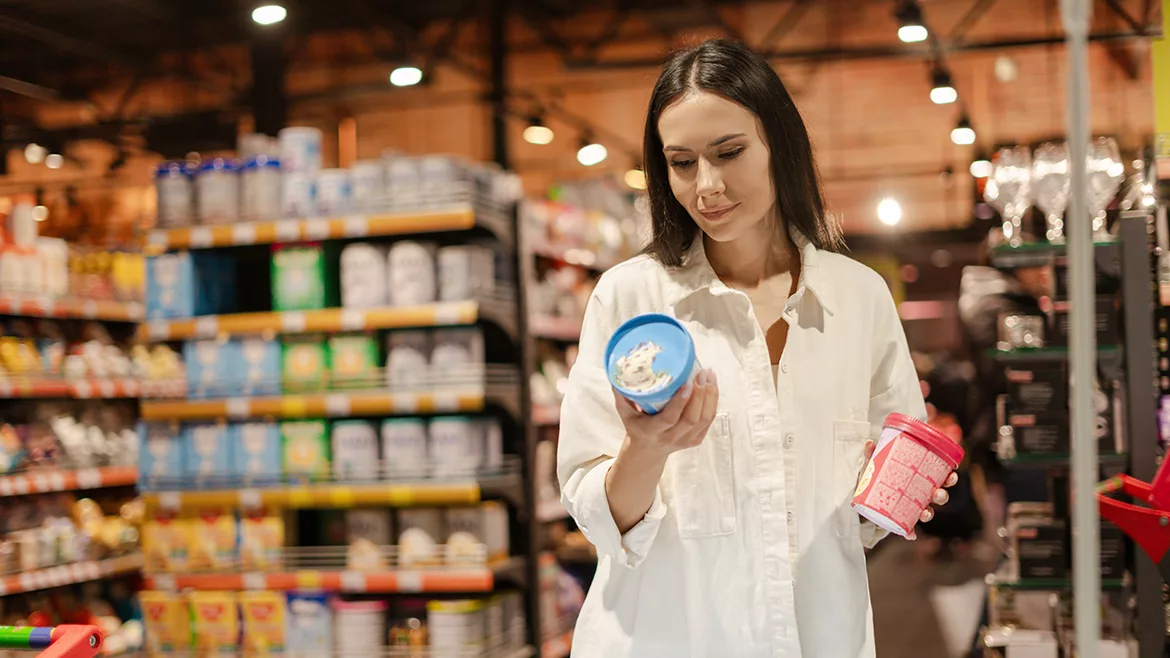
A new voluntary effort led by the International Dairy Foods Association (IDFA), in partnership with America’s ice cream makers, promises to eliminate certified artificial colors from ice cream products made with real milk by December 31, 2027. Dozens of U.S. ice cream companies are promising to cut certified FD&C Red 3, Red 40, Green 3, Blue 1, Blue 2, Yellow 5 and Yellow 6 from all frozen dairy desserts..
The new USDA Food Guide Pyramid wasn’t the only thing that got turned upside-down by the latest iteration of the Dietary Guidelines for Americans and the “Make America Healthy Again” drive by the Deptartment of Health and Human Services.
Reformulation to meet the key changes of more full-fat dairy, promotion of animal-derived proteins (generalized simplistically as “eat more meat”) and replacement of artificial colorants will present specific challenges for refrigerated and frozen foods processors and manufacturers.
All is not negative, however. Along with the challenges come opportunities that favor certain aspects of the world of cold foods.
For example, the push in the new DGAs for greater focus on “whole foods” could be a boon to the recent revival of the value of frozen produce. For the past several years the American Frozen Food Institute (AFFI) has tracked sales of frozen fruits and vegetables, showing a steady increase, with more U.S. consumers making them a standby rather than a back-up ingredient.
Fat of the Land
One of the most interesting changes in the DGAs is the promotion of full-fat dairy.
The demonization of fat persisted for decades, even as scientific research increasingly supported the fact that the connection between dietary sources of natural fats and disease states in healthy persons is far more tenuous than once believed.
Moreover, positive benefits of healthful fats, especially from dairy, continue to be revealed. In addition to the higher satiety that can lead to ingestion of fewer calories in the daily diet overall, dairy fat enhances the uptake of the fat-soluble vitamins A, D, E and K2 inherent in dairy.
EXPLORE MORE


Cultured full-fat dairy also is an important source of viable probiotic bacteria critical to digestive health and immunity.
“Cultured dairy products are excellent sources of live bacteria,” said Dana McCurdy, PhD, dairy and fermentation scientist and an expert in the connection between digestive health and immunity. “In most cases, multiple species of lactic acid bacteria (LAB) are used in the fermentation of dairy products. LAB have long been recognized as probiotics, defined by the WHO and FAO as live microorganisms which, when administered in adequate amounts, confer a health benefit on the host.”
“One of the greatest barriers between consumption of live probiotic bacteria and successful colonization in the small intestine is the stomach,” she said. “With an average pH of approximately 2.0, the stomach is a highly acidic environment. When probiotics are consumed without protection, bacterial counts are dramatically reduced and only a small proportion of organisms survive transit to the small intestine. Even those that survive can experience membrane damage and protein denaturation, impairing their ability to compete with established intestinal microbiota.”
When damage to the probiotic bacteria is extensive, they cannot establish a stable population, and the intended probiotic benefit is diminished or lost. To overcome this barrier, strategies have been developed to enhance probiotic survival and colonization.
“The stomach is primarily specialized for protein digestion and has minimal lipolytic activity,” she said. “Since fat is not substantially digested in the stomach, its coating of probiotics in a lipid matrix can shield them from gastric acid and promote delivery to the small intestine. Functional foods, particularly full-fat cultured dairy products, offer a natural delivery system that supports both nutrition and probiotic viability. While protein contributes to protection, fat plays a particularly important role in the survival of probiotic bacteria.”
Top of the Bottom of the Pyramid
With the new DGA emphasis on meat, consumers are seeking healthy options that appeal to their interest in global flavors and seeking choices in addition to beef and pork. This has led to a rise in interest in heartier poultry such as duck and quail.
“The new Make America Healthy Again dietary guidelines place a stronger focus on nutrient-dense meats,” said Joey Jurgielewicz, III, director of business development at Joe Jurgielewicz & Son, Ltd., one of the U.S.’s largest premium purveyors of Pekin duck. “With beef prices rising and consumer interest in pork declining, many manufacturers are shifting toward alternative choices.”
To meet burgeoning demand, JJS recently expanded its offerings to an extensive line of all-natural duck items, including whole ducks, ground duck, duck carnitas, duck fat, specialty cuts and duck eggs. These alternatives offer manufacturers a versatile ingredient for product innovation.
“Duck aligns well with consumer demand for minimally processed foods, high quality protein and the global flavor trends,” Jurgielewicz said. “As a lean, vitamin- and mineral-rich ‘red’ meat, duck has an untapped versatility that allows it to conform to many formulations where other red meats have been used.
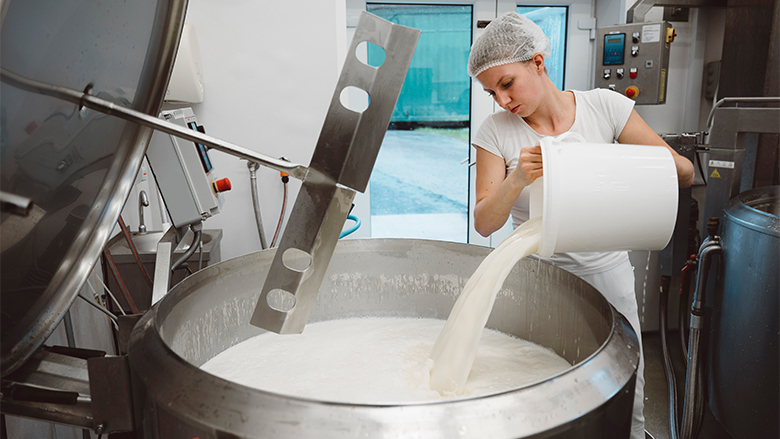
Cultured full-fat dairy products are among the foods promoted in the updated Dietary Guidelines for Americans. Courtesy Ziga Plahutar / E+ / Getty Images
Worth its Salt … and Sugar
The new DGAs have maintained the call for lowered sugar and salt. Not only flavor boosters, these two fundamental ingredients serve formulations in capacities ranging from providing bulk, texture and structure to inhibiting microbial growth and extending shelf life.
Sugar also controls crystallization in frozen dairy desserts, managing moisture, controlling freezing and boiling points and imparting creamy mouthfeel. In cultured dairy products, it controls texture, preserves shelf life, facilitates fermentation feeding the beneficial bacteria and even enhances color—especially important when shifting to natural colorants.
Beyond enhancing flavor, salt acts as a crucial, non-flavor agent in food manufacturing by inhibiting microbial growth (preservation), controlling fermentation, strengthening gluten structure in baking, regulating water activity (moisture retention), enhancing color and improving the texture of processed meats and cheese.
In some formulations, sugar can be replaced with allulose or tagatose. These are two new, natural sweeteners known as “rare” sugars.
Allulose, found in many plants, especially jackfruit, figs, beets, wheat and tapioca, is an epi-isomer of fructose and delivers just 0.2-0.4kcals/g and does not have to be labeled as an added sugar. It is more hygroscopic than sucrose, retaining moisture better and also participating in the Maillard reaction, although more quickly and at slightly lower temperatures than sucrose.
Tagatose contributes more calories than allulose—about 1.35kcals/g—but only a third that of other caloric sweeteners. It also functions as a prebiotic fiber, helping with digestive health but without causing gastric upset typical of many other food fibers. As with allulose, tagatose also has a strong Maillard property. But it also has extremely low hygroscopy.
Both new sweeteners have no off flavors—in fact, tagatose boasts an exceptionally clean sweetness—and can be used as one-to-one replacers for sucrose in many formulations. Allulose has about 70% the sweetness of sucrose in some formulations, but it has a long curve toward maximum sweetness and thus might come closer to sucrose. Tagatose has a sweetness level 92% that of sucrose, a difference slight enough that it is virtually undetectable to the average palate.
To Dye For
The call to remove artificial food colorants has likely caused the biggest disruption yet. Consumer clean-label demands over the past decade have been pushing product makers in that direction, with European food makers having already outpaced U.S. companies.
One of the leading frozen food manufacturers, Conagra Brands, will remove certified Food, Drug & Cosmetic (FD&C) colors from its U.S. frozen product portfolio, instituting a step-by-step plan with the goal of total elimination of FD&C colors by the end of 2027. Not to be left behind, Kraft Heinz announced last year that 90% of its U.S. products are now free of FD&C colors and pledged the entire portfolio will be free of them by the end of 2027.
The majority of U.S. ice cream makers have signed on to eliminate artificial colors. A new voluntary effort led by the International Dairy Foods Association (IDFA), in partnership with America’s ice cream makers, promises to eliminate certified artificial colors from ice cream products made with real milk by December 31, 2027. Included in these efforts dozens of U.S. ice cream companies are promising to cut certified FD&C Red 3, Red 40, Green 3, Blue 1, Blue 2, Yellow 5, and Yellow 6 from all ice frozen dairy desserts.
There are considerations when replacing artificial colorants with natural ones in dairy products and, especially, frozen full-fat dairy.
“Fat level in dairy products alters how natural colors behave, especially if those natural pigments are oil-soluble,” said Abbey Thiel, PhD, food scientist and host of the popular “Abbey the Food Scientist” show on YouTube. “For example, beta-carotene and lutein partition into the fat phase, so in full-fat dairy they tend to look softer and more blended because of how fat globules scatter light. In low-fat or non-fat systems, there’s less lipid to house those pigments and less light scattering, so colors can appear brighter, even harsh. In this case, the use of emulsifiers becomes much more critical to keep natural pigments that are oil-soluble stable.”
Thiel also points out some challenges with frozen dairy items specifically when it comes to reformulating for natural colors.
“When we talk about temperature stress, usually it's in terms of heat,” she said. “But cold or low temperatures also pose a stress on food. During freezing, water turns into ice crystals which has two significant impacts. First, it concentrates anything else in the unfrozen phase, such as salts, sugars and pigments. Second, ice crystals rupture cells as they form and grow. For water-soluble pigments like anthocyanins and beet, these changes can lead to accelerated oxidation and browning reactions during frozen storage. It's not unheard of for a food to look perfectly bright going into frozen storage but to come out looking dull and brown after thawing.”
The new DGA and recent announcements by major CPGs underscore a broader shift across the refrigerated and frozen foods landscape, as leading manufacturers continue reformulation initiatives aimed at label transparency and ingredient simplification while working to preserve the sensory attributes consumers expect.
Looking for a reprint of this article?
From high-res PDFs to custom plaques, order your copy today!