From the Cold Corner Podcast
Circular Action Alliance Talks EPR Implementation
What cold food brands should know about Extended Producer Responsibility legislation.
By 2030, nearly a fifth of the U.S. population is expected to be subject to EPR laws– extended producer responsibility – but packaging suppliers and the cold foods companies who rely on them cannot wait years – or in some cases, even months – to comply.
Seven U.S. states have enacted packaging-focused EPR laws, each with its own timeline and compliance goals.
Fees are paid to a Producer Responsibility Organization (PRO), responsible for calculating costs following the state law. The non-profit Circular Action Alliance is the only PRO approved to implement EPR laws and is operating in California, Oregon, Minnesota, Maryland and Colorado.
"EPR is really a policy approach," said Geoff Inch, senior vice president of producer services at the CAA, where he oversees the national producer strategy, including reporting and services to prepare producers for EPR compliance.
"It shifts the financial and, often the operational, responsibility for the end-of-life management of packaging," he said. "The core job that CAA has in this process is once a law is passed, we work to understand what the requirements are. It's really building a recycling system for the end-of-life management of these packaging materials. We are really the implementer of these programs, and we work on behalf of producers to make sure that it is an effective, cost-efficient system that meets all the requirements under the law."

Circular Action Alliance Talks EPR Implementation
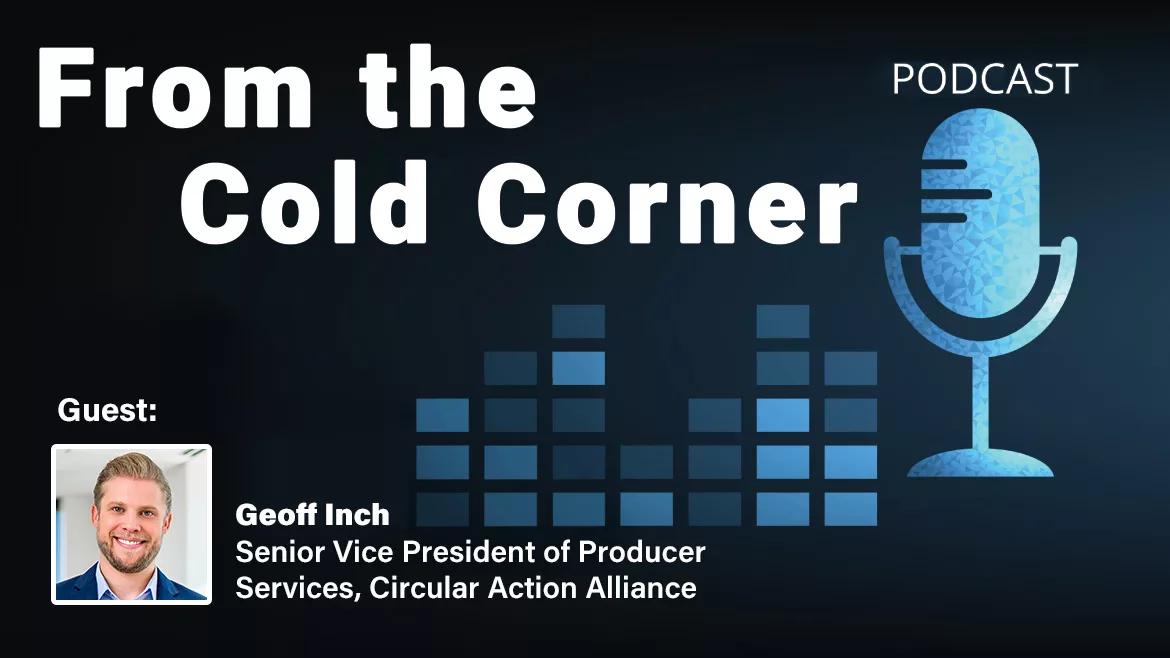
Geoff Inch, senior vice president of producer services at the Circular Action Alliance, discusses implementing EPR and what food brands should be doing now.
Each state has different classifications for who is considered a "producer" responsible for registering, reporting and paying fees for a covered product under the law.
Packaging weight by material category is the typical starting point for reporting requirements, with different states layering on. For example, when California’s system begins next year, "it's not just the weight of packaging, it's also the count of plastic components," Inch said.
"We're working really hard to make sure that those make sense and are harmonized as best as possible, as well, across multiple states," he said. "I think that's something that producers are fundamentally interested in."
Food packaging formats that are not recyclable, compostable, or reusable will face higher fees to support the added work needed to recycle, compost or reuse the package.
Assessed fees may be mitigated for things packaging with post-consumer recycled (PCR) content or original packaging made of highly recyclable materials.
"If you meet certain requirements, like incorporating sustainable materials into your product, or completing certain assessments around your product, which allows you to qualify for some of the financial bonuses under the program as well," Inch said.
The CAA publishes producer guidance and holds regular webinars explaining the nuances of EPR for businesses.
"Companies are starting to really build this muscle," Inch said. "We are here to help you figure out what you need to do if you have an obligation under these laws. Come work with CAA as soon as you can, and we'll be happy to help."
For the complete story, listen to the podcast in the player above or download episodes of From the Cold Corner wherever you get your podcasts.
Looking for a reprint of this article?
From high-res PDFs to custom plaques, order your copy today!