Hygienic Design: Best Practices for Food and Beverage Facilities

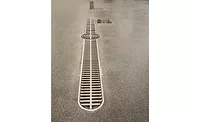
Image courtesy of luquas / iStock / Getty Images Plus
The pressure to comply with the Food Safety Modernization Act (FSMA) only continues to mount. The need for FSMA compliance, paired with public scrutiny propelled from this year’s influx of food recalls, puts food safety front and center. To prevent food safety incidents and meet regulatory mandates, food and beverage companies are now taking a deeper look at their processing practices, facility designs and processing equipment.
Without a sophisticated sanitary design strategy, a facility can never be cleaned to a microbiological level. A sound food safety program starts on the facility floor. From the beginning, the facility must be designed for a more predictable outcome that minimizes risk and includes sufficient space and lighting for cleaning and drying systems to foster a food-safe environment.
11 principles of sanitary design
A few years ago, I joined the American Meat Institute’s (AMI) Facility Design Task Force with a mission to establish sanitary design principles for the design, construction and renovation of food processing facilities to reduce food safety hazards. We developed the following 11 AMI sanitary design principles:
- Establish distinct hygienic zones in the facility.
- Control personnel and material flows to reduce hazards.
- Control water accumulation inside the facility.
- Control room temperature and humidity.
- Control room airflow and room air quality.
- Facilitate site elements for sanitary conditions.
- Facilitate building envelopes for sanitary conditions.
- Promote sanitation with interior spatial design.
- Facilitate building components and construction for sanitary conditions.
- Design utility systems to prevent contamination.
- Integrate sanitation into facility design.
These best practices fall into three major buckets of hygienic design—zones of control, temperature and moisture control and ability to clean and maintain the facility.
Zones of control
To prevent cross contamination, the design and construction of any food processing facility should incorporate a complete separation of production areas that house uncooked (raw) from cooked, ready-to-eat (RTE) products. Construction must also include the segregation of welfare areas for employees who handle raw products from those who handle RTE products. Such welfare areas include locker rooms, wash stations, cafeterias and other such support areas.
Keep in mind, animal slaughter facilities have a more stringent level of sanitation principles to follow. These facilities must also have separate welfare areas for the kill portion of the plant to prevent the spread of bacteria such as E. coli.
Early in a project’s planning stages, the design team should determine how many zones of control are necessary for the specific plant. Be sure to take allergens such as gluten, milk, eggs, nuts and soy into account. If products are labeled and marketed as “allergen-free,” then the facility must have separate rooms for food allergen sources if housed in the facility. Remember, these ingredients should also have an isolated/dedicated delivery pathway to mixing systems.
Identifying air pressures for these areas and isolated spaces is also important. Control air flow and balance to eliminate the potential for contaminants such as dust and bacteria to reach processing areas. For example, air from kill floors and rendering areas where raw meat is handled should never flow into packaging spaces where it may contaminate the final food product.
Temperature and moisture control
Cold food processors should also grasp a clear understanding of each room’s function to ensure sufficient humidity control and corresponding room temperatures are reached.
Installing reliable mechanical systems to control humidity within the plant is critical to eliminating potential food safety and bacteria harborage issues. For example, listeria can multiply between the temperatures of 86-98.6°F. Listeria can also still live in refrigerated spaces.
Indoor air quality issues such as mold, odors, allergens, bacteria growth/accumulation and suspended organic particles can be improved through proper humidity control. Humidity is also an important consideration in the design of WIP coolers, freezers and finished goods storage areas because moisture depletion can cause ingredient deterioration, which ultimately affects the quality of the product.
Humidity sensors can be used to monitor and control humidity levels within the proper ranges. Typical dehumidification is performed by mechanical dehumidifiers, which over-cool incoming air below the point where the water condenses on the cooling coils (dewpoint temperature). Afterwards, the cold dry air is heated up to the desired temperature again and/or is mixed with untreated air to provide air at both the desired temperature and humidity to occupied spaces.
Desiccant dehumidification is also a common and effective way to lower humidity. Air is passed through a porous wheel of solid desiccant, or through a shower of liquid desiccant, and its humidity is lowered. Roughly 75% of the time, the desiccant absorbs moisture out of incoming air. The remaining 25% of the time, it will be regenerated by passing heated air over the media.
Ability to clean and maintain the facility
Materials used in both food manufacturing plant construction and for process equipment fabrication should be selected for both durability and cleanability. Consider different materials’ ability to withstand harsh cleaning chemicals and temperature variations.
For example, the industry is using higher-end finishes and grades of stainless steel to resist daily exposure to an array of chemicals used in sanitation cycles. Type 316 has become the most common stainless-steel alloy used for food applications, along with higher-end finishes such as 2BA and No. 3, which often exceed regulatory requirements and provide better bacterial resistance and improved cleaning capabilities.
Cleaning and sanitizing is part of a plant’s food safety intervention and mitigation strategy, however the maintenance and cleaning tools themselves can create hazards within the operating facility. These tools often come in contact with unclean equipment during the disassembly for cleaning or repair. Even worse, these tools are sometimes placed on the floor along with other changeable parts during the cleaning or maintenance process. Proper attention must be given to tool segregation, cleaning and storage. An effective management control plan should be written, and the procedures must be validated to minimize the risks.
Understand that sanitary design is not just about the process equipment itself. There should also be enough room allocated for operators to access and clean the processing equipment and rooms. Designs should include ample space above, below and around the physical constraints of processing equipment, building columns, mechanical equipment and other building equipment-related interfaces.
Food safety is a shared responsibility
To foster effective communication for the hygienic design of a new or existing facility, allow your engineering, design and construction professionals to meet directly with individuals from all areas of your plant, including but not limited to, operations, maintenance and sanitation. There should be a collaborative planning session to determine answers to questions such as:
- What products are you making?
- How will you be making these products?
- How will you be isolating areas of the plant, so they’re positively or negatively pressurized?
- How many zones of control will you need?
- What types of physical barriers are necessary?
- What is the cleaning cycle (time and procedures) and which chemicals will be uses for sanitation?
Remember, food safety is a continuous improvement process and everyone is responsible. Ensuring your facility follows hygienic design best practices is an important piece of long-term, food-safe conditions. Every plant looks great at its grand opening, but that could all change once operations begin. Set your facility up for success from the beginning.
Looking for a reprint of this article?
From high-res PDFs to custom plaques, order your copy today!