The latest data from research firm IRI (Information Resources Inc.) and BCG (Boston Consulting Group) shows frozen and refrigerated food sales leveling off after a sharp sales spike in March due to COVID-19 stockpiling by consumers.
Week-over-week statistics from Clear Seas Research show food and beverage manufacturers have shifted their attention from future business goals to immediate employee welfare and current economic factors impacting their operations. Research conducted in late March showed 73% of those polled were concerned about achieving their business goals the next six months. Research conducted in early April saw that number drop to 53%.
On our newest From the Cold Corner podcast, I talked with Roberto Peregrina from Hiperbaric about the latest trends in High Pressure Processing (HPP) and what the evolution of HPP might look like in the future. We also discussed COVID-19’s impact on Hiperbaric’s business, and what the company is doing instead of tradeshows to connect with F&B processors while travel is shut down, which is a pivot many businesses have to make today.
The sudden surge in demand for refrigerated, frozen and packaged foods due to the COVID-19 pandemic has put food processors into overdrive trying to meet the market's needs. For example, oat milk sales have increased 477% compared to the same time last year, and dried beans 231%. One area possibly overlooked in this supply chain crush is labels for food. A company might have the actual F&B product and physical packaging, but maybe not access to updated label templates to complete the food manufacturing process before it ships out to stores, direct-to-customer orders and other clients.
Giant Food, a Washington D.C. regional grocery chain, announced two new social distancing policies put into effect across all of its stores as they continue to provide an essential service for the community during the coronavirus pandemic.
Q1 net sales growth expected to be 3%, while organic net sales growth up 6%.
April 6, 2020
Kraft Heinz's growth has accelerated in the wake of very strong consumer demand for its products and trusted brands, despite significant declines in foodservice-related sales around the world.
Refrigerated and frozen foods manufacturers use packaging graphics, text, colors, geometries, internal volumes, clarity, opacity, and ergonomic designs as nuggets of information to persuade consumers that the products they see are safe, will deliver pleasurable eating experiences, and may be enjoyed in specific or universal locations. Fundamentally, packaged messages must communicate to shoppers at the point of sale that there is a reason to believe in a product so that it is wanted.
A message from Dave Ciesinski, president and CEO of Lancaster Colony, parent company of T. Marzetti, New York Bakery, Sister Schubert's, and other refrigerated and frozen food brands.
April 6, 2020
The T. Marzetti Company has two priorities: First, to provide for the health, safety, and welfare of our team members and by extension their loved ones. Second, to ensure that we continue to play our part in the vital food supply chain.
Foodservice distributor will donate money to No Kid Hungry for every social media post during the initiative.
April 3, 2020
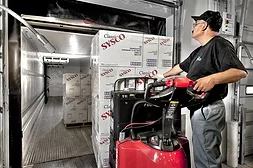
Sysco Corporation will kick off a month-long social media campaign, Take Out To Give Back, in conjunction with No Kid Hungry in order to provide healthy and nutritious meals in underserved communities while promoting the restaurant industry during the COVID-19 global pandemic.
This week on our From the Cold Corner podcast, I interviewed Lowell Randel, VP of government and legal affairs at the Global Cold Chain Alliance (GCCA) for the very latest developments regarding COVID-19's impact on the cold food supply chain.
 RSS
RSS