How Cafe Spice Boosted Throughput, Lowered Giveaway with Chef Robotics Automation
Adding RaaS delivered 60% increase in labor productivity on average.

The Chef Robotics system works with various portion sizes (5-8-ounces), is adaptable to ingredient variation and works with a single-lane stop-and-go conveyor. Before using Chef, each Cafe Spice line operated at 10-15 trays per minute. With Chef robots and the new conveyor system, the company now achieves a throughput of 30 trays per minute on average, resulting in 2-3 times higher output.
Cafe Spice, a New York based global cuisine manufacturer and winner of R&FF’s Processor of the Year in 2024, used Chef Robotics to boost output by 2-3x, ease labor shortage constraints and lower food giveaway by 67%.
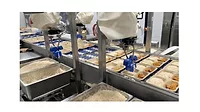
To accomplish this, Chef Robotics deployed its flexible AI-enable robots, which can pick and place a wide range of ingredients with varying portion sizes and trays through quick changeovers. Unlike traditional automation, which requires costly infrastructure changes, Chef’s robots fit within a human-sized footprint on existing lines and were quickly deployed on Cafe Spice’s new conveyor installation.
Cafe Spice’s Challenges
In the post-pandemic era, Cafe Spice struggled to hire the necessary labor for its operations. Labor participation rates in New York state remained lower, making hiring all the more challenging. These labor constraints made it difficult for Cafe Spice to meet the growing demand for its products. In addition to hiring, labor costs increased following the implementation of a $15 minimum wage in 2024, posing a challenge to Cafe Spice’s operating margins.
Meeting demand despite limited throughput and trouble scaling Cafe Spice historically had workers serving over tables instead of using conveyors. With workers manually shifting bowls down the line, output often landed well below expected throughput. On a given line, a throughput of 12 trays per minute was frequently the maximum output Cafe Spice could obtain. These rates limited Cafe Spice’s facility output, overall revenue potential and ability to scale.
Cafe Spice produces 12 different curry entrees and even more SKUs when accounting for portion sizes and tray types. These ingredients range from various rices to chicken to vegetable curries. Traditional automation isn’t capable of consistently portioning this range of ingredients or meeting the short changeover time (especially cleaning time) between SKUs that Cafe Spice requires in its daily operations. Cafe Spice has tried traditional automation without success.
While increasing output, maintaining high-quality standards was also critical for the Cafe Spice team. At the end of a line, underweight trays are rejected to avoid underserving consumers. As a result, workers often over-portion meals, which causes food giveaway and reduces overall yield. This was a further blow to Cafe Spice’s margins.
Cafe Spice uses a two-compartment tray with a shallow cavity separating rice from curry to maintain meal freshness and extend shelf life. The tray must be filled to the top to hit the target weight, which can quickly lead to spillage or spillover of curry onto rice if food is over-portioned or placement is offset. Excessive spillage also requires an added labor touch point, as a worker needs to wipe the trays before entering the sealing machine.
Depositors and other traditional automation could not perform well given Cafe Spice’s placement and presentation requirements, paired with its extensive range of ingredients.
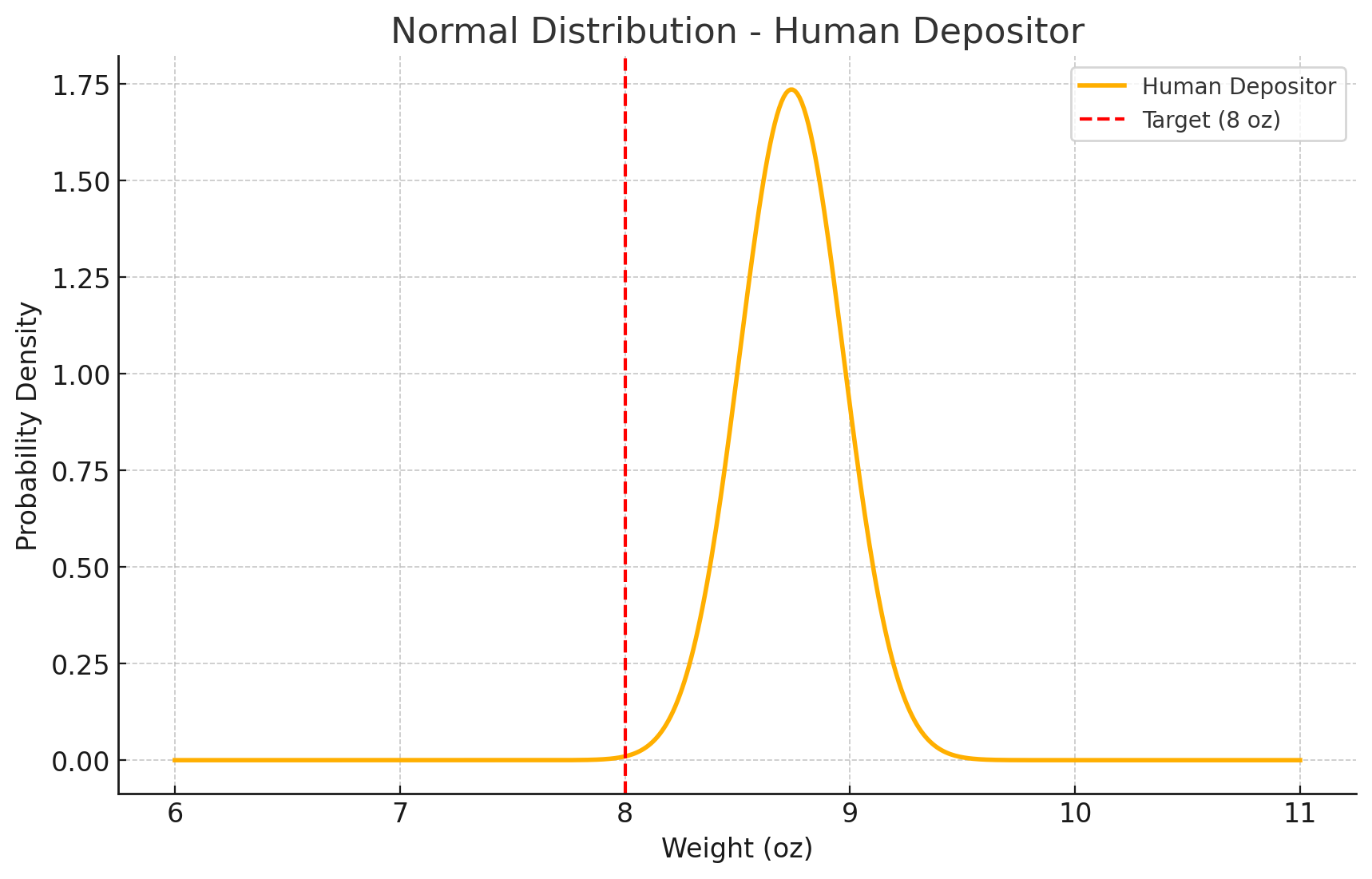
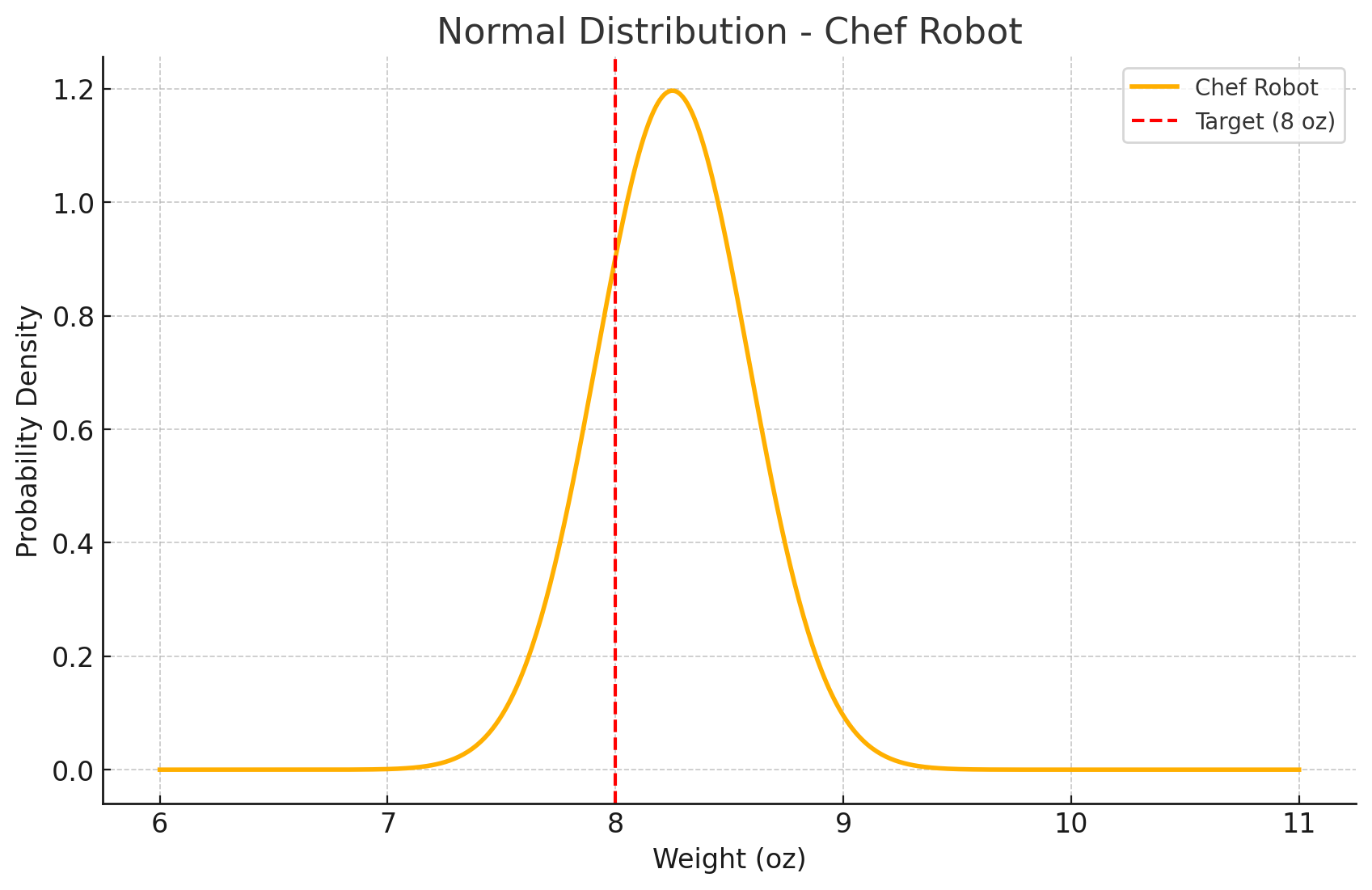
Charts courtesy of Chef Robotics/Cafe Spice
Chef Robotics Solution
To boost output and reduce its giveaway problem, Cafe Spice decided to invest in Chef’s AI-enabled robots along with a conveyor system. Unlike traditional automation, Chef robots can flexibly adapt to various ingredients, recipes, portion sizes, conveyors and trays, while supporting quick changeovers. In addition to accurate placement, Chef roots collect precise weight data for every deposit to achieve consistency and reduce giveaway.
Finally, the Chef team developed a new utensil and software designed explicitly for curries, to minimize the risk of spilly and consistently handle meat chunks suspended in a saucy base.
Equipped with AI-based perception, a collaborative robot arm and proprietary utensils, Chef robots maximize SKU compatibility while maintaining product quality and production throughput with maximum uptime.
Chef’s perception system uses AI to accurately detect bowl positioning and food surface topology, enabling precise deposit placement and consistently portion weights. At Cafe Spice, Chef robots reliably deposit rice and complex curries with minimal spillage, ensuring both accuracy and cleanliness.
A Chef robot takes up the same footprint as a worker and can be moved easily between lines to meet changing production needs. Changeovers to new ingredients or meals take just minutes, making Chef robots as flexible as workers. At Cafe Spice, switching robots between conveyors—or transitioning from depositing rice to curry—is quick and seamless.
Chef robots have helped Cafe Spice achieve high throughput while meeting industry standards such as ISO 10218 for working alongside humans. As Cafe Spice continues to automate more workstations, humans can safely work next to robots on the same production line.
Chef’s conveyor integration solution uses a wireless module to coordinate closely with other line equipment. This approach optimizes throughput with both indexing and continuous conveyors while preserving the flexibility to reposition Chef robots as production needs evolve. Cafe Spice has obtained up to 40 trays per minute and high placement accuracy throughout.
With a simple utensil swap, Chef robots can deposit hundreds of different SKUs, enabling fast changeovers and minimal sanitation time. For Cafe Spice, the Chef team engineered a custom utensil specifically designed to handle curries with varying densities and suspended proteins—while consistently meeting high quality standards.
“The data insight with the Chef robots has been transformative. Previously, we took a sample every 30 minutes. Now, we have granular insight into every deposit in every tray, which allows us to make better business decisions and adjustments where warranted,” said Virgilio Felix, chief operating officer at Cafe Spice.
Product Approach & Deployment
Previously, Cafe Spice required 8-10 workers per production line for meal assembly. With Chef, the number of dedicated workers on each line has decreased to 3-4 people, delivering a 60% increase in labor productivity on average. Cafe Spice leverages the freed-up workers in other areas of its operations, which had previously remained understaffed.
Cafe Spice has seen the percentage of deposits within the target weight range increase notably for meals assembled by Chef robots compared to those assembled by workers.
Food giveaway was 9.19% before Chef and is now 3.05% for Chef-made meals. Additionally, the acceptance rate for Chef-made meals is 91%, compared to a 75% acceptance rate for worker-made meals. These consistency improvements directly affect Cafe Spice’s overall product quality, as Chef robots are able to accurately place ingredients into the company’s two compartment trays.
They have also allowed Cafe Spice to reduce food giveaway by 67%.
Chef robots are a low-risk investment for Cafe Spice because they work across different conveyor types and easily slide onto the company’s new conveyor lines. All they require is 120V AC power and a pneumatic line with a standard industrial quick-disconnect air coupling.
Chef can deploy within weeks of the contract closing and quickly have systems operational in production. For Cafe Spice, the Chef robots were running in production within 2 weeks of conveyor installation. This allowed Chef robots to start assembling food and create value quickly. Customers can choose to automate one or multiple stations at a time.
Cafe Spice chose partial automation as a starting point, deploying 4 robots to start. After that, the company quickly deployed four more robots, partially automating two production lines. Now, Cafe Spice is onboarding eight more robots, to fully automate both production lines with a total of 16 robots.
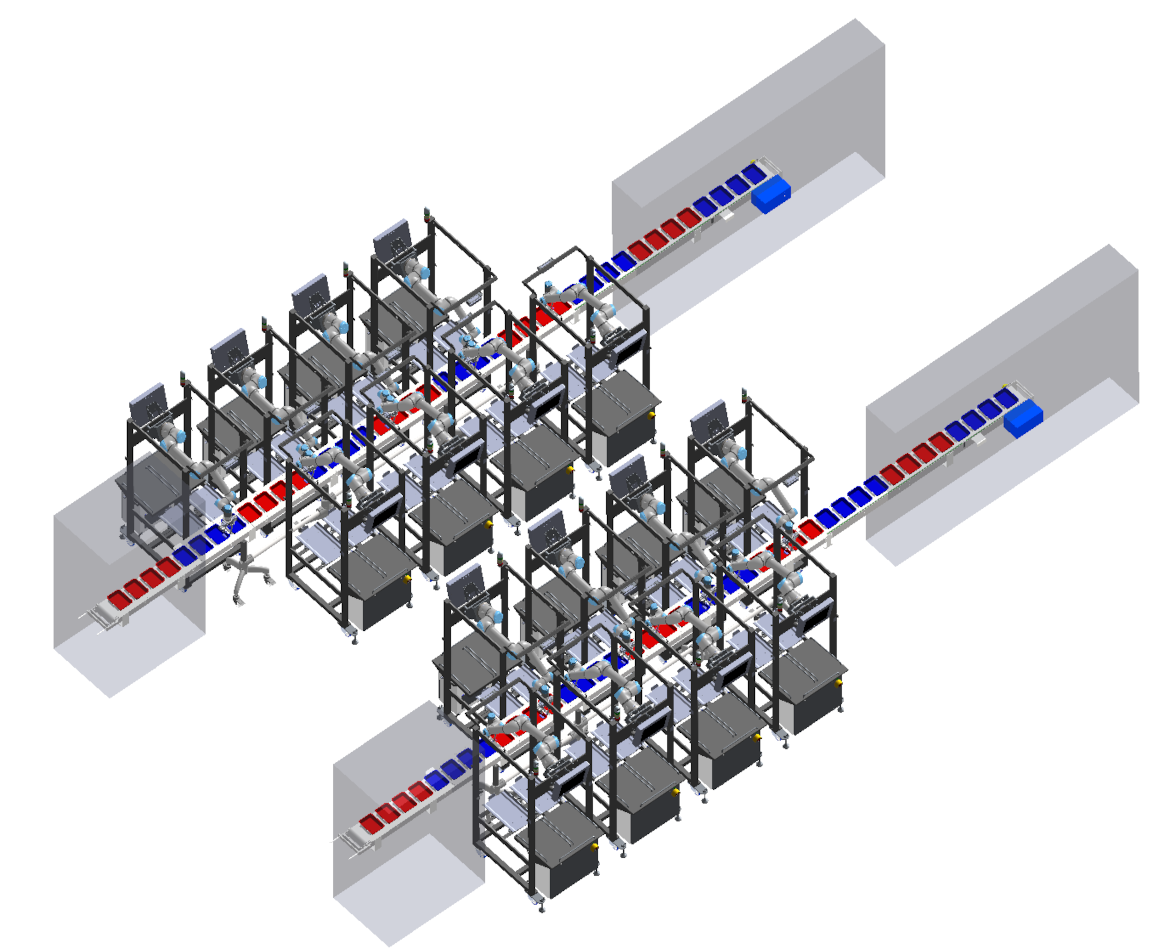
Image courtesy of Chef Robotics/Cafe Spice
Many traditional automation suppliers create custom one-off automation solutions, requiring customers to pay a large capital expense (CapEx) investment upfront. This approach would have required Cafe Spice to limit its cash flow and allocate a considerable budget through long planning cycles, resulting in slowed deployment timelines and a delayed return on investment (ROI).
Chef Robotics follows a robotics-as-a-service (RaaS) model, acting as a robot staffing agency for Cafe Spice. Chef’s recurring RaaS fee includes hardware and software updates, support, and maintenance. Thanks to this approach, Cafe Spice eliminated the need for a large upfront investment and avoided surprise fees or maintenance costs over time. The company was also able to start small and increase its number of robots over time, rather than making a large commitment right away.
Looking for a reprint of this article?
From high-res PDFs to custom plaques, order your copy today!