Cold Chain Companies Making Strides in Sustainability
Regulatory pressures, consumer demand and rising utility costs are driving cold chain companies to seek solutions.

Energy is the cold storage industry’s second-largest expense after labor costs.
The United Nations' Food and Agriculture Organization (FAO) estimates that the food industry uses about 30% of global energy, with the bulk of that being in the processing and manufacturing of products.
In the U.S. the food and beverage sector’s electricity usage breaks down to about 46% for machine-driven systems (pumps, conveyors, mixers etc.), about 27% for process cooling/refrigeration, about 19% for facility uses (HVAC/lighting), and about 8% for other process uses, according to an analysis by the Department of Energy.
The manufacturing of chilled and frozen foods has potential for efficiency gains by focusing on factors like refrigeration/freezer systems, storage strategy and water‐use optimization in ancillary processes. Of course, cold foods packaging always plays a role in sustainability strategy.
Here are a few of the top stories in sustainability that you may have missed this year.
Protocols & Packaging
This summer, the Global Cold Chain Alliance (GCCA) and the American Frozen Food Institute (AFFI) announced a new protocol providing a unified, data-driven approach to tracking temperature fluctuations from production to distribution. Designed to help frozen food manufacturers, cold chain logistics providers and distributors improve operational efficiency and reduce energy use without sacrificing food safety.
“This protocol represents a major advancement for frozen food manufacturers and broader cold chain partners as we drive continued improvements in quality and sustainability,” said Dr. Sanjay Gummalla, AFFI’s senior vice president of food safety and scientific affairs. “By establishing a common framework for monitoring temperature fluctuations, we’re not only improving consistency across the cold chain—we’re also laying the groundwork for a more sustainable future.”
The protocol represents the first phase of a broader industry initiative, with a taskforce developing additional guidance documents addressing food quality assessment, shelf-life optimization, food safety considerations and energy measurement protocols, in the coming months.
As the cold storage industry’s second-largest expense after labor costs, even seemingly minor changes in energy price trends can have a major impact on operators’ bottom lines.
“There are major opportunities for businesses across the cold chain to identify and eliminate inefficiencies in how they use energy to keep food frozen,” said Shane Brennan, senior vice president of strategy, partnerships and policy at the GCCA. “To seize this opportunity, it’s critical to build a shared understanding of how to monitor and log temperatures across every link in the chain. This protocol is a big step forward and lays the foundation for greater collaboration to drive efficiency, sustainability and high-quality food preservation.”
The announcement comes as the Move to -15°C Coalition announced it has expanded to 55 companies and named a new managing director.
The coalition, which launched in 2023, aims to explore and enable a temperature shift in frozen food logistics from -18 degrees Celsius to -15 degrees Celsius to cut global emissions without compromising food safety.
The coalition’s work is grounded in research, including the Three Degrees of Change report and an 18-month trial by Nomad Foods and Campden BRI. These studies suggest that increasing the frozen food temperature set point does not compromise food safety or quality across a range of products, with microbial activity remaining inactive below -12 degrees Celsius and no significant impact observed on taste, texture or nutrition.
With the first wave of EPR (extended producer responsibility) regulations taking effect this year, sustainable packaging continued to be a focus for cold processors and manufacturers.
Companies making headlines this year including Danone Canada, which announced a $9 million investment to launch production of new individual yogurt cups made from polyethylene terephthalate (PET) resin, aiming to integrate up to 30% recycled PET (rPET).
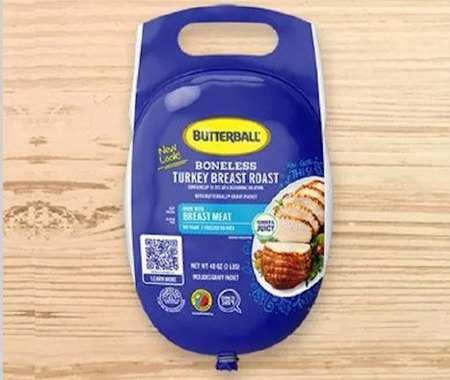
Amcor launched a shrink bag turkey breast package for Butterball with a built-in handle that reduces packaging material and improves efficiency. Compared to the incumbent netted turkey breast bag, a life cycle assessment certified by the Carton Trust found the new bag delivered a 22% reduction in carbon footprint and water usage.
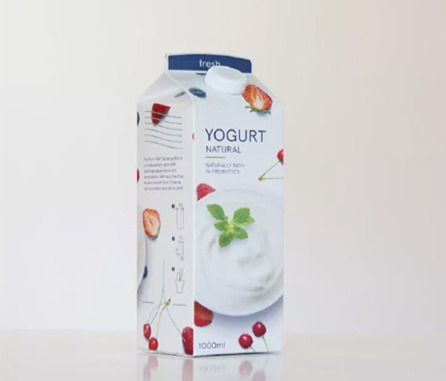
And Elopak debuted a new carton for fresh liquids in chilled distribution chains. Compared to cartons made with standard board, the Natural White Board reduces the packaging’s carbon footprint by up to 14%.
Finished with a specialized process to create a naturally smooth outer surface, it reduces the plastic coating (i.e., polyethylene). The new white paperboard uses bleached fibers in only the top layer of the carton, delivering a clean white finish while also using less polyethylene than standard paperboard.

Facility Footprints & Fighting Food Waste
Conagra Brands, Inc. and Bloom Energy this spring announced plans to use fuel cell technology at Conagra facilities in Troy and Archbold, Ohio.
The 15-year PPA (power purchase agreement) will deploy approximately six megawatts and provide combustion-free electricity generation, supplying approximately 70% to 75% of the electricity needs at the facilities, while also projecting a 19% decrease in their greenhouse gas emissions.
Conagra established a $9 million Sustainability Capital Allowance program to support the company's production facilities in achieving their sustainability goals by investing in technologies that modernize its supply chain, reduce environmental impact and promote sustainable practices.
Pork processor Clemens Food Group announced a similar initiative, partnering with Convergent Energy and Power to install an energy storage system to stabilize energy costs at its Hatfield, Pennsylvania facility.
Convergent will finance, own and operate the 14.5MW / 29MWh industrial-scale battery energy storage system, leveraging proprietary energy storage intelligence to maximize value. The system is projected to come online in 2026.
The Pennsylvania plant is an expansion project with 308,000 square feet of combined production space for smoked meat, including bone-in hams, boneless hams, lunch-styled meat, bologna and more. It was honored by our sister publication, FOOD ENGINEERING, as its Plant of the Year.
A renewable natural gas (RNG) project went online this year at a Pilgrim’s Pride processing facility in Sumter, South Carolina. GreenGas is using methane-capture capabilities to convert biogas from wastewater streams, upgrading it to pipeline quality RNG. The collaboration is expected to reduce greenhouse gas emissions at the Sumter facility, improve wastewater operations and local air and water quality.
In an effort to combat food waste along distribution and retail channels, Walmart and Avery Dennison this fall announced the use of radio-frequency identification (RFID) technology in fresh categories previously not possible.
This first-to-market solution is set to transform inventory processes and enhance both associate and customer experiences across fresh departments – particularly bakery, meat and deli.
Looking to help develop a solution to a longstanding industry challenge of using RFID technology in high-moisture, cold environments, like meat cases, Walmart teamed with Avery Dennison to create and test a first-of-its-kind sensor technology that brings RFID-enabled labels to the meat department. This allows employees to track inventory faster and more accurately — making sure products stay stocked and ready when customers want them.
The latest headlines in cold chain sustainability are always available online.
Looking for a reprint of this article?
From high-res PDFs to custom plaques, order your copy today!