Ensuring Cold Food Quality with Proper pH
How to chose and use the right measurement system for your manufacturing process.

Used to measure the acidity of a food, pH levels can significantly influence the color, flavor, consistency and shelf life of packaged foods. But pH testing of cold foods is not a one-size-fits-all process.
pH testing in food processing and manufacturing a crucial process that helps ensure food safety, product quality and consistency. Used to measure the acidity of a food, pH levels can significantly influence the color, flavor, consistency and shelf life of packaged foods. But pH testing of cold foods is not a one-size-fits-all process.
Getting pH testing right for food safety means selecting the proper pH meter and electrode, using suitable testing techniques and maintaining pH equipment in proper working condition through regular maintenance.
How pH Testing Impacts Safety & Quality
While pH can impact the taste and consistency of certain foods, it also plays a key role in ensuring food safety, making sure products remain safe to eat once they leave the processing or manufacturing facility. pH plays a significant role in preventing the growth of Clostridium botulinum, the bacterium responsible for botulism, a potentially life-threatening illness caused by ingesting the botulinum toxin produced by these bacteria.
For this reason, the U.S. Food and Drug Administration (FDA) has set a maximum pH of 4.6 for certain prepared and RTE foods, like hummus. Typically made from mashed chickpeas and blended with tahini, olive oil, lemon juice, garlic and spices, the addition of food acids (lemon juice or citric acid) imparts a pleasant, tart taste, also functioning as a preservative, lowering pH levels to inhibit or slow bacterial growth.
To be confident in their pH readings and ensure the food is both safe and satisfying, food producers require an accurate and precise pH measurement system that meets their specific needs. But not all pH measurement systems are equal. While pH test strips and pens are available, a pH electrode and meter are used for accurate, reliable and documented pH testing of food products, especially in the critical range from pH 4.0 to 4.6.
Selecting a pH electrode and meter kit that is well-suited for your sampling and testing environment can significantly impact the speed, accuracy and reliability of your pH testing process. Fast electrode response times enable quicker testing and increased productivity. An electrode that delivers consistent, accurate results can reduce the need for recalibration and retesting. Refillable and durable electrodes last longer, reducing replacement costs and improving the cost-effectiveness of each test.
Equipment Considerations
There are several factors to consider when selecting a pH electrode, including maintenance requirements. For example, a low-maintenance electrode can make your pH testing easier, as you do not need to check the electrode fill level, replace the fill solution or open and close the fill hole cover for measurements and storage.
Conversely, cold foods processors and manufacturers may want to consider a refillable standard electrode. While refillable electrodes require more maintenance, some labs prefer them because they tend to last longer, provide quick and stable readings, and can usually be used at higher temperatures, where low-maintenance electrodes can malfunction. Regular maintenance can restore performance and extend the lifetime of refillable electrodes.
Producers must take the sample size into account. When samples are thick, sticky or greasy, they can clog the pH junction of the electrode, causing readings to slow or become unstable and inaccurate. This can lead to electrode malfunctions and necessitate replacement more often. If the sample is difficult to work with, consider selecting a pH electrode with a clog-resistant junction, such as a flushable or capillary junction that can easily be cleaned.
The temperature of the product sample also can affect electrode selection. When measuring cold or hot samples, an automatic temperature compensation (ATC) probe, or a pH electrode with an integrated ATC is essential. An ATC allows the correct pH value to be assigned during calibration and then corrects the calibrated slope for temperature effects.
Finally, durability is key. If testing is done on the production floor, consider the value of a durable epoxy body electrode with protective plastic housing around the pH bulb to protect it from breakage. It is essential to use ATC when testing outside the laboratory to achieve better agreement between production floor results and quality control lab results.
Taking all these factors into account when selecting your pH electrode can help ensure your readings are precise and accurate for food testing.
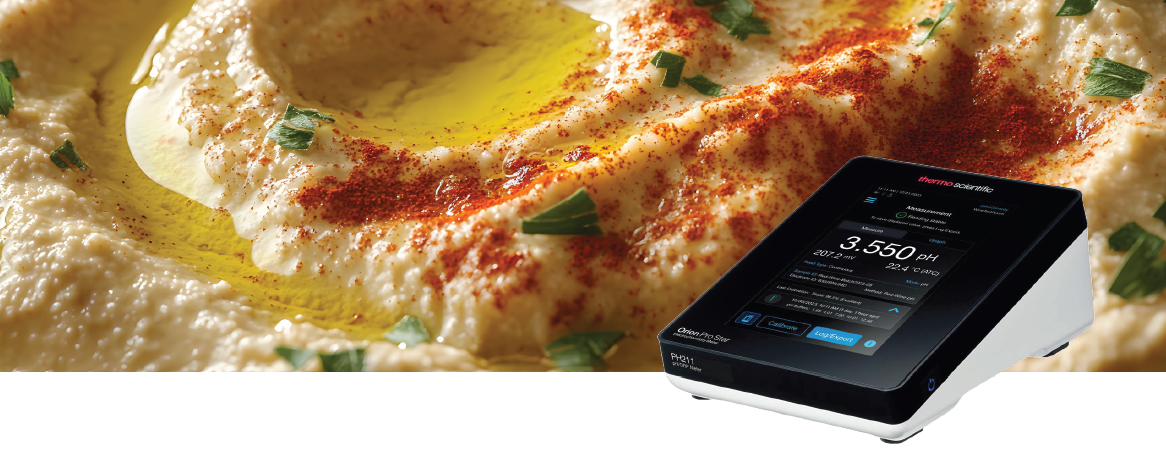
As in selecting the electrode, there are considerations when choosing the proper pH meter, including its calibration process. Since optimal pH results are achieved when calibration is part of the daily routine, a meter kit that simplifies the process with clear on-screen calibration instructions, automatic calibration data storage and access controls that limit who in the organization can make calibration changes can all help streamline and secure the process.
The need for training and guidance remains constant. Some pH meters include onscreen guides for meter setup, calibration, measurement and electrode maintenance that can assist with training and refreshers for new and infrequent users. It is also important to consider meter durability. Meters in the lab or on the production floor are subject to spills and stringent cleaning routines, so ensure the meter has a suitable IP rating, such as IP-54, to protect it.
Other features to look for include a capacitive touchscreen that can be operated while wearing disposable gloves and a smooth meter face that facilitates cleaning by eliminating cracks and crevices where food can accumulate and decay. By carefully selecting the proper pH meter and electrode, processors and manufacturers can help ensure pH measurements are fast, accurate and dependable.
Putting pH Systems to Work
To get the most out of your pH measurement system, it is essential to follow best practices for accurate readings and the equipment’s longevity. For instance, incorrect storage can lead to damaged electrodes and inaccurate readings.
Allowing the electrode bulb and interior to dry out or storing it in the wrong solution will damage the glass pH bulb, contaminating or clogging the junction with unwanted crystals. It can also lead to potassium chloride creeping, which, although harmless, is messy. To avoid these issues, use a specialized pH electrode storage solution, close the fill hole before storing, top up the fill solution before use and ensure that no crystals form inside.
An improperly cleaned electrode can result in the calibration not holding and the slope may fall outside the acceptance range. For faster and more reliable readings, rinse the electrode and pH bulb thoroughly with generous amounts of purified water. When working with oily and greasy samples, gently wipe the electrode and then swish it in a warm, mild laboratory detergent mixture, rinsing thoroughly afterward. For deeper cleaning, pH electrodes may be soaked in a specialized cleaning solution.
Finally, buffers that are reused, expired or incorrectly stored can become contaminated, evaporate, absorb gases and particles from the air, or even grow mold. When this happens, the buffers will no longer have the expected certified value, and the calibration will be invalid. To combat this, buffers should be poured fresh into clean beakers, disposed of at the end of the day and always used within the expiration date. Store pH buffer bottles tightly closed and away from heat and light. Alternatively, purchase buffers in smaller bottles or single-use pouches to help maintain integrity.
pH testing for cold food products is an integral part of the manufacturing process. Selecting the appropriate electrode and meter, as well as proper use and care of the pH measurement system, can help ensure accurate and reliable pH measurements and safe products on store shelves.
Looking for a reprint of this article?
From high-res PDFs to custom plaques, order your copy today!