How Cold Foods Facilities are Achieving Energy Efficiency

Image courtesy of Fahroni | Getty Images
The cold and frozen foods industry increasingly is incorporating sustainable design and construction practices aimed at improving energy efficiency and promoting overall sustainability.
Energy is typically the second-highest operating cost behind labor in the cold chain industry, according to the Global Cold Chain Alliance (GCCA).
Improving a building’s overall energy performance is possible through a variety of strategies like incorporating a tight and efficient thermal envelope, efficient refrigeration systems, LED lighting, advanced controls, metering and other options can result in significant energy savings.
Primus Builders recently earned LEED Gold designation on a 295,000-square-foot square foot cold storage project for RL Cold. The Ridgeville, South Carolina, site demonstrates a 32% improvement in energy performance.
LEED or Leadership in Energy and Environmental Design is the world’s leading green building project and performance management system, delivering a comprehensive framework for green building design, construction, operations and performance. Once unheard of for operations like cold storage, is now possible thanks to changes in LEED requirements surrounding energy modeling and ventilation requirements. Current industry standard, LEED version 4.1, now incorporates specific pathways for warehouses and data centers, allowing cold storage warehouses more opportunities to seek certification.

“The biggest challenge to obtaining LEED certification is starting as early as possible. LEED certification is more than a checklist at the end of a project; it requires thoughtful engagement from a project’s earliest stages. A sustainability partner can guide an owner toward a site that is suited for optimal LEED points; conduct energy modeling to optimize the sustainable design of the building; and submit the paperwork for LEED certification. There are a significant number of LEED points that can be achieved through the site (Surrounding Density and Diverse Uses, Regional Priority Credits). The opportunity to achieve a higher LEED certification may be missed because it is hard to make up those points if the site is not optimal,” said Rebecca Elliott, vice president of marketing at Primus. “This is the first cold storage warehouse Primus has designed and built that features solar energy. Installing a one-megawatt system on the roof offsets at least 3% of the building’s energy costs.”
Whether a project pursues certification or not, cold chain operators are looking for ways to conserve resources and capital.
“Across the board, new regulations on food safety and environmental impacts are influencing the design and construction of cold facilities. For publicly traded companies, new regulations from the SEC on climate-related disclosures will mandate more transparency regarding emissions and plans to address them, including the requirement to disclose climate-related risks, potential material impacts, climate-related targets or goals and more,” said Bob West, vice president of Food and Beverage at Ryan Companies. “While investing in certifications like LEED has become less common in our recent experience, we are seeing a preference for funds going directly into energy and water conservation measures with possible payback. For example, we have projects that have a net zero water site. These projects are usually located in the west due to limited water resources for these plants. In many cases, this makes sense because there is limited availability, allowing the cost to be justifiable.”
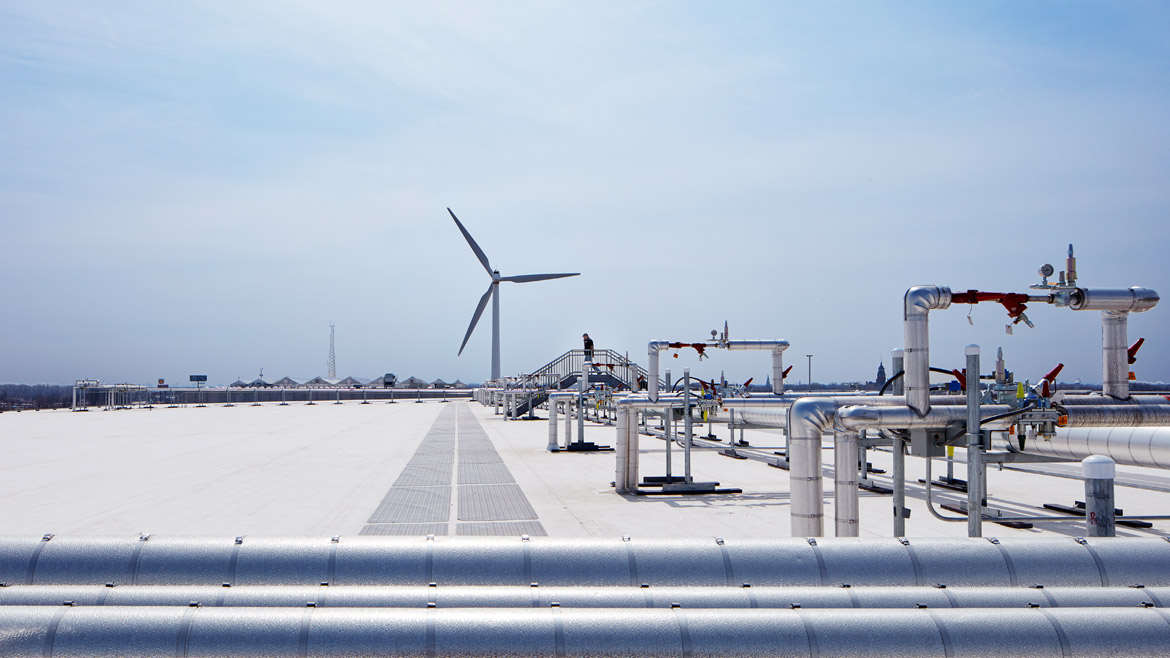
Ryan Companies this summer will finish a job for an F&B client that implemented several sustainable aspects including reduced heat island effects with light-color high-albedo materials for less than 30% of exterior surfaces, including light-color concrete pavement and white reflective roofing. A recycled concrete casting bed serves as a subgrade base and local materials were used in construction.
“This thoughtfulness extended to the exterior with the utilization of climate-appropriate plant material and decision not to implement permanent irrigation throughout the landscaping,” West said. “The facility's reuse of process water for utility systems and metering of all process water used for production were key strategies to lower potable water use. Energy-efficient lighting was installed throughout the facility and parking lot, as well as reduced lighting levels in the warehouse where no pedestrians or workers were present. Non-CFC and non-HCFC refrigerants and ammonia chillers were used as a safer, more efficient and cost-effective alternative for cooling and high-efficiency motors were implemented.”
When designing its first cold storage site, PL Cold intentionally built an extra-large refrigerated loading dock: At 80 feet deep and over 900 feet long, the 72,000-square-foot dock sacrificed freezer capacity in an effort to maximize operational efficiency, allowing orders to be pulled and pre-checked. Developed in partnership with Ambrose Property Group and built by ARCO Design/Build Indianapolis, the state-of-the-art building is equipped with 40 doors, each outfitted with vertically stored dock equipment.
“What you want is throughput. You want the ability to take a lot of product and move it in the doors and out the doors with nobody waiting. We have an extra wide, extra deep freezer wall where we can pre pull the orders the day before. Run them out right before they're scheduled to pick up. Load that truck and then get him on his way to his next destination in under an hour,” said Ed Rodgers, vice president of business development. “So just by getting that driver out, not only does it support the cold chain, and our partners at the driver, but you're going to have emissions that go along with that right? Cuts down on emissions, cuts down on time on the dock. We're really designed with the concept that nobody has to sit in that door.”
“We have the ability to continually bring more product in and create larger turns to where we get throughput, which actually helps the investors and it's a more sensible build. Our energy costs necessary to maintain our temperature levels are lower owing to the design of the dock doors that prevent the outside air from entering our dock,” Rodgers added.
Once operational, food companies are taking a variety of approaches to help them meet sustainability goals.
For example, 3PLs and transportation companies can partner with the U.S. EPA on its SmartWay program, which helps track and share information about fuel use and freight emissions. The data allows entities to analyze the energy efficiency of goods transported across supply chains. Lineage, the world's largest global temperature-controlled warehouse REIT last month added its entire North America fleet as registered partners. Sysco, the world’s largest foodservice distributor, has added 120 electric trucks to help reduce direct emissions by 27.5% by 2030.
The GCCA offers an Energy Excellence Recognition Program (EERP) that helps measure and improve energy efficiency at cold chain facilities using qualitative and quantitative assessment tools. Operators can track facility performance over time and receive progress reports with recommended next steps.
Kraft Heinz and Unilever each received millions in federal grant money for clean energy projects at U.S. food facilities. Others, like McCain Foods, are turning to regenerative agriculture to help meet carbon footprint reduction goals while some companies, such as Hormel Foods, are using solar energy.
Planning and budgeting are the keys to project success. Collaborating with engineers, original equipment manufacturers and builders from the outset allows F&B companies to establish budgets and ensure seamless execution – minimizing impacts on costs and schedules. This proactive approach also enables owners and builders to leverage favorable market conditions for procurement.
“Early discussions facilitate the timely integration of large-scale efficiency solutions for energy and water consumption, such as geothermal systems, microgrids, sustainable waste solutions and centralized energy storage. Some of these solutions may necessitate specific site assessments and permits, while others can reduce the size and cost of other building components, enhancing overall payback when considered early in the design phase,” West said.
Looking for a reprint of this article?
From high-res PDFs to custom plaques, order your copy today!