How forklifts drive the future of food processing & distribution
This special report uncovers the trends and innovation driving the future of food processing and distribution.
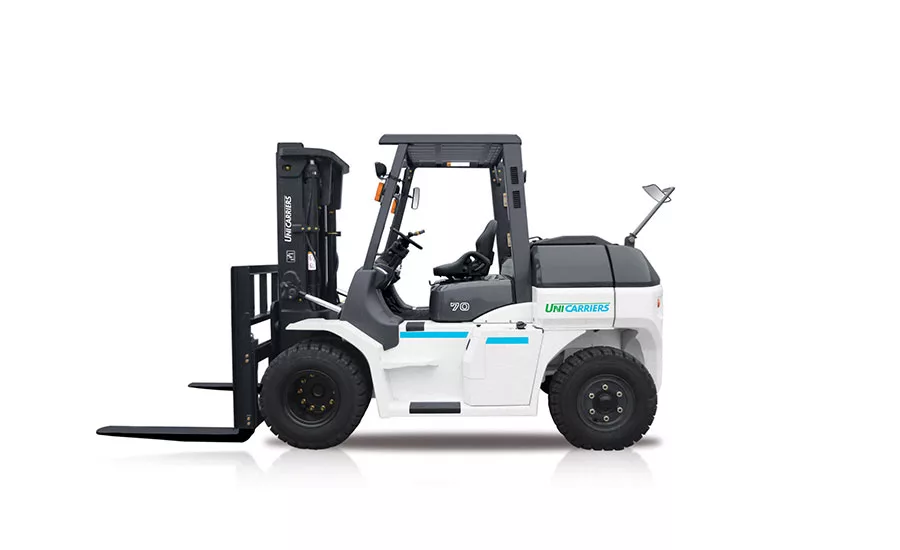
UniCarriers Americas launched the new PD6 Series (IC) Pneumatic Tire Forklifts, which handles a 13,000- to 22,000-pound capacity range.
Click here to learn more.
Robotics. Automation. Wearables. Sustainability. Internet of Things (IoT). All key buzzwords surrounding the material handling sector of the food and beverage industry. From alternative-powered lift trucks to automated stackers and order pickers to cloud-based controls and features, many of today’s forklift manufacturers provide solutions equipped with these cutting-edge technologies.
This special report uncovers the trends and innovation driving the future of food processing and distribution.
Automation ignites innovation
Rewind 5-10 years ago, and convenience, versatility and simplicity were key in the supply chain and logistics arena. Equipment was designed to improve operator comfort and withstand harsh environments. And, employee safety became more commonplace. Then, robotics and telematics entered the playing field, allowing companies and operators to re-evaluate how they deliver product from Point A to Point B. While these facets still ring true today, the future continues to revolve around automation, incorporating smart controls and features that present new opportunities for innovation.
For example, the integration of additional truck and warehouse technology, such as telematics and pick-to-light, has been crucial for aiding operators in the demanding new environment, says Erica Moyer, product manager, pallet trucks and stackers for The Raymond Corp., Greene, N.Y.
“Telematics technology has guided the path for lift trucks to become more intelligent. They are no longer ‘just trucks,’ but tools to assist in warehouse productivity,” she adds. “The growth of powered industrial equipment to collect and wirelessly transmit large amounts of data about the equipment’s current operating parameters and condition has been key to lift truck evolution. Pick-to-light technology utilizes visual, colored light that works in tandem with voice-picking solutions to direct operators on where to place picked product. The technology improves operator productivity and reduces picking errors.”
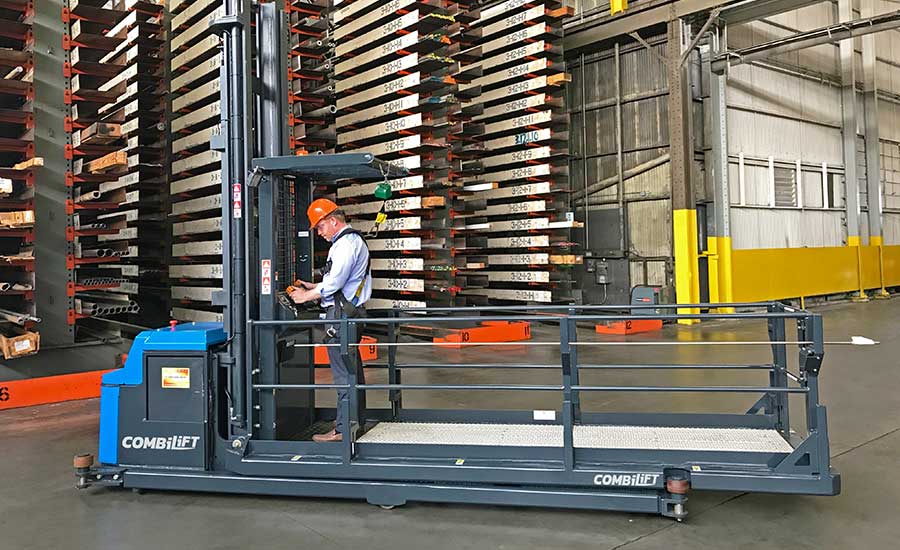
Combilift’s Combi-OP is said to be the first purpose-built order picker, featuring a long platform that enables access to long products stored at height. Click here to learn more.
The industry is at the tip of the iceberg as it relates to forklift connectivity and the fully connected warehouse or distribution facility, according to Jim Gaskell, director of global technology business development for Crown Equipment Corp., New Bremen, Ohio.
“A connected facility enables companies to shift away from individual components or equipment to a view that encompasses the entire facility and how its systems and components work together to deliver measurable business value,” he adds. “In a connected facility, individual components no longer work independently. They are interconnected and communicate with other components and equipment. They work hand-in-hand with other systems and technologies to improve productivity, efficiency and safety. Sensors, software and computing devices are embedded into these connected components, equipment and systems to enable them to collect, send and receive relevant data that can be used to provide greater understanding of operations and make strategic decisions. Given the forklift’s prominent role in the supply chain in enabling product movement, it provides an ideal starting point for connectivity efforts.”
Likewise, IoT and wireless fleet management are gaining more and more traction in the cold food industry, specifically through lift trucks equipped with telematics, says Kevin Paramore, manager, motive power and telematics for Yale Materials Handling Corp., Greenville, N.C.
“Lift trucks equipped with sensors can detect and track impacts, provide automated maintenance alerts and enable operators to digitally perform safety checklists. Information collected via telematics enables greater fleet visibility and data-driven analysis for informed fleet management decisions,” Paramore says. “The growth of robotics is another trend impacting the future of operations, as technology advances and labor challenges continue. Robotics can free operators to handle more engaging, value-added tasks, helping minimize potential turnover.”
Companies like UniCarriers Americas, Marengo, Ill., respond to the increasing need of automation with new light, seat, tire, loadback rest and safety interlock options.
“I see a continued adoption of automation in cold food processing and warehouse distribution,” says Daniel Smelter, product manager. “The reasons for this include confirming lot and SKU traceability for regulatory and food safety reasons, along with providing the ability to optimize resource allocation for cost management purposes.”
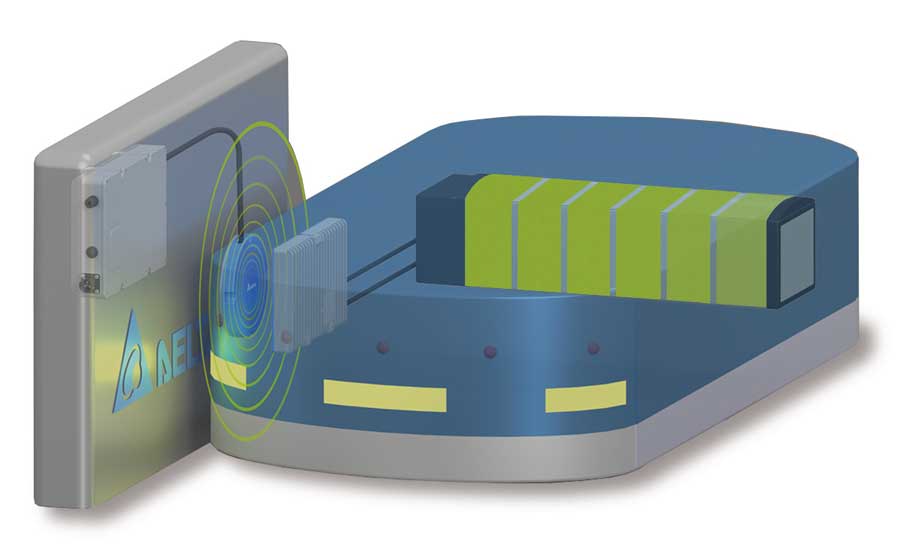
Delta’s 30 kW wireless battery charging system can charge a 600Ahr-48V battery in just 60 minutes.
Lithium-ion leads the way
Many of today’s refrigerated and frozen food processors seek alternative power sources for use in warehouse equipment such as forklifts and pallet trucks.
To help meet this demand, Crown Equipment introduced the V-Force Lithium-Ion Energy Storage System (ESS) for the Crown WP Series pallet truck, which includes an on-board charger that delivers the optimum charge and properly balance the cells.
“The V-Force Lithium-Ion ESS allows customers to more easily realize the benefits of lithium-ion technology, which is generally more efficient than lead-acid batteries,” says Craig Bruns, vice president of customer support. “Lithium-ion batteries can be opportunity charged during operator breaks without adversely affecting battery life, which can contribute to longer run times and remove the need for battery changing. They do not emit gas during charging, which means they do not require special battery rooms. This is especially important for those looking to reduce costs associated with battery management. Lithium-ion batteries are also maintenance free, which eliminates the need for battery watering and avoids exposure to harmful vapors.”
Meanwhile, The Raymond-labeled lithium-ion power pack allows trucks to run longer and recharge quicker.
“Regenerative braking and regenerative lowering have been instrumental in Raymond’s overall ‘green’ efforts,” says Shannon Curtis, product manager, order pickers. “Regenerative braking can extend operating hours per battery charge on counterbalanced trucks, and regenerative lowering on certain Swing-Reach trucks can enable up to 40% longer operation per charge by feeding the energy of the descending load back to the battery. Raymond’s Model 9800 Swing-Reach truck features an advanced lift system with regenerative lowering, which reduces energy use by 40% per lift cycle.”
Furthermore, warehousing professionals want automated guided vehicles (AGVs) and autonomous mobile robots (AMRs) capable of moving into cold storage and outdoor environments. A key consideration in this transition will be the capacity of the batteries, says Don Nasca, national sales manager for industrial electric vehicles for Delta Electronics (Americas), Fremont, Calif.
“Since refrigerated and frozen environments can significantly hamper the capacity of lead-acid batteries, lithium-ion is now viewed as a more attractive alternative. Compared to lead-acid batteries, which need to be swapped several times per shift or repeatedly connected to a fast-charger, lithium-ion batteries keep the cold out longer through a sealed enclosure. This ensures a continuous and productive workflow, even in freezing environments,” Nasca adds. “IoT technologies are another contributor. Charging systems are now smarter and more versatile, which allows operators to become more agile and responsive. These units no longer simply supply energy. They offer a record of events that are reported via various communications channels, including Bluetooth, Ethernet, cellular and WiFi. These features make it easier to monitor systems remotely and allow operators to initiate firmware upgrades or change operating parameters – such as battery charging profiles – without waiting for a technical support representative or special tools.”
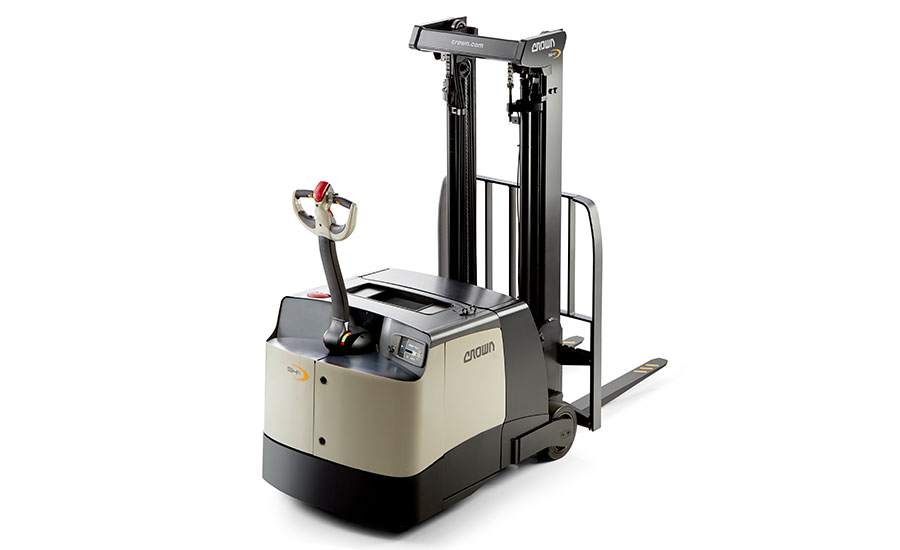
Crown Equipment’s new Crown SHC 5500 Series counterbalance stacker offers flexibility and durability for safe, efficient handling of loads weighing up to 4,000 pounds. Click here to learn more.
The rise of e-commerce
One of the most influential factors on warehousing over the last few years has been the rise of e-commerce. A survey produced by RBC Capital Markets, New York, shows an acceleration in the number of respondents who purchase groceries online. And, 87% of respondents said they were spending the same or more on online grocery compared to a year ago.
But, how does this change the landscape of the industry? And, how do material handling equipment manufacturers respond?
“Customer needs have changed based on increasing SKU growth. And, the e-commerce boom has led to an increase in picks, which leaves more room for potential picking errors,” says Moyer. “The growth of telematics data collection and wireless transmission will provide a much finer granular view of warehousing operations and allow for more informed decisions, improving efficiency and speed of product movement through the supply chain.”
Meanwhile, omni-channel distribution within the food industry continues to create the need for more efficient solutions to meet customer demands. That’s why KION North America Corp. (KION NA), Summerville, S.C., cooperates with other KION Group brands like Dematic, Grand Rapids, Mich., which KION NA acquired in 2016.
“Improved productivity can, for example, be achieved by enhancing either a man aboard or pallet jack vehicle using a voice-directed solution. This hands-free, voice-activated system would direct operators to pallet locations within a warehouse for full pallet storage, retrieval, replenishment. Pallet jack operators equipped with pick-to-voice will then experience productivity gains and accuracy improvements for order fulfillment. Dematic IQ software, interfacing to the client’s WMS, would drive this voice system to not only optimize productivity, but also improve accuracy and safety,” says Bob Hasenstab, general product manager.
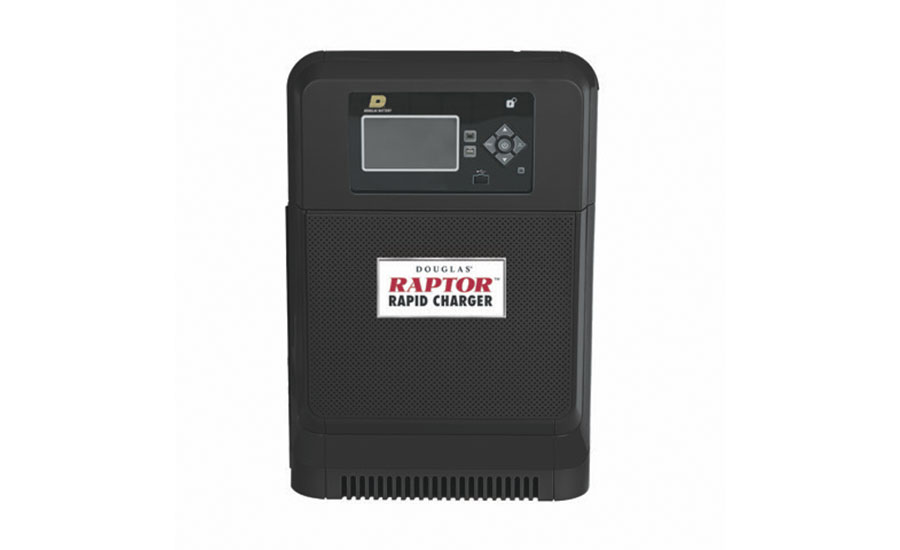
Douglas Battery’s new Raptor Rapid Charger enables batteries designed for fast charging to be safely charged anytime during the day.
Likewise, manufacturers can streamline handling and rationalize storage procedures for better stock location to ensure quicker turnaround of goods, according to Paul Short, president, North America and Canada of Combilift, Greensboro, N.C.
“Many warehouses are still using older and often in-house developed WMSs that are not ideally suited to the requirements of picking items, which can sometimes be scheduled for a delivery slot just hours after being ordered,” says Short. “We have evaluated hundreds of scenarios where we identified not just wasted space in current setups, but also wasted time due to the layout of the premises. In some cases, we found that pickers spent 65% of their time in transit, picking for just 20% of the shift, with the rest being taken up by searching for stock or dead time. This waste can be avoided by adopting ABC slotting, which helps to overcome some of the challenges involved with e-commerce. This classifies products as A, B or C, and stores the most popular products closest to the picking line and the least popular items farthest away. This has the added advantage of enabling a reduction of the forklift fleet whilst improving productivity, without substantial investment in automated systems.”
Batteries bring the heat
Ultimately, the greatest benefits to come from battery-powered devices and charging stations is the elimination of human intervention in the act of charging, says Nasca.
“In the years ahead, no one will need to plug, unplug or maintain a battery charging system,” he adds. “Automated or manually driven electric vehicles simply have to pull up, park for a short time and drive away. The benefits increase when using lithium-ion batteries in unison with wireless charging, as these units charge up to 20 times quicker than lead-acid alternatives. Through reducing the number of charges and charge-time, operators will achieve much greater production throughput. This ensures they will remain competitive in the face of a constantly evolving industry.”
That’s why Delta debuted the 30 kW wireless battery charging system. Ideal for large and complex vehicles associated with the warehouse automation industry, such as scissor lifts, forklifts, trucks and AGVs, the 30 kW can charge a 600Ahr-48V battery in just 60 minutes. Delta also debuted 720W and 1.5kW onboard chargers, which efficiently charge industrial electric vehicles even in the harshest of environments.
For its part, Douglas Battery, Winston-Salem, N.C., introduced the Raptor Rapid Charger, which enables batteries designed for fast charging to be safely charged anytime during the shift-day. Raptor Rapid chargers offer intelligent charging with high efficiency and flexibility, while packaged in what is said to be one of the industry’s most compact sizes. Douglas Battery also introduced a new line of charger stands designed to withstand potential, light impacts better than previous versions.
“The need for longer battery run times and faster turnaround time on battery changes is a key focus,” says Brian Faust, general manager. “Our chargers are some of the most efficient in the industry. As a result of this, they use less energy from the grid. And, because of their high efficiency ratings, the battery can recharge faster because its temperature remains low, allowing it to use less energy as well.”
Click here to learn more about these and other new forklifts and batteries.
Looking for a reprint of this article?
From high-res PDFs to custom plaques, order your copy today!