On our latest From the Cold Corner Podcast, I talk with Vincent Free, chairman of the Controlled Environment Building Association (CEBA) about how the organization helps bring together suppliers, sub-contractors, builders and more, to move the thermal envelope industry forward through education and networking.
Editor-in-Chief Michael Costa details how COVID-19 has helped cold storage become a hot business in 2020, and conversely how the pandemic has devastated the traditional model for foodservice distribution.
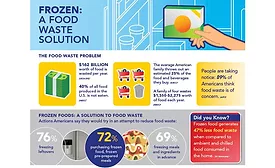
Editor-in-Chief Michael Costa sits down with Alison Bodor, president and CEO of the American Frozen Food Institute (AFFI) to discuss how frozen foods can play a key role in fighting global food waste.
Refrigerated & Frozen Foods catches up our 2016 Refrigerated Foods Processor of the Year, SugarCreek, to learn how reinvestment in facilities and staff have helped the company grow the past four years.
By any measure, 2020 has been a historically difficult year for foodservice distributors. COVID-19 wiped out business for foundational customers like restaurants, hotels, caterers, stadiums, schools and other volume foodservice clients starting in March, and even today, as states attempt to re-open amid the uncertainty of where the pandemic is heading, an argument could be made that foodservice distributors have had to continuously pivot more than any other cold chain segment to stay afloat.
Looking back on what we’ll call 2020 B.C. (Before Coronavirus), the pipeline for cold storage construction was already robust and healthy. According to research by commercial real estate firm CBRE, overall industrial construction—which encompasses cold storage, along with warehouses, distribution centers, manufacturing facilities, self-storage, office and flex space—was at 298 million square feet (MSF) before COVID-19, bolstered by the ongoing rise of e-commerce.