Vandemoortele’s Frozen Bakery Innovation Drives Supply Chain Gains
Behind the Bake’Up space and labor-saving innovation.
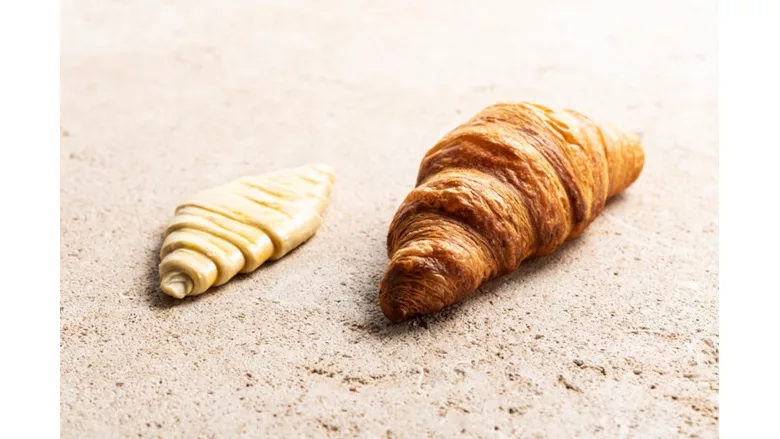
Bake’Up products transition directly from the freezer to the oven in about 25 minutes, saving energy and labor required for defrosting and proofing.
With savings in logistics, storage and labor, this frozen innovation has sustainability baked right in.
Belgium-based Vandemoortele in 2024 purchased a majority stake in New Jersey’s Banneton Bakery, its first U.S. production site, allowing it to expand its patented Bake’Up products to the North American market.
Intentionally flattened during production, Bake’Up pastries remain compact and unproofed until they reach the oven. Unlike traditional pre-proofed products that are frozen in their final, aerated shapes, Bake’Up items proof as they bake.
The unique, flat profile maximizes packaging, logistics and storage capacity across the supply chain. Products are pre-glazed, further cutting prep time.
EXPLORE MORE


"We approach innovation by looking at the entire lifecycle of a product, from ingredient sourcing to packaging and shipment," said Christine Hoguet, marketing manager at Vandemoortele USA. "The key differentiator is that following the mixing and laminating of the dough, these items are flattened to reduce the size, but in such a way that the layering that’s so crucial to croissants and other pastries remains intact. Thanks to our patented process that manipulates the shape of our croissants to be flattened with distinctive ridges, or bridges as we call them, our Bake’Up products go from freezer-to-oven-to flaky in under 30 minutes."
The reduced size of Bake’Up products results in boxes that are over 50% smaller than those for conventional pre-proofed pastries.

A single pallet can hold 112 boxes of Bake’Up croissants versus 60 boxes of traditional, pre-proofed products. There is an approximate 60% space savings compared with pre-proofed product. Courtesy Vandemoortele USA
"This allows our partners to house substantially more product within the same amount of freezer space, a critical advantage for space-constrained environments like cruise ship galleys or compact retail freezers," Hoguet said. "Bake’Up technology allows for a significant saving of up to 60% in valuable storage and logistics space. When you can fit the same amount of inventory into 60% less space, you are essentially removing more than half of the volume from the cold chain. This density translates to fewer trucks on the road and a significant reduction in the energy required to keep products frozen during transport and storage."
Those benefits align with broader category dynamics. North America remains the largest market for frozen bakery products, according to Grand View Research, with more than half of demand driven by foodservice. In that channel, operators continue to seek solutions that deliver scratch-quality results without the labor, space or consistency challenges of traditional baking.
Vandemoortele’s R&D team is now developing a second generation of Bake’Up technology, building on a platform that already addresses several of foodservice’s most pressing operational constraints.
"We know that many of our customers, including one of our largest, longest-term key customers, value our Bake’Up product for what makes these products special," Hoguet said. "They require less storage space, don’t require specialized bakery skills to bake the products, as they go straight from freezer to oven without any extra steps needed and they’re authentically French, with real French butter and a signature flavor, fragrance and flakiness."
Looking for a reprint of this article?
From high-res PDFs to custom plaques, order your copy today!